The Visionary Who Reimagined Indian Theatre
 KRC TIMES Desk
Rajkummar
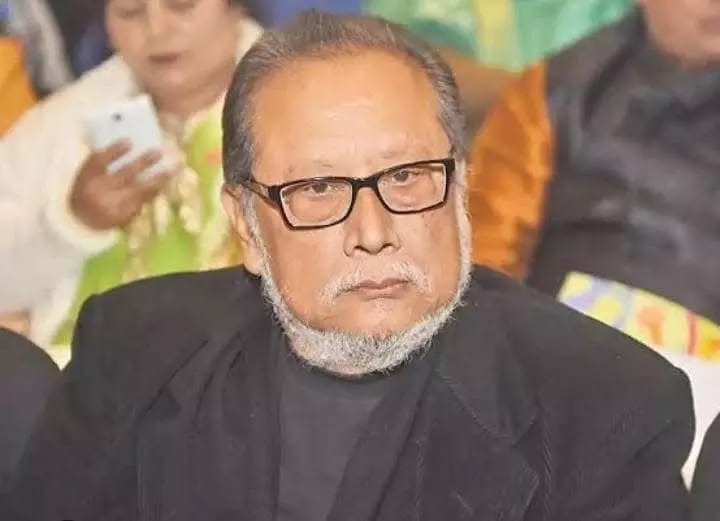
The Indian stage lost one of its tallest figures on July 23, 2025. Ratan Thiyam, the legendary theatre director, playwright, and cultural reformer, passed away at the age of 77 after a prolonged illness. Widely regarded as the torchbearer of India’s “Theatre of Roots” movement, Thiyam’s name became synonymous with a unique theatrical language one that seamlessly wove together the sacred and the political, the local and the universal.
Born on January 20, 1948, in Imphal, Thiyam was raised in a household steeped in the performing arts. With parents who were acclaimed Manipuri dancers, he absorbed the rhythm and discipline of traditional art forms early on. His journey into the world of performance began with painting and music, but it was theatre that eventually claimed his soul. In 1974, he graduated from the National School of Drama (NSD), becoming the first student from Manipur to do so marking the start of a career that would redefine Indian theatre.
In the turbulent cultural landscape of the 1970s, Thiyam emerged as a leading force in the “Theatre of Roots” movement a collective effort to craft a modern Indian theatre grounded in indigenous traditions. He drew from the wellsprings of Manipuri heritage Thang-Ta martial arts, Nata Sankirtana rituals, and the Natya Shastra’s aesthetic theories to construct a performance language that was visual, visceral, and deeply spiritual. His theatre was not merely an artform; it was a philosophical inquiry, a civic dialogue, and a ritual of healing.
In 1976, Thiyam founded the Chorus Repertory Theatre on the outskirts of Imphal. Conceived as a space of discipline and devotion, it became a world-class laboratory for theatre training and experimentation. Actors at Chorus were trained in body movement, martial art forms, vocal modulation, and design, creating a rare synergy of craft and consciousness. From this quiet corner of the Northeast, Thiyam’s productions would go on to captivate audiences across the globe.
Thiyam’s best-known productions were marked by epic themes, philosophical depth, and striking visual compositions. Chakravyuha, a searing anti-war play; Uttar Priyadarshi, an introspective portrait of Emperor Ashoka’s transformation; Urubhangam, a retelling of the Mahabharata through the lens of the fallen Duryodhana; and Lengshonnei, a Meitei-language adaptation of Sophocles’ Antigone all reflected his ability to mine classical texts for contemporary resonance. His stagecraft symbolic, rhythmic, and steeped in silence invited audiences to reflect, rather than merely consume.
Thiyam’s contributions extended to the institutional realms of Indian theatre. He served as Director of NSD (1987–89) and later as Chairperson of its governing body (2013–17). He also held the post of Vice-Chairman of the Sangeet Natak Akademi, where he tirelessly advocated for decentralization of theatre training and the inclusion of India’s Northeast in the national cultural mainstream.
Thiyam was a recipient of numerous national and international honours:
Sangeet Natak Akademi Award (1987)
Padma Shri (1989)—which he courageously returned in 2001 in protest of the government’s policies in Manipur
Sangeet Natak Akademi Fellowship (2012)
Kalidas Samman, Bharat Muni Samman, Fringe First (Edinburgh), Rockefeller Fellowship, among many others
For Thiyam, theatre was not performance—it was purification. “Theatre is a laboratory of the soul,” he often said. His works, shaped by the political unrest and identity struggles in Manipur, became a medium through which pain was processed and hope imagined. Through stylized gestures, mythic narratives, and haunting silences, he asked the eternal questions: Who are we? What is justice? Where do we belong?
Chorus Repertory Theatre toured over 30 countries, showcasing a distinctly Manipuri aesthetic on some of the world’s most prestigious stages. Critics across continents drew parallels between Thiyam and global greats like Peter Brook, Jerzy Grotowski, and Tadashi Suzuki—but his vocabulary remained uniquely his own. He believed in reaching the universal through the intensely personal, and the global through the deeply local.
As the news of his demise reverberates through the arts community, tributes continue to pour in from across India and beyond. Ratan Thiyam is being remembered not merely as a master dramatist, but as a philosopher of the stage, a mentor to generations, and a cultural conscience-keeper. His life’s work offers a powerful reminder that theatre, when rooted in truth, can be both a sanctuary and a revolution.
He redefined Indian theatre through indigenous forms and modern metaphors.He nurtured a generation of artists to see theatre as spiritual discipline. He challenged cultural marginalization and gave Manipuri identity a global platform. He proved that theatre can illuminate the soul while interrogating power.
Even as the curtains fall on his remarkable life, Ratan Thiyam’s legacy will continue to echo—in rehearsal halls, in quiet black-box theatres, in the chants of Chorus performers, and in every corner where art dares to dream.
The stage is darker today, but the path he lit remains.
Promotional | Subscribe KRC TIMES e-copy