


The Majestic Hindu Legacy in Cambodia
 Sangram Datta
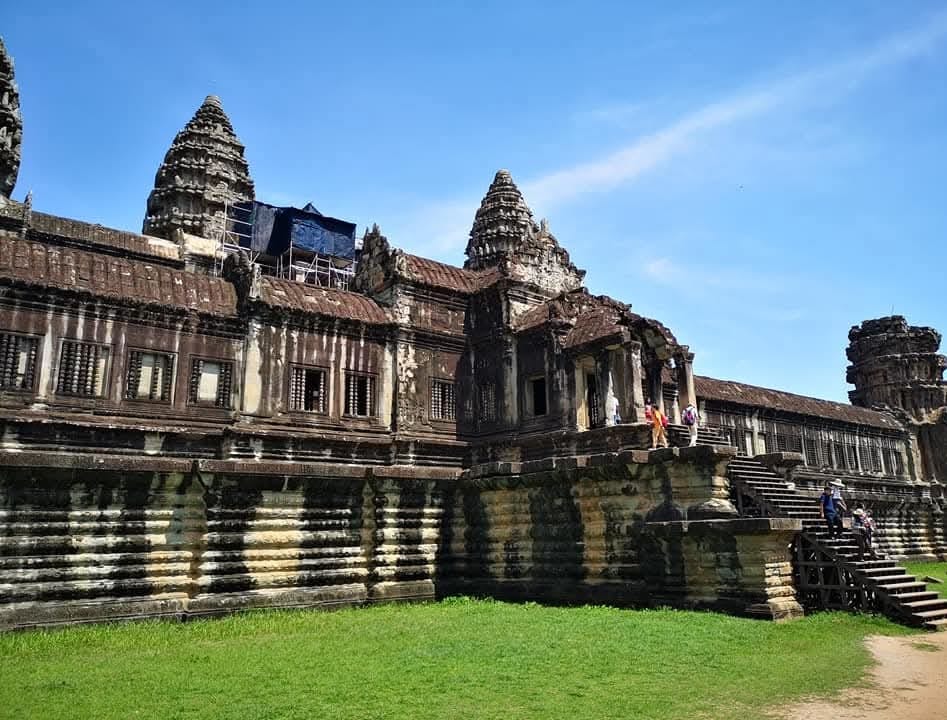
In the heart of Southeast Asia, nestled among the lush forests and ancient ruins of Cambodia, stands one of the greatest architectural and spiritual marvels ever built Angkor Wat. This iconic temple complex, originally constructed as a Hindu temple dedicated to Lord Vishnu, is not only a symbol of national pride for Cambodia but also a remarkable testament to the cultural influence of India across Asia.
Angkor Wat was built in the early 12th century during the reign of King Suryavarman II, the ruler of the powerful Khmer Empire. It served both as a state temple and later as the king’s mausoleum. At the time, the Khmer Empire was at its zenith, and Angkor Wat embodied the empire’s grandeur, religious devotion, and architectural genius.
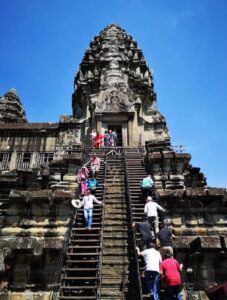
The temple was originally dedicated to Lord Vishnu, which is noteworthy because most other temples of the period were devoted to Shiva. This reflects the syncretic nature of Hinduism and the personal devotion of the king.
Angkor Wat is the largest religious monument in the world, covering over 160 hectares. Its design represents Mount Meru, the mythical home of the Hindu gods. The central tower rises 65 meters high, surrounded by four smaller towers and enclosed by three rectangular galleries and an expansive moat.
The temple’s walls are adorned with more than 800 meters of intricate bas-reliefs, depicting scenes from the Ramayana and Mahabharata, including the famous Churning of the Ocean of Milk. These carvings not only showcase Hindu mythology but also Khmer artistic excellence.
By the late 13th and early 14th century, as the influence of Theravāda Buddhism grew in Cambodia, Angkor Wat gradually transformed into a Buddhist site. Unlike many other temples abandoned after regime changes, Angkor Wat remained in continuous use and care, preserving it from complete ruin.
Today, Angkor Wat is the national symbol of Cambodia and appears on the country’s flag. It attracts millions of tourists annually and has become a vital part of Cambodia’s cultural and economic landscape. In 1992, it was declared a UNESCO World Heritage Site.
Despite years of war and neglect, the temple has survived remarkably well. Restoration efforts led by international teams continue to ensure its preservation for future generations.
Angkor Wat stands as a shining example of India’s ancient cultural reach, reminding us of the deep-rooted ties between South and Southeast Asia. It represents not only a religious monument but also a bridge across time, geography, and civilization.
Angkor Wat is not just a temple; it is a living chapter of history, echoing the spiritual, artistic, and imperial splendor of a bygone era.

Know More – Apply Here

