


To truly emerge as a knowledge city, several steps are critical
 KRC TIMES Desk
The story of Guwahati has often been told in terms of its geography and trade-the city as the ancient gateway to the Northeast, as a river port, as a commercial hub. But in the last three decades, another story has been unfolding, more quietly yet no less significantly: the transformation of Guwahati into a city of ideas, research, and higher education.
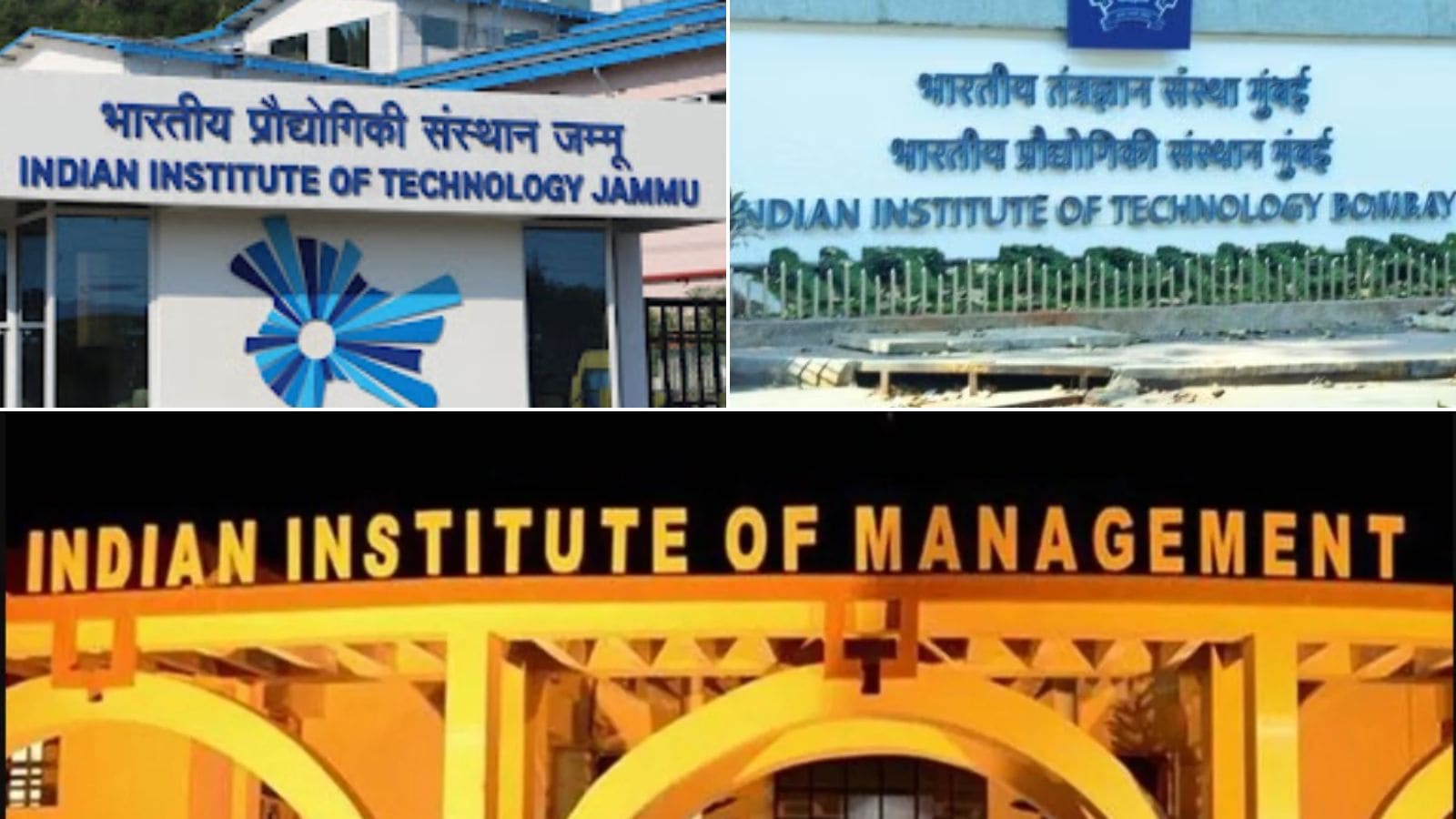
What began in 1994 with the founding of the Indian Institute of Technology (IIT) Guwahati on the banks of the Brahmaputra has since matured into a broader arc of institutional expansion. Today, Guwahati is not only home to the IIT but also the Indian Institute of Management (IIM), the All India Institute of Medical Sciences (AIIMS), the National Law University and Judicial Academy (NLUJA), and several national research centres. The city is slowly but surely carving out a reputation as a knowledge capital for the Northeast-one that has the potential to transform not only Assam but the wider region.
Yet, like all transitions, this one comes with challenges. Guwahati’s aspirations to be a knowledge city demand far more than the presence of marquee institutions. They require planning, civic foresight, and a deliberate integration of these centres of learning into the economic and cultural fabric of the city.
The IIT Spark
The establishment of IIT Guwahati marked a turning point for Assam. For decades, the Northeast had felt distant from India’s national imagination in higher education. While IITs in Kharagpur, Kanpur, or Bombay had produced generations of engineers and entrepreneurs, Assam’s brightest often had to leave for Kolkata, Delhi, or Bengaluru. The founding of an IIT in Guwahati was not just a gift of prestige; it was an act of recognition.
In three decades, IIT Guwahati has built a reputation for excellence in engineering and science research, particularly in areas such as nanotechnology, water resources, and energy. Its faculty and alumni are now counted in global academic and industry networks. Just as importantly, the institute has served as a magnet-attracting thousands of students from across India to Guwahati and gradually changing the city’s demographic and intellectual profile.
Beyond Engineering: The Expansion
The IIT alone, however, could not carry the burden of building an ecosystem. That expansion has come in waves. The opening of IIM Shillong in 2008 was followed a decade later by the decision to locate IIM Assam in Guwahati. Meanwhile, the setting up of AIIMS Guwahati addressed the long-felt need for advanced medical education and research in the Northeast.
In the legal field, the establishment of NLUJA in 2009 provided a pathway for nurturing lawyers, judges, and policy experts within the region, reducing dependence on metropolitan centres. Together, these institutions signify that Guwahati is no longer a peripheral outpost but a node in India’s map of higher education.
More recently, research clusters such as the Institute of Advanced Study in Science and Technology (IASST), the National Research Centre on Pig, and the Indian Council of Agricultural Research centres have created avenues for specialised research linked to the region’s unique ecology and economy.
The Urban Challenge
But Guwahati’s rise is not just about campuses and degrees. The bigger test lies in how the city itself adapts to its new role. Knowledge cities are not made by institutions alone; they are sustained by the urban ecosystem that surrounds them.
Bengaluru, Pune, or Hyderabad illustrate this well. Universities and research centres there thrived because the city offered the infrastructure, connectivity, and quality of life to retain talent. Young students became entrepreneurs because cities offered co-working spaces, start-up incubators, and cultural life beyond classrooms.
In Guwahati, this remains a pressing challenge. While the city has grown rapidly, it has done so unevenly. Traffic congestion, inadequate public transport, and periodic flooding highlight the fragility of its urban planning. For a knowledge economy to flourish, Guwahati must ensure that its civic infrastructure does not remain its weakest link. A student who comes to study in Guwahati should be able to see a future in the city, not just a temporary sojourn.
Promotional | North East Integration Rally
A Regional Role
There is also the question of how Guwahati positions itself within the Northeast. For all practical purposes, Guwahati has long been the region’s cultural and commercial hub. Its rise as a knowledge city could cement this role, turning it into a centre from which ideas, innovation, and trained professionals radiate outward into Nagaland, Mizoram, Meghalaya, Arunachal Pradesh, and Manipur.
But this requires a conscious commitment to inclusivity. It cannot be that Guwahati benefits while the surrounding states are left behind. One way to avoid this trap is by fostering collaboration between Guwahati’s institutions and universities in other Northeastern states-joint research programmes, student exchanges, and region-specific studies on environment, ethnic cultures, agriculture, and conflict resolution.
In other words, Guwahati’s institutions must not become ivory towers. They must remain rooted in the unique challenges of the Northeast: from ethnic diversity and ecological fragility to the geopolitics of sharing borders with China, Myanmar, and Bangladesh.
Knowledge and Economy
For Assam, the economic implications of a knowledge city are significant. The region has long been dependent on tea, oil, and coal, with limited industrial diversification. By fostering a knowledge economy-research, innovation, start-ups, biotech, IT services-Guwahati can reduce this dependence.
Already, there are promising signs. IIT Guwahati’s technology transfer initiatives, incubators, and tie-ups with industry are encouraging young graduates to turn ideas into enterprises. Similarly, the presence of IIM offers a platform for nurturing entrepreneurship and managerial talent locally, which in turn can benefit small businesses, tourism, and agriculture.
The challenge, however, is to create a pipeline that connects research with industry and policy. Too often in India, universities remain disconnected from real-world application. Guwahati has the opportunity to avoid this trap by building innovation corridors-linking academic institutions with industry clusters, start-up hubs, and government policy initiatives.
A Cultural Dimension
A true knowledge city is not measured by degrees alone. It is also measured by how it sustains culture, debate, and public life. Guwahati’s rise must therefore be accompanied by the nurturing of theatres, libraries, museums, literary festivals, and spaces for dialogue. The city has a proud tradition of cultural expression-from Jyoti Prasad Agarwala’s plays to Bhupen Hazarika’s music. This tradition must find new resonance in the context of a young, globally connected student community.
Moreover, as Guwahati grows as a magnet for students from across India, it must remain hospitable to diversity. Tensions between local and migrant populations, if left unaddressed, could erode the city’s inclusive ethos. A knowledge city thrives when it is cosmopolitan-when students from Chennai or Chandigarh feel as much at home as those from Shillong or Sivasagar.
The Road Ahead
Guwahati’s trajectory so far is promising but incomplete. To truly emerge as a knowledge city, several steps are critical:
1. Urban Infrastructure: Invest in transport, housing, and flood management so that the city can accommodate its growing student and professional population.
2. Research-Industry Linkages: Build stronger mechanisms to translate research into real economic value, particularly in biotech, renewable energy, agriculture, and IT.
3. Regional Collaboration: Ensure that Guwahati’s rise benefits the wider Northeast through institutional networks and joint programmes.
4. Cultural Investment: Expand cultural infrastructure to make the city attractive not only to students but also to scholars, artists, and entrepreneurs.
5. Policy Support: The state government must position Guwahati not merely as an administrative capital but as an intellectual capital-through incentives, scholarships, and start-up ecosystems
A City of Possibilities
Guwahati today stands at an inflection point. Its transformation into a knowledge city is not inevitable, nor is it guaranteed. It will require vision, investment, and above all, the imagination to see education not as an isolated sector but as the foundation of a new economy and a new civic culture.
For too long, the Northeast has been spoken of in terms of distance and neglect. Guwahati’s rise offers a chance to reverse that narrative. By becoming a city of ideas, Guwahati can prove that knowledge is not just power-it is the bridge between past neglect and future possibility.
If the Brahmaputra has for centuries been the lifeline of Assam’s physical geography, perhaps knowledge can now become the lifeline of its civic and economic future. The IIT was the spark, the IIM the next milestone. What Guwahati makes of this journey will determine whether it becomes just another university town-or truly India’s next great knowledge city.