

The Rathyatra is celebrated not only as a religious event but also as a cultural bridge, bringing together people of diverse backgrounds
 Sangram Datta
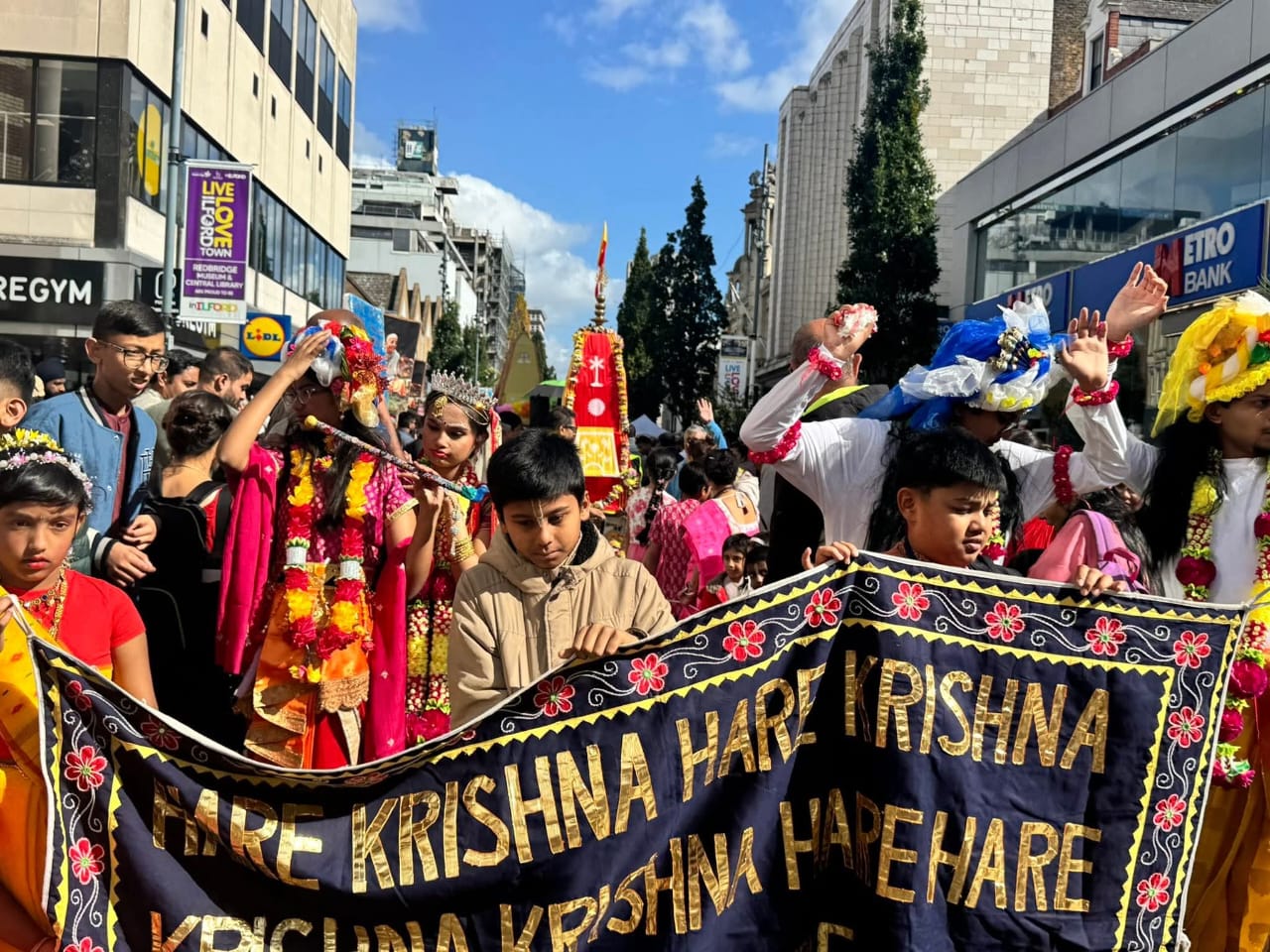
The vibrant streets of Ilford burst into life on Saturday, September 21, as the Jagannath Rathyatra festival, organised by the International Society for Krishna Consciousness (ISKCON), was celebrated with great splendour and devotion. The festival, often described as a moving temple on wheels, drew hundreds of devotees, residents, and curious onlookers who gathered to witness one of the most ancient and inclusive celebrations of Indian spiritual culture.
The celebrations commenced at 12 noon on September 21, with the ceremonial pulling of the ornately decorated chariot, marking the start of a day that blended spirituality, culture, and community spirit.
An Ancient Tradition in a Global City-
The Rathyatra, meaning “Chariot Festival,” traces its roots back thousands of years to the coastal city of Jagannath Puri in Odisha, India. The grand festival there is one of the largest of its kind in the world, drawing millions of pilgrims annually. Traditionally, the deities of Lord Jagannath (a form of Krishna), his elder brother Balabhadra, and his sister Subhadra are placed on massive wooden chariots and taken out of the temple to allow all devotees, regardless of status, to offer prayers.
This deep symbolism of accessibility and openness has made Rathyatra beloved across cultures. The term “Jagannath” itself translates to “Lord of the Universe,” highlighting the inclusivity of the celebration.
The festival was carried beyond India’s borders by His Divine Grace A.C. Bhaktivedanta Swami Srila Prabhupada, the Founder-Acharya of ISKCON. Since his arrival in the West in the 1960s, Rathyatra has been celebrated in major cities including London, New York, Paris, and Sydney. In the United Kingdom, the festival is now observed in around 30 different towns and cities every year, making it one of the most recognised South Asian cultural events in the country.
A Colourful Procession Through Ilford-
In Ilford, the day began at the Redbridge/Ilford Town Hall on September 21, where the beautifully decorated chariot awaited devotees. The air was filled with the fragrance of incense and the beats of traditional drums as men, women, and children gathered, dressed in colourful attire. Many wore traditional Indian clothing—saris, dhotis, and kurtas—while others donned casual outfits, symbolising the festival’s spirit of openness to all.
As the chariot began its journey along High Street, Ilford, devotees pulled the ropes with visible joy, chanting the Hare Krishna mantra in unison. The rhythmic sounds of mridangas (drums) and kartals (cymbals) created a lively atmosphere, while groups of dancers performed with energy and devotion. Passers-by stopped to capture photos and videos, with some even joining the procession spontaneously.
For many, the sight was both spiritual and cultural. “It feels like a piece of India has come to East London,” said Anil Patel, a local shopkeeper who has watched the festival for several years. “The colours, the music, the energy—it brings the whole community together.”
The procession eventually circled back to the Town Hall, where the celebrations continued well into the afternoon on September 21.
Cultural Festivities at the Town Hall-
From 1:30 pm to 5:00 pm on September 21, the Redbridge/Ilford Town Hall became a hub of cultural activity. A vibrant stage programme offered something for everyone—ranging from classical Bharatanatyam dance to modern drama performances, and even a light-hearted magic show that captivated children and adults alike.
The audience enjoyed devotional songs performed by both local artists and ISKCON musicians, with lyrics focusing on love, devotion, and peace. Children took part in recitals and short plays depicting episodes from Lord Krishna’s life, highlighting the festival’s role in passing traditions to younger generations.
A community feast (prasadam) was another highlight of the day. Rows of tables were set up, where volunteers served thousands of plates of vegetarian food prepared as an offering to Lord Jagannath. “Sharing food is sharing love,” said one of the organisers. “Prasadam is for everyone—no distinction of caste, culture, or religion.”
Festival of Unity and Devotion-
The Rathyatra is celebrated not only as a religious event but also as a cultural bridge, bringing together people of diverse backgrounds. Its inclusivity was evident in East London, where individuals of South Asian, African, Caribbean, and European heritage all participated.
“Jagannath means ‘Lord of the Universe’, and this festival reminds us that spirituality transcends boundaries of culture and background,” said Pushpita Gupta, a participant in the celebrations. “It is a day when everyone can come together in joy, devotion, and service.”
For ISKCON, the event is also an opportunity to spread messages of harmony and sustainability. Alongside festivities, volunteers distributed literature on spiritual living, vegetarianism, and yoga, encouraging healthier and more compassionate lifestyles.
A Celebration That Resonates Beyond Faith-
What sets Rathyatra apart is its universal appeal. Unlike many religious festivals confined to specific groups, Rathyatra is open to anyone willing to participate—whether by pulling the chariot, singing, dancing, or simply sharing a meal. Its symbolism of inclusivity and equality resonates deeply in a multicultural city like London.
Local councillors and community leaders also acknowledged the festival’s positive role in fostering unity. “Events like these showcase the best of London’s diversity,” remarked one Redbridge representative. “They remind us that our city thrives when we celebrate each other’s traditions.”
Global Festival, Local Joy-
As the sun set on Ilford on September 21, the echoes of devotional songs lingered in the air, leaving participants with a sense of fulfilment and joy. For many, the East London Rathyatra was not merely a cultural spectacle but a spiritual experience that reinforced values of peace, unity, and service.
From its origins in the temple city of Puri to the bustling streets of London, the Jagannath Rathyatra has become a truly global festival, cherished not only by devotees of Lord Krishna but also by people of all faiths seeking joy and togetherness.
The East London celebration on September 21 added another memorable chapter to that continuing journey—one where ancient tradition meets modern multiculturalism in a vibrant expression of devotion and community spirit.
Promotional | North East Integration Rally