


THE SHADOWED TITAN OF INDIA’S FREEDOM STRUGGLE
 KRC TIMES Desk
BIDHAYAK DAS PURKAYASTHA
A Birthday and a Legacy 6 September 1889, a sacred date in the history of Bengal. On this day was born a leader whose name still reverberates with unfulfilled dreams :Sarat Chandra Bose.
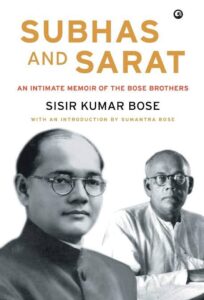
For the Bengali nation, his birth was not merely the arrival of an individual, but the rise of a national consciousness rooted in self-restraint, courage and resistance. Sarat Bose was not only the elder brother of Subhas Chandra Bose, but also his mentor, financier, strategist and guide. If Netaji became the firebrand who electrified masses, it was Sarat who provided the anchor, the shield and the structure behind him.
Revered as the spiritual son of Deshabandhu Chittaranjan Das, Sarat Bose was the golden leader of golden Bengal – my leader, your leader, a leader who revealed the past and showed the light of the future. From his legal battles in defence of revolutionaries to his political campaigns for a united Bengal, he embodied the uncompromising Bengali nationalist spirit.
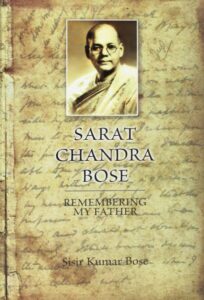
Yet, history has been cruel. Delhi sought to erase his memory. After Partition, Jawaharlal Nehru’s government kept him under 24-hour surveillance, generating 1,824 pages of IB reports in just two and a half years. In his last political battle of 1949, Sarat Bose thundered that “Delhi is destroying Bengal”, and the people of South Calcutta elected him over Nehru’s candidature. But in February 1950, Bengal lost this great son.
Today, as Bengal struggles to reclaim its own voice, Sarat Bose’s life reminds us that history is not merely about those who fought with the sword, but also about those who defended with the pen, the law and the sheer force of organisation.
This essay seeks to reclaim Sarat Bose’s rightful place – not as a shadow of Subhas, but as a Titan in his own right, the unseen architect of India’s revolution.
The Power Behind Netaji
The British secret police were unanimous in their assessment :Subhas was dazzling, but Sarat was dangerous.
Charles Tegart, the infamous colonial police officer who masterminded Bengal’s intelligence machinery, wrote of him :
- “The power behind his brother Subhas Chandra Bose,”
- “The real snake in the grass,”
- “A man whose activities, though less spectacular than those of his younger brother, were more subtly insidious and perhaps no less dangerous.”
To Tegart and his intelligence network, Sarat was not only a nationalist politician, but he was also the strategist who could turn passion into organisation, violent outbursts into sustainable networks, scattered revolutionaries into a formidable front. His ability to provide intellectual guidance, financial support and organisational legitimacy made him in their eyes, an adversary far more enduring than his charismatic younger brother.
The Lawyer of the Revolutionaries
One of Sarat Bose’s greatest contributions lay in the courtroom, where he became the defender of revolutionaries condemned as terrorists by the Raj. From the Chittagong Armoury Raid trials to numerous political prosecutions, Sarat stood as legal counsel whom the colonial power sought to crush.
Names like Surya Sen, Ananta Singha, Ganesh Ghosh, Lokenath Bal, PreetilataWaddedar and many others are forever grateful to him for his fearless advocacy. He was not a mere Barrister fulfilling professional duty but was also their guardian, financier and advocate in the widest sense.
- He exposed police excessesin court, turning trials into theatres of political resistance.
- His financial relief to the families of the accused revolutionaries ensuring that they are not broken economically in their odd periods of life, is really true-leadership.
- He influenced the press, making sure the revolutionaries cause was sympathetically portrayed in the public sphere.
- He brought revolutionaries into mainstream nationalist politics, fusing the underground with the overground struggle.
The British were infuriated. IB reports accused him of nurturing “the cult of the revolver” and glorifying “political assassinations”. To defend revolutionaries was one thing, but to transform them into respected national heroes was, for the Raj, intolerable.
A Real Headache for the Raj
Sarat Chandra Bose was not feared without reason. His activities created constant nightmares for the colonial establishment :
- Courtroom Battles : He turned the Raj’s trials into public embarrassments, exposing its illegitimacy.
- Financial Networks : He waslinked to the nationalist enterprises such as the Bengal Insurance and Real Property Company, suspected of secretly funding underground activity.
- Press and Propaganda : Through newspapers like Forward, he gave voice to suppressed nationalist narratives.
- United Front Politics : As President of the Bengal Congress, he built alliances between moderates, radicals and revolutionaries.
- Netaji’s Escape (1941) : When Subhas staged his daring flight from house arrest, Sarat was accused of facilitating it. His arrest thereafter underscored the British fear of his role in enabling his brother’s movements.
Tagert’s assessment sums it up :Sarat was not the man of the revolver, but the man who made the revolver’s cause respectable.
The Two Brothers : Fire and Flame
The Bose brothers embodied two complementary dimensions of India’s struggle :
- Subhas Chandra Bose : The electrifying orator, mass mobilizer and revolutionary who believed in armed struggle.
- Sarat Chandra Bose : The strategist, organiser, barrister and institution-builder who ensured the underground and overground wings of nationalism worked in tandem.
They were not rivals but partners. Subhas openly acknowledged his debt to Sarat’s guidance and resources, while Sarat respected Subhas’s daring spirit even when he disagreed with specific choices – such as aligning with Axis Powers. In fact, both the brothers loved and respected each other to the fullest. Together they were parallel titans – one is the lightning, the other is the steady flame.
The Visionary of United Bengal
Even in the final decade of colonial rule, Sarat Bose’s imagination defied boundaries. In 1946, with Huseyn Shaheed Suhrawardy, he advanced the radical idea of a United – Independent Bengal – a sovereign state that would avoid partition along communal lines.
The proposal, signed on 20 May 1947, included :
- Bengal to be a sovereign state, free to decide its relation with India.
- Universal adult suffrage for elections, with seats reserved proportionately for Hindus and Muslims.
- A Balanced Cabinet, with equal members of Hindus and Muslims. Prime Minister from the Muslim community and Home Minister from the Hindu side.
- Equal Distribution (50-50) of army, police and administrative jobs between the two communities, reserved for Bengalis alone.
This was in effect, the last practical initiative for a united India. Though it ultimately failed, it revealed Sarat’s extraordinary vision to rise above communal politics.
After partition he went further – proposing a United States of South Asia, a stretching from Afghanistan to Burma, based on linguistically autonomous republic. He even held meetings in Burma and corresponded with leaders across the region, many of whom responded very positively. It was a dream far ahead of its time.
Political Battles in Free India
After independence, Sarat continued his struggle – now against the dominance of Delhi over Bengal. He warned repeatedly that Bengalis, especially in West Bengal, were yet to grasp the extent of political, social and economical subjugation forced upon them by partition.
In June 1949, contesting the South Calcutta seat against Nehru’s Congress candidate, he campaigned under the banner of Bengali unity. His slogan was unflinching : “Delhi is destroying Bengal.” Bengalis rallied with him and he won the seat with a resounding victory.
But his independent stance made him inconvenient. Surveillance did not end with British rule. Between 1947 and his death in February 1950, the IB compiled a staggering 1,824 pages of secret reports on Sarat Bose – proof that he remained as feared by Nehru’s India as he had been by the British Raj.
Why Sarat Bose Remains in the Shadows
- Spectacle Vs. Subtlety : Subhas’s dramatic career and mysterious death (if at all) made him a legend. Sarat’s work grounded inlaw and institutions, lacked the same mythic aura.
- Historiographical Bias : Indian historiography has celebrated charismatic leaders and martyrs, often sidelining strategists and organisers.
- Political Inconvenience : Sarat’s advocacy for United Bengal and his criticism of Delhi’s centralism were uncomfortable truths for post-independence politics.
Thus, while the Raj saw Sarat as a nightmare, free India chose to remember him only as Netaji’s elder brother, not as the Titan he truly was.
Reclaiming of the Shadowed Titan
The history of India’s liberation is incomplete without Sarat Chandra Bose. To revolutionaries, he was a defender and benefactor. To Subhas, he was a mentor and anchor. To the British, he was the “most dangerous opponent” in a barrister’s robe. To free India, he was a prophet silenced too soon.
If Subhas symbolises the lightning strike of rebellion, Sarat represents the steady enduring flame that kept the fire alive. Together, they embody a fuller truth of India’s freedom, passion and planning, sword and pen, fire and light.
It is time, at long last, to lift Sarat Bose out of the shadows – to honour him not as a mere shadow of Subhas but as a Titan in his own right, the unseen architect of a revolution that redefined a nation.
Promotional | North East Integration Rally