


A New Chapter in Tariff Tensions, Diplomatic Balance,and Global Trade Equations
 KRC TIMES Desk
Kishan Bhawnani
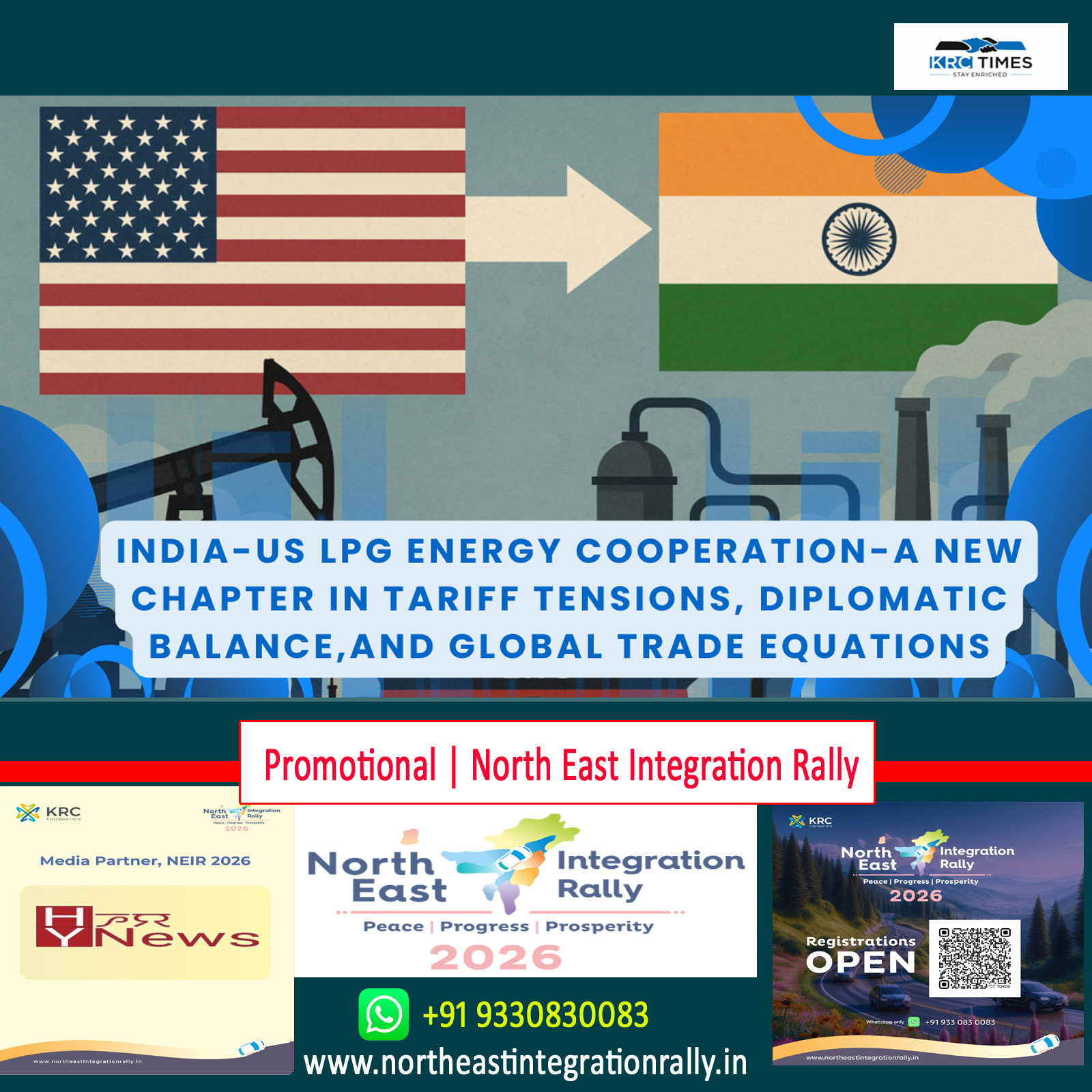
Gondia-The new agreement between India and the US on energy trade, particularly in the field of LPG (liquefied petroleum gas), is not only economically significant but also reflects geopolitical dynamics, tariff wars, access to agricultural markets, and the changing framework of global tradepolicies In recent years,India-US relations have witnessed periods of cooperation and tension,especially after former USPresident Donald Trump increased tariffs on several Indian products.
In such a scenario, this massive LPG import agreement, signed for one year, is being considered a positive step in bilateral relations.I,Advocate Kishan Sanmukhdas Bhawnana, Gondia, Maharashtra, believe that while this agreement covers only 10 percent of India’s total annual needs, its diplomatic language and strategic message are much greater.
India is ensuring domestic energy security, while the United States is gaining new technological and commercial entry into the Indian market.Furthermore, this agreement is being seen as a signal of a potential future trade deal, tariff reduction, and improved India-US relations.

Friends, if we consider “Made in America” ?LPG in Indian Kitchens: A New Dimension of Energy Security and Trade,” India is among the countries with the fastest- growing domestic LPG usage. Currently, approximately 90 percent of Indian households use LPG, and 65 percent of this LPG is imported. Only 35 percent of India’s domestic needs are produced domestically.
Therefore, it was strategically imperative for India to add new sources of LPG imports to diversify its energy supply chain and reduce supply risks.The United States is the world’s largest producer of shale gas and is seeking to expand its energy exports In this context, India’s one-year agreement to import 2.2 million tons of LPG from the United States is not only commercial but also strategic.
This agreement gives the United States its first real entry into the Indian energy market.The United States has long wanted India to open its market to its agricultural products, particularly wheat, corn, soy, and dairy.
However, India has consistently resisted this move, citing the sensitivity of the agricultural sector and the livelihoods of millions of farmers.As a result, the US, indignantly, raised tariffs on Indian products by up to 50 percent. Now, the LPG agreement provides the United States with a “small but significant economic entry,” which is likely to ease the Trump administration’s trade tensions and move toward larger agreements in the future.

Friends, if we consider the India-US LPG Agreement: A One-Year Contract, But a Foundation for Broader Future Trade Cooperation, the new deal will see India purchase approximately 2.2 million tons of LPG from the United States. This volume represents only 10 percent of India’s annual LPG consumption, but its international political and economic significance is far greater.
Why is this agreement significant? This is the first time the United States is directly entering India’s domestic energy market. This agreement is for one year, but it is being considered the backdrop for a larger, long-term agreement.
Amid tariff disputes, this is a step toward restoring trust between the two countries.This indicates that India now wants to further secure its energy supply chain with Western countries, especially the United States.
This deal could usher in a new era of cooperation between India and the United States, where the US will increase energy exports and India will diversify its import sources. India has also sent a message that it will allow the US access to its market, but not in sensitive sectors like agriculture.
Friends, let’s discuss India’s Growing LPG Imports: Domestic Energy Policy, Ujjwala Yojana, and Dependence on Gulf Countries. To understand this, LPG use in India has increased rapidly over the past decade.

The biggest reason for this is the government’s Pradhan Mantri Ujjwala Yojana,under which millions of poor families were provided subsidized LPG connections. This has also led rural and low-income families to switch to safer cooking fuel. India’s Major LPG Import Sources (2024): UAE – 8.1 million tons; Qatar – 5 million tons; Kuwait and Saudi Arabia are important suppliers.
These figures clearly demonstrate India’s significant LPG supply dependence on the Gulf region. Given geopolitical tensions, wars, threats to shipping routes, and price fluctuations, India needed new import sources. In this context, importing LPG from the US is a strong step towards India’s energy supply security.
Furthermore, this agreement sends a message that India wants to rebalance its relationship, despite the Trump administration’s tariffs on Indian agricultural products.This deal also indicates that despite the US’s tariff hikes, both India and the US will remain major markets for each other. India is a major hub for energy exports and other technological deals for the US.
Friends,let’s discuss:Will the LPGagreement pave the way for a trade deal?Tounderstand the potential shift in the Modi-Trump equation, the natural question is: Can this LPG agreement pave the way for a comprehensive trade deal between India and the US?

According to experts and diplomats, this has three key implications: (a) The beginning of trust restoration – Distrust between the two countries had increased following tariff disputes, agricultural market tensions, and US displeasure over energy purchases from Russia.
This LPG agreement is being seen as the beginning of a return of trust. (b) Limited US access to the Indian market – To mitigate the disappointment of not being able to enter the Indian agricultural sector, the US gained access to the energy sector.
This is a strategically balanced policy. India did not open the agricultural market, but struck a deal in a non-sensitive sector like LPG. This is a preparation for future major trade agreements. (c) The practical aspect of the Modi-Trump equation – Trump and Modi have had a strong personal relationship in the past, but Trump’s policy on global trade has always been “America First.”
Trump repeatedly stated that India is a “high-tariff nation.” Now, this agreement by India indicates that the Modigovernment is willing to reduce tariff tensions and expand energy-based economic partnerships with the US. Many analysts believe that this deal could lead to future tariff eliminations, new regional cooperation, and possibly a new free trade agreement (FTA)-like structure.

Friends, if we consider the US tariffs on energy purchases from Russia and the possibility of a return to normal US-India trade, in August 2025, the US imposed an additional 25 percent tariff on India for purchasing energy from Russia, bringing the total tariff to 50 percent.
This move was a way for the US to exert geopolitical pressure. They hoped that India would reduce energy imports from Russia. However, India made it clear that its energy security is a priority and that it will determine its import policy based on its interests.
Now, following the LPG deal, it is possible that: the US will reduce the additional tariffs imposed on India; normal trade relations between the two countries will be restored; energy trade cooperation will reach new highs. Experts believe that this deal also carries a bilateral political message: India will continue to purchase energy from Russia, but is also ready to strengthen energy ties with the US. India has reaffirmed its policy of global balance, “multi-dimensional trade and balanced diplomacy.”
Therefore, if we study and analyze the entire above narrative, we will find that the LPG agreement is not just about energy trade, but also signals a shift in bilateral relations. The India-US LPG agreement is not just a trade deal. It is also a story of global trade structure, tariff tensions, energy security, and diplomatic balance between major economies.
This deal indicates that: India wants to diversify its energy policy, the US wants to increase access to the Indian market, and both countries are ready to move forward, leaving tariff tensions behind. This agreement could be a step towards a stronger India-US trade partnership, a potential new trade deal, and a more relaxed tariff policy in the long run.In the coming years, this LPG deal could prove to be an important milestone in energy cooperation, strategic balance, and the India-US equation in global trade.