

A city that knows how to move, how to adapt, and how to stay essential in a region defined by change
 North East Integration Rally

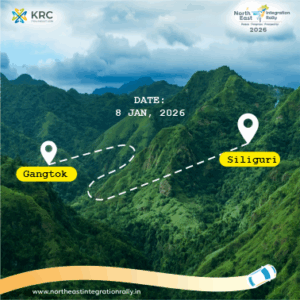
The NEIR 2026 touches Siliguri en route to other places (Kokrajhar, among others) on the 8th of January. We know that Siliguri is known for tea, timber and tourism. Siliguri doesn’t wait for you to warm up to it. The city comes at you fast—traffic, markets, flyovers, tea gardens, army convoys, students, traders, buses heading toward the hills, the plains, the borders.
You stand in the middle of it all and realise this isn’t a place that grew for beauty. It grew for purpose. And that purpose has shaped everything about its character.
Here’s the thing. Siliguri isn’t defined by what it looks like. It’s defined by what it connects. This city is a hinge that links the Northeast, the plains of Bengal, the hills of Darjeeling and Kalimpong, the Dooars, Sikkim, Nepal, Bangladesh, even Bhutan through trade routes and shared histories.
You feel that the moment you step into its rhythm. Everyone here is either going somewhere, coming from somewhere, or carrying stories shaped by movement.
Start with geography. Siliguri sits at the edge of the Terai, where the land is flat enough to breathe but close enough to the mountains to feel their shadow. The Mahananda River cuts through the city, sometimes calmly, sometimes with a monsoon temper.
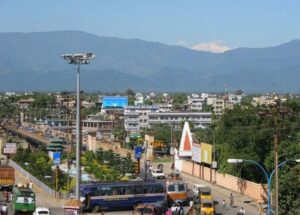
The Coronation Bridge, not far away, feels like a gate to the hills. On a clear day, the outline of the Himalayas appears faintly above the skyline, reminding you that the hills are never too far, even when the city feels overwhelmingly urban.
The place grew because it had to. Partition pushed trade routes eastward. The emergence of Sikkim and North Bengal as tourism centres increased its importance. The opening of international borders, the expansion of the Indian Army’s presence, the rise of tea and timber industries—all of these forces pulled Siliguri outward. The city didn’t expand through planning. It expanded through necessity.
What this produced is a city with layers that don’t blend neatly. Hill culture sits next to plains culture. Nepali rubs against Bangla, Hindi, Marwari, and languages shaped by migration. You can see it in the markets.

Hong Kong Market carries everything from cheap electronics to imported clothes that somehow made their way through Nepal or Bangladesh. Bidhan Market sells everything from local produce to hill spices. Sevoke Road feels like a different city altogether—wide, busy, and modern with malls, multiplexes, and restaurants that cater to a growing middle class.
Walk deeper into the residential neighbourhoods and the pace shifts. Pradhan Nagar, Ashram Para, Hakimpara, Deshbandhu Para—each pocket has its own identity. Old houses, narrow lanes, families who’ve lived here for generations, shops that haven’t changed in decades. Siliguri isn’t trying to become a metro. It’s becoming something else—a hybrid city shaped by transit, commerce, and the constant negotiation between old and new.
The tea gardens around the city remind you of what the region once was. Some are active, some struggling, some slowly giving way to development. Drive through them early in the morning and the mist still hangs low.
Workers move in small groups, plucking leaves with the same practiced precision that has defined the region’s economy for more than a century. The tea gardens don’t just decorate Siliguri. They frame its history. They explain why labour politics matter here. They reveal how dependent the region still is on global markets.
Then there’s the wildlife corridor. The city sits dangerously close to elephant pathways that connect forests across North Bengal. Anyone who has lived here long enough has heard stories of elephants walking through outskirts like Naxalbari or Matigara at night. This uneasy relationship between expanding urban life and shrinking wild spaces defines much of Siliguri’s environmental tension.
But the heart of Siliguri is its crossroads nature. Buses to Gangtok, Darjeeling, Kalimpong, Jaigaon, Cooch Behar, Guwahati—they all begin here. The New Jalpaiguri railway station (NJP) is one of the busiest in eastern India.
Bagdogra Airport lies just outside the city, pulling in travellers heading toward the mountains. You stand at NJP and see pilgrims going to Bhutan, trekkers heading to Sandakphu or Dzongu, families from Assam stopping for a night, army officers preparing to move toward forward areas, migrant workers on their way to Delhi or Punjab.

This constant churn shapes the city’s economy. Hotels thrive because people rarely stay long. Transport companies dominate entire stretches of the city. Cafes fill with students from nearby colleges and coaching centres who treat Siliguri as their stepping stone toward bigger dreams.
Small eateries run by Nepali, Tibetan, Bengali, and North Indian families feed the city’s hunger at all hours. You’ll find momo stalls next to dosa counters, and noodle bars sitting comfortably beside shops selling litti-chokha. Siliguri doesn’t choose a single identity. It takes all of them.
Here’s what people often miss. Siliguri may feel chaotic, but beneath the noise is a kind of order that works on its own logic. Traffic looks wild, but drivers follow an unspoken rhythm shaped by years of adjusting to bad roads, sudden rains, and unpredictable movement of trucks and army vehicles.
Markets seem messy, but traders know exactly where everything is and how fast it moves. Residents complain about infrastructure, but they also know the city’s growth came faster than any planning department could handle.
The city carries anxieties too. Flooding is a real concern. Rapid construction strains drainage systems. The pressure on public services grows every year. The border economy brings opportunity but also tension. Illegal trade isn’t a secret. Political movements from the hills often spill into the city. And yet Siliguri continues to hold its ground, partly because people here are used to navigating uncertainty.

Still, the city isn’t all transit and commerce. Look closer and you’ll find moments of calm that make the place feel unexpectedly intimate. Morning walkers crowd into Surya Sen Park. Families take evening strolls along Sevoke Road.
Students gather at tea stalls near North Bengal University debating everything from football to films. In winter, the city softens. The fog settles low. The markets fill with oranges from the hills and vegetables from the Dooars. Even the traffic seems to pause.
What this really means is that Siliguri isn’t a city you admire from a distance. You understand it only when you move through it. It’s a place made by footpaths, bus stands, railway stations, tea gardens, riverbanks, border routes, and the relentless everyday energy of people who keep the city in motion.
Siliguri is the city that holds North Bengal together. It’s the connector, the messenger, the passageway, the marketplace, the waiting room, the dispatch centre, the threshold between plains and mountains. It doesn’t pretend to be picturesque. It doesn’t need to be. Its identity comes from purpose, resilience, and the sheer volume of life that passes through it every hour.
And once you spend time here—really spend time, not just pass through—you begin to see the city not as a stopover, but as a force. A place that shapes journeys long before people realise it. A city that knows how to move, how to adapt, and how to stay essential in a region defined by change.
Promotional | North East Integration Rally