Rare Registration-Route Case
 KRC TIMES Barak Valley Bureau

Silchar : In a rare case under the Citizenship Amendment Act (CAA), a 40-year-old woman from Sribhumi district, who entered India from Bangladesh in 2007, has been granted Indian citizenship, officials and legal experts said on Friday. Along with her, a 61-year-old man from Cachar district has also received citizenship under the Act.
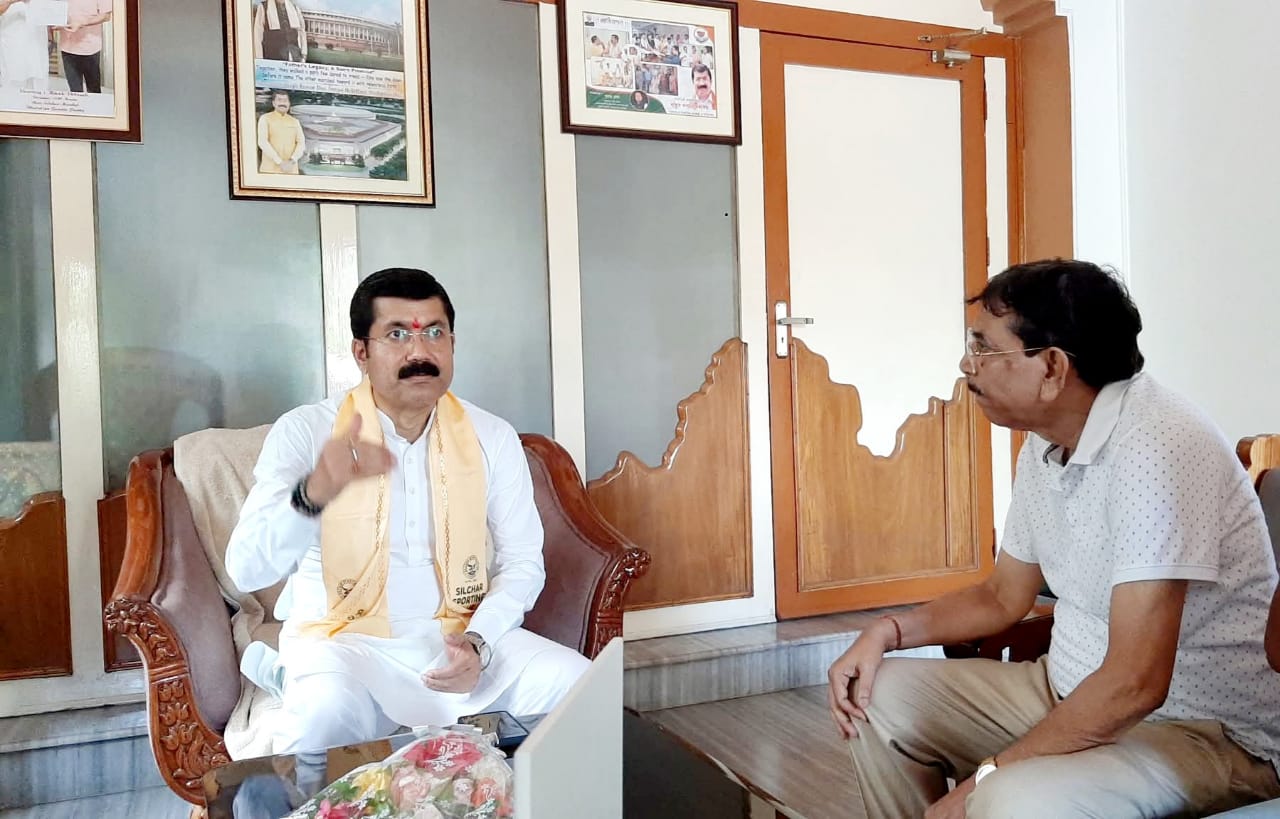
Senior advocate Dharmanand Dev, a former member of the Foreigners’ Tribunal in Silchar, confirmed that the Union Ministry of Home Affairs issued citizenship certificates to both beneficiaries on Friday. As per legal provisions, citizenship in such cases is deemed effective from the date of entry into India. The identities of the two individuals have been withheld due to concerns over possible social and personal repercussions.
Legal experts described the woman’s case as particularly significant, noting that citizenship granted through the registration route under the CAA is extremely rare in Assam. According to Dev, the woman, who uses the surname Banerjee, entered India in 2007 when she accompanied a relative to Silchar Medical College and Hospital for medical treatment.

During her stay, she met a local resident of Sribhumi district, whom she later married. The couple eventually settled permanently in Assam and have a son. Her extended family continues to reside in Chattogram, Bangladesh.
After the notification of the CAA rules, she applied for citizenship in July this year. However, her first application was rejected due to administrative complications linked to the delimitation exercise conducted ahead of the Lok Sabha elections.
Parts of the Badarpur area, where she resides, were reassigned from Sribhumi district to Cachar district, leading to jurisdictional confusion. After rectifying the discrepancies, she reapplied, and the application was subsequently approved.
Dev said citizenship was granted under Section 5(1)(c) of the Citizenship Act, 1955, read with Section 6B, which allows a foreign national married to an Indian citizen to acquire citizenship through registration after seven years of continuous residence in India. He added that while overall approvals under the CAA in Assam have been limited, cases granted through the registration route are even fewer.
The second beneficiary, a resident of Silchar city, entered India from the Srimangal area of Bangladesh’s Moulvibazar district in 1975 at the age of 11. Born in 1964, he later married in Silchar and established his life in Assam. His citizenship has been granted through the process of naturalisation.

With these two approvals, only four individuals in Assam have so far received citizenship under the CAA despite having entered India after the March 25, 1971 cut-off date. Dev said that over the past 18 months he has assisted nearly 25 applicants, though most applications remain pending or have been rejected.
The CAA, enacted on December 11, 2019, had triggered widespread protests across Assam. Since the notification of its rules, around 40 people in the state have applied under the Act.
The law provides a pathway to citizenship for Hindu, Christian, Buddhist, Sikh, Jain and Parsi migrants from Bangladesh, Pakistan and Afghanistan who entered India between March 25, 1971, and December 31, 2014.
Despite nearly two lakh people in Assam still being categorised as “doubtful citizens,” the number of CAA applicants remains low. Chief Minister Himanta Biswa Sarma has repeatedly stated that the majority of Hindu migrants entered Assam before 1971.
Reactions to the development have been mixed. Senior Gauhati High Court advocate and Congress leader Hafiz Rashid Ahmed Choudhury questioned the effectiveness of the CAA, arguing that it has failed to offer meaningful relief to persecuted Hindus, particularly in the context of recent developments in Bangladesh.
Former Hojai MLA and senior BJP leader Shiladitya Dev, however, welcomed the move, calling it a positive outcome of the Act that could encourage eligible members of persecuted communities to apply. Rajya Sabha MP Sushmita Dev criticised what she described as inconsistent implementation of the CAA, alleging that while citizenship certificates are being openly distributed in some states, the process in Assam remains muted and opaque.
Highlighting procedural delays, Dharmanand Dev urged authorities to streamline the functioning of the state-level empowered committee and adopt a more sensitive, time-bound approach to ensure timely relief for genuine applicants.