

Supreme Court Urged to Recognise Racial Slurs as Hate Crimes
 KRC TIMES Manipur Bureau
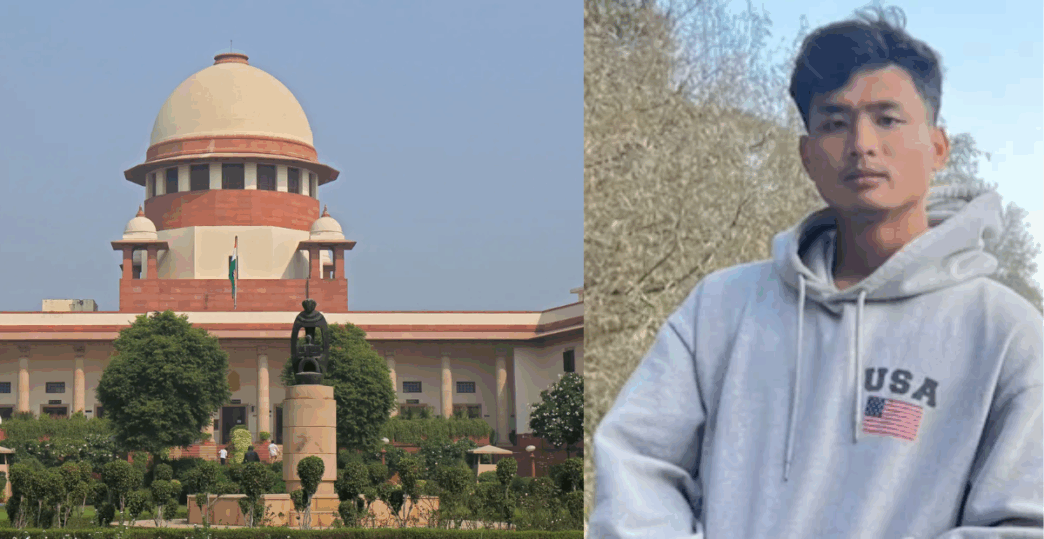
NEW DELHI : The death of a 24-year-old MBA student from Tripura following an alleged racially motivated assault in Dehradun has prompted a public interest litigation in the Supreme Court, seeking formal legal recognition of racial slurs and racially targeted violence as hate crimes in India.
The petition was filed after Anjel Chakma succumbed to his injuries on December 26, more than two weeks after he was stabbed during an altercation in the Selaqui area of Uttarakhand’s capital on December 9. Chakma, who belonged to India’s north-eastern region, had been undergoing treatment for severe neck and spinal injuries and remained unconscious throughout his hospitalisation.

Filed under Article 32 of the Constitution by petitioner Anoop Prakash Awasthi, the plea alleges a systemic failure by the state to prevent, recognise and effectively prosecute racial violence against citizens from the North-East. It urges the apex court to intervene in what it describes as a recurring pattern of discrimination, assault and impunity faced by people from the region in several parts of the country.
According to accounts cited in the petition, Chakma and his younger brother were shopping when a group of men allegedly subjected them to racial abuse based on their physical appearance. The confrontation escalated into violence, during which both brothers were beaten and stabbed. While the younger brother survived, Anjel Chakma sustained critical injuries that ultimately proved fatal.
The petition argues that India’s criminal justice framework does not currently recognise racial bias as an aggravating or defining element of an offence at the stage of investigation. As a result, crimes motivated by racial prejudice are registered and prosecuted as routine offences, stripping them of their constitutional and social gravity, the plea contends.
“This absence of legal recognition leads to diluted accountability and fosters a culture of impunity,” the petition states, adding that victims from the North-East are left without adequate institutional protection or acknowledgement of the specific nature of the harm inflicted upon them.

Drawing attention to earlier incidents, including the 2014 killing of Arunachal Pradesh student Nido Taniam in Delhi and multiple reported attacks on north-eastern students and workers in metropolitan cities, the plea notes that the Union government has repeatedly acknowledged the issue in responses to Parliament. Despite this, it argues, no comprehensive legislative or institutional framework has been put in place to address racially motivated violence.
The petition also highlights gaps in the recently enacted Bharatiya Nyaya Sanhita, 2023 and the Bharatiya Nagarik Suraksha Sanhita, 2023, pointing out that neither statute contains provisions recognising hate crimes or racial offences as distinct legal categories. Police officers are not mandated to record bias motivation while registering first information reports (FIRs), nor are there specialised investigative protocols or victim-support mechanisms for such cases.
According to the petitioner, this legislative vacuum violates fundamental rights guaranteed under Articles 14, 15, 19 and 21 of the Constitution and undermines the constitutional principle of fraternity enshrined in the Preamble.
The plea seeks a range of directions from the Supreme Court, including the formulation of interim guidelines to be followed until Parliament enacts specific legislation on hate crimes. Among its key demands are the recognition of racial slurs as a distinct category of hate crime with prescribed punishments, and the establishment of nodal agencies at both Central and state levels to register, monitor and respond to racially motivated offences.
It also calls for the creation of specialised police units in every district and major metropolitan area to investigate such crimes, as well as structured victim-protection and witness-support mechanisms. In addition, the petition urges the court to direct educational institutions to organise workshops, seminars and public debates to promote awareness, social harmony and respect for India’s ethnic and cultural diversity.
The Supreme Court is expected to consider whether to admit the plea in the coming days, amid growing calls for stronger legal safeguards for people from the North-East living and working across the country.
Promotional | North East Integration Rally