The Death of Anjel Chakma and India’s Unfinished Reckoning with Prejudice
 KRC TIMES Desk
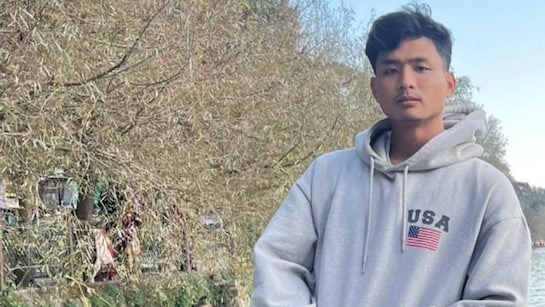
The death of Anjel Chakma, a young student from India’s NorthEast, is not merely a personal tragedy confined to one family or one city. It is an unsettling mirror held up to Indian society, forcing a reckoning with how difference-of appearance, region, and identity-is perceived and treated in everyday life.
Beyond the legal process that will determine in- dividual culpability, Anjel’s death raises a larger, more uncomfortable question: how safe and accepted do Indians from marginalised regions truly feel when they step outside their home states in pursuit of edu- cation and opportunity?
Anjel Chakma had travelled from Tripura to Dehradun, Uttarakhand, to enrol in an MBA programme-an aspiration shared by thousands of young Indians who leave familiar surroundings each year to study, grow, and build careers.
His journey reflected the promise of a modern, mobile India, where education is meant to transcend geography and where opportunity is not confined by birthplace. Yet that promise was violently interrupted. Friends and classmates remember Anjel as quiet, diligent, and focused on his studies.
Like many students studying far from home, he was navigating the challenges of a new city-different social norms, languages, food habits, and a cultural atmosphere unfamiliar to someone from the North-East. Such transitions are rarely easy, particularly for students encountering them for the first time.
They require resilience, adaptability, and, crucially, a degree of acceptance from the host environment. On the evening of December 9, 2025, Anjel and his brother were reportedly involved in an altercation near their residence in Dehradun. What began as a dispute escalated into violence, leaving Anjel grievously injured. Despite medical intervention, he succumbed to his injuries.

The news sent shockwaves through student communities, particularly among those from the North-Eastern states who have long spoken of feeling vulnerable, misunderstood, or unwelcome in parts of mainland Indi As investigations continue, it is vital to separate the legal facts of the case from the broader social questions it provokes. Justice, in the narrow sense, will depend on courts and due process. But justice, in its deeper sense, requires society to con- front the conditions that allow prej- udice-sometimes subtle, sometimes overt-to fester.
At the heart of this tragedy lies an enduring problem: bias rooted in physical appearance and regional identity. For many from the North-East, discrimination rarely announces itself loudly. More of- ten, it emerges in quieter, corrosive forms-assumptions, stereotypes, ca- sual jokes, intrusive questions, or the persistent suggestion that one is somehow an outsider. Questions such as “Where are you really from?” or being mistaken for a foreign na- tional may seem trivi- al to some, but repeated over time, they erode a person’s sense of be- longing.
These experiences are not isolat- ed. Students and professionals from the North-East have long recounted feeling compelled to explain their Indianness, justify their presence, or endure comments about their looks, accents, or food habits. Even when not accompanied by physical violence, such daily encounters cre- ate emotional fatigue and social distance. In unfamiliar environments, they can foster insecurity and isolation.
Educational hubs like Dehradun attract students from across the country, creating spaces of remarkable diversity. Yet diversity, by itself, does not guarantee inclusion. Without sensitivity and mutual respect, difference can become a source of unease rather than enrichment. For students living away from home, academic challenges are often com- pounded by the pressure to adapt so- cially while protecting their dignity.
Anjel Chakma’s death under- scores a reality that is often over- looked: students require more than classrooms and degrees. They need emotional safety, social support, and an environment where difference does not translate into vulnerability. Educational institutions, host communities, and local administrations all share responsibility in creating such conditions. In the days following the incident, candlelight vigils were held in several cities.

These gatherings were marked not by rage, but by grief and solidarity. Participants remembered Anjel not as a statistic or a headline, but as a young man with aspirations, family ties, and an unfinished future. The tone of these assemblies reflected a collective desire for understanding rather than retaliation-a recognition that anger alone cannot heal deep social fractures.
Educators, activists, and social commentators have since emphasised the role of early education and socialisation in shaping attitudes towards difference. Prejudice is rarely innate; it is learned, absorbed, and normalised through social cues. Schools and universities therefore occupy a crucial space in nurturing empathy, cultural awareness, and respect for diversity.
Curricula that engage meaningfully with India’s regional histories and social complexities can help dismantle ignorance before it hardens into bias. India prides itself on being one of the world’s most diverse societies. Its national identity is built from a mosaic of cultures, languages, ethnicities, and traditions-stretching from the North-East to the southern peninsula, from coastal belts to hill regions.
Yet diversity also imposes responsibility. It demands listening rather than assuming, learning rath- er than stereotyping, and engaging rather than dismissing. The loss of Anjel Chakma compels society to ask an uncomfortable but necessary question: are existing ef- forts enough to ensure that every In- dian feels equally accepted, regard- less of appearance or origin? Laws alone cannot answer this.
While le- gal safeguards are essential, social attitudes ultimately shape everyday experiences. Preventing such tragedies requires sustained social awareness. Conversations about diversity must extend beyond symbolic gestures and enter daily interactions-in class- rooms, hostels, neighbourhoods, and workplaces. Institutions can help by fostering intercultural dialogue, establishing support systems for students from different regions, and responding swiftly and sensitively to complaints of harassment or dis crimination. Host communities, too, stand to gain from greater exposure to India’s internal diversity.
Simple acts-respectful language, curiosity without intrusion, patience with difference-can significantly reduce misunderstanding. Inclusion is not an abstract ideal; it is practiced in small, everyday choices. It is important that Anjel Chakma’s death does not become a catalyst for further division. Blame and counter-blame risk obscuring the deeper issue: the need to cultivate a society where difference does not provoke fear or hostility.
Tragedies often reveal hidden weaknesses within social structures, but they also offer an opportunity for reform. Remembering Anjel should therefore mean more than mourning. It should inspire a commitment to human dignity, empathy, and shared responsibility. His life, though brief, reflects the aspira- tions of countless young Indians who leave home with hope and de- termination.
Honouring his mem- ory means ensuring that future students can pursue education without fear of isolation, prejudice, or harm. National unity is not sustained by slogans or symbols alone. It is measured in everyday interactions-by how citizens treat one another in streets, campuses, and communities. When respect becomes habit- ual and understanding instinctive, tragedies rooted in prejudice can be prevented. The death of Anjel Chakma is a reminder that every life matters, and that building a truly inclusive India remains an unfinished taskone that demands effort, empathy, and continuous learning from all.
Promotional | North East Integration Rally