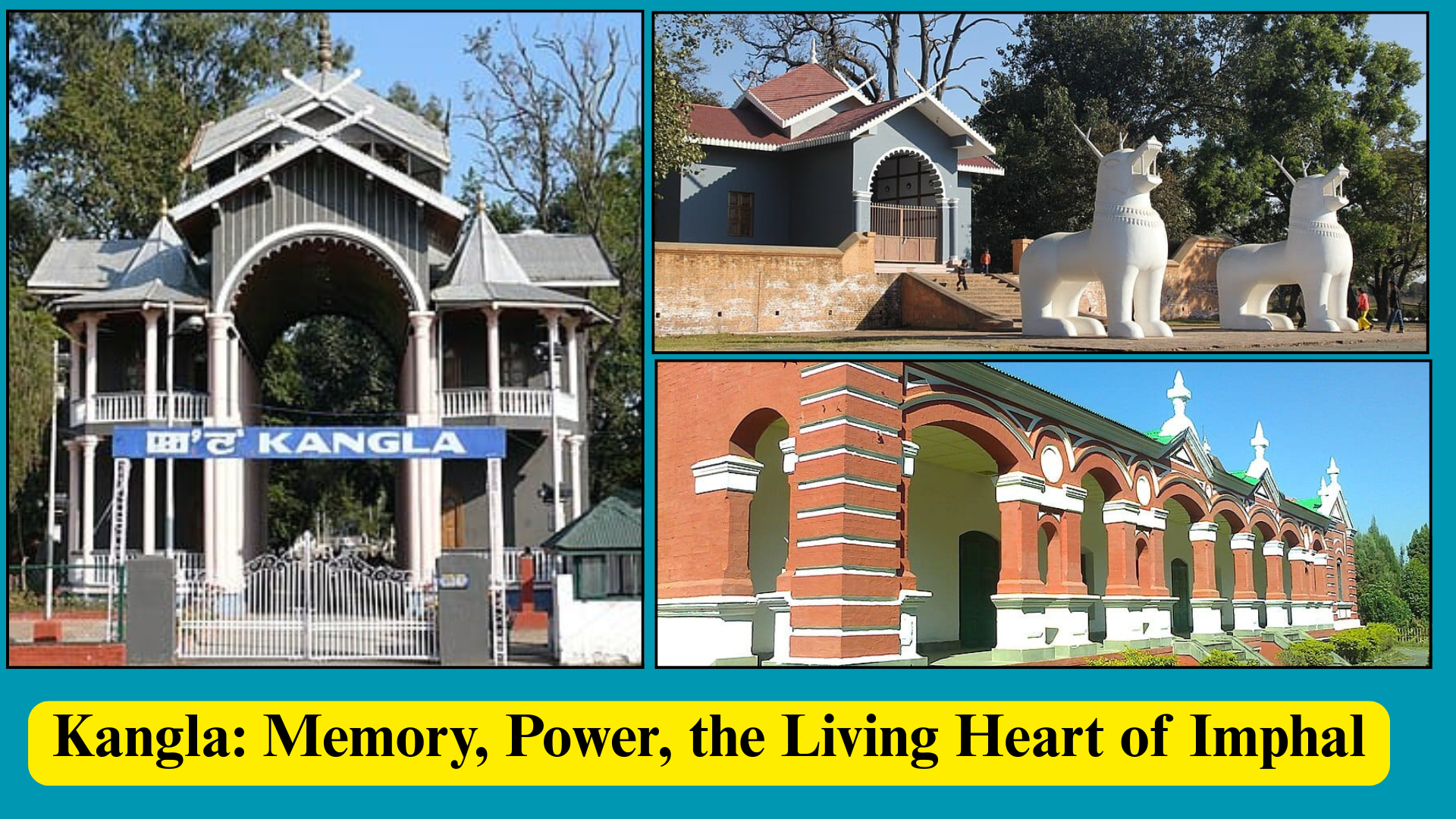


Dharmanagar: North Tripura’s Historic Gateway, Commercial Nerve Centre, and Cultural Heart
 North East Integration Rally
Dharmanagar sits quietly in the northern edge of Tripura, but its importance has never been quiet. This is a town shaped by history, geography, trade, and belief. It is the administrative heart of North Tripura district and the second largest urban centre in the state after Agartala. More than size, Dharmanagar matters because of where it stands and what it connects.
Located close to the India Bangladesh border, Dharmanagar has long functioned as a gateway. To the north lies Moulvibazar of present day Bangladesh. Karimganj district of Assam stretches to the east, Mizoram lies to the south, and Kailashahar subdivision of Unakoti district borders it on the west.
The Juri River flows through the town, shaping both its landscape and its seasonal rhythms. Green surroundings, low hills, and water bodies give Dharmanagar a character that feels open and lived in rather than crowded.
Historically, Dharmanagar is believed to be an ancient settlement once known as Faticuli. While its exact boundaries in ancient times are not clearly documented, several sources suggest that the town once held far greater political and geographical importance.
Accounts indicate that parts of Sylhet, now in Bangladesh, were once linked to Dharmanagar. What was once considered a capital of Tripura has, over centuries, been reduced in size and political status. Yet traces of that older prominence still linger in the town’s cultural confidence and regional influence.
Today, Dharmanagar functions as one of Tripura’s most important commercial hubs. It serves not only North Tripura but also nearby regions of Assam and border areas of Bangladesh. Trade, transport, and small scale commerce drive the local economy. Markets remain active throughout the day, drawing traders, farmers, and buyers from surrounding rural areas. Its role as a district headquarters further strengthens its administrative and economic position.
The town’s population, estimated at around 32,900 in the mid 2000s, reflects a largely homogeneous social fabric with space for diversity. According to the 2011 Census, Hinduism is followed by over 92 percent of the population, while Islam accounts for nearly 7 percent. Buddhism, Christianity, Sikhism, Jainism, and other religions together form a small but visible presence.
This demographic balance has contributed to Dharmanagar’s reputation as a relatively peaceful town with strong community ties.Literacy levels in Dharmanagar are higher than the national average, standing at over 73 percent. Male literacy exceeds 81 percent, while female literacy is above 65 percent.
These figures point to gradual social progress, though gaps remain. Educational institutions, both government and private, play a steady role in shaping the aspirations of the town’s younger population.
Climate defines daily life here.
Dharmanagar enjoys a generally moderate and pleasant environment for much of the year, though summers can be harsh. Heat, humidity, sudden rainfall, and thunderstorms are common during the warmer months.
Winter arrives towards the end of November and lasts until February, bringing cooler temperatures that are often described locally as biting cold. The monsoon begins early, around April, during the Bengali month of Baishakh. Heavy rainfall frequently leads to flooding, especially when local rivers overflow, disrupting daily routines and transport.
Connectivity has always been central to Dharmanagar’s identity. The town holds a special place in Tripura’s railway history. In 1964, Dharmanagar became the first railway station in the state to be connected to the national rail network. Even today, it remains a crucial rail junction.
Trains from Dharmanagar link Tripura to the rest of India, including major cities such as Delhi, Kolkata, Bangalore, Hyderabad, Bhopal, and Firozpur. Services like the Tripurasundari Express, Rajdhani Express, Kanchanjunga Express, Humsafar Express, and others ensure that the town remains well connected beyond the Northeast.
Road connectivity is equally vital. Daily bus services operate from Dharmanagar to Guwahati and Shillong via National Highway 8. Frequent buses connect the town to Agartala and other parts of Tripura and Assam. For many residents, buses remain the most reliable and affordable mode of transport.
Air connectivity has seen changes over time. Kailashahar Airport was once the nearest airfield but is currently abandoned. Recent surveys by the Airports Authority of India and commitments from the state government to acquire land have revived hopes of its redevelopment.
Until then, Silchar and Agartala airports serve Dharmanagar, along with a local helipad used for emergency travel and official movement.Beyond commerce and connectivity, Dharmanagar holds cultural and spiritual significance. Festivals shape the town’s calendar and collective memory. Durga Puja is the most prominent celebration.
During the festival, the town transforms. Streets fill with people, pandals glow with lights, and idols of Goddess Durga appear across neighbourhoods. The enthusiasm rivals that of larger cities, and Dharmanagar’s Durga pandals have earned recognition at the state level, securing second place after Agartala in the Maa Durga contest.
Kali Puja is another major event, celebrated between October and November. On these nights, Dharmanagar becomes a sea of lights. Homes, streets, and temples are illuminated, creating an atmosphere that feels both devotional and festive.

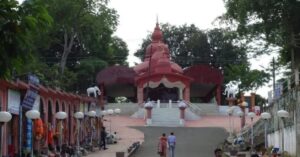
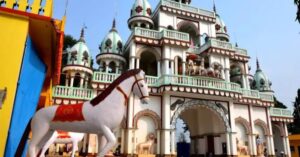
Temples form an important part of the town’s identity. Kalibari, Hari Mandir, Office Tilla Kalibari, Shib Bari, Ramakrishna Seba Samiti, and Choto Kalibari attract devotees throughout the year. These spaces function not only as places of worship but also as centres of community life.
Tourism around Dharmanagar draws heavily from its natural and archaeological surroundings. Kali Dighi, a scenic lake within the town, offers a quiet space for relaxation. Its evening fountains and calm setting make it a popular local attraction. Nearby lies Rowa Wildlife Sanctuary, a protected forest area that adds ecological value to the region.
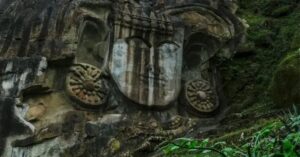
A short distance away stands Unakoti, one of Tripura’s most remarkable heritage sites. Known for its massive rock cut images and stone carvings dating back to the 7th to 9th centuries, Unakoti is both a religious site and an archaeological wonder. The colossal image of Lord Shiva dominates the landscape, drawing pilgrims, historians, and tourists alike. Though technically located in the Kailashahar subdivision, Unakoti remains closely tied to Dharmanagar’s cultural and tourism circuit.
Dharmanagar today is a town shaped by contrast. It carries memories of a larger past while managing the realities of a district headquarters. It faces challenges from floods, infrastructure gaps, and changing economic patterns, yet it continues to hold its ground as a regional centre. What defines Dharmanagar is not spectacle, but continuity. Trade flows through it. Trains stop here. Festivals return every year. History sits quietly beneath everyday life.
Dharmanagar may not seek attention, but it remains essential. In Tripura’s northern landscape, it stands as a town that connects borders, preserves memory, and keeps moving forward, one season at a time.
Promotional | North East Integration Rally