

A Needonomics Case for Middle-Class Self-Respect in Goodness Mode
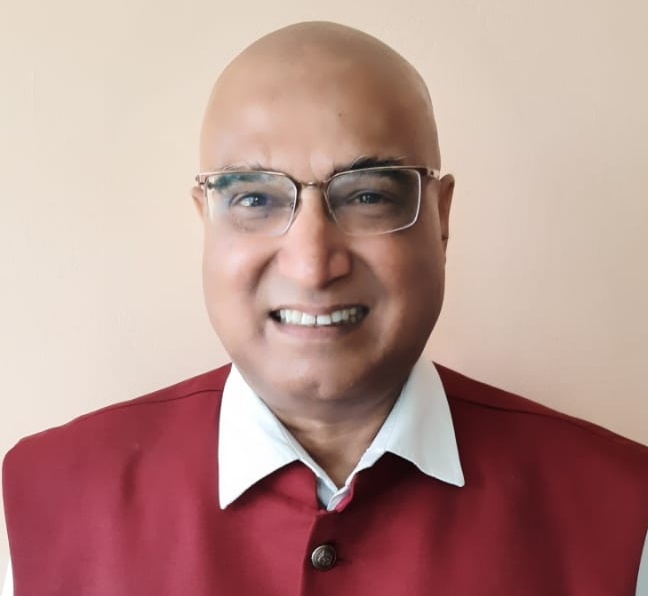 Dr. M. M. Goel
The Needonomics School of Thought—a Kurukshetra-based think tank—firmly believes that Bharat’s journey towards becoming a Viksit Bharat cannot rest merely on the widening reach of free goods, subsidies, and doles. While such measures may offer temporary relief, sustainable peace, progress, and prosperity demand a deeper engagement with human dignity—particularly the dignity of the middle class, which serves as the ethical and stabilizing backbone of the economy.
Development that alleviates material deprivation but erodes self-respect risks hollowing out the social capital that binds a nation together. Growth without dignity may expand consumption, but it weakens character, responsibility, and social cohesion. A simple yet powerful real-life story from a local community illustrates this truth with striking clarity.
A Story of Hunger, Help, and Honor
In a modest neighbourhood lived a schoolteacher—respected, sincere, and quietly devoted to shaping young minds. Her life was simple and disciplined. Due to adverse circumstances, she often struggled to arrange even one proper meal a day. Yet when a free food distribution drive began in her area, she never joined the long queues.
This was not denial of need, nor misplaced pride. It was self-respect. Her fear was not hunger, but the silent humiliation that frequently accompanies public charity—especially when need is displayed, counted, and judged.
Ironically, some of the young boys managing the free distribution were her former students—children she had once taught not only academic subjects, but also values of dignity and empathy. When they noticed her absence and learned of her situation, they responded with wisdom that many policy frameworks overlook.
They discontinued the free distribution and announced instead a special offer: vegetables and rice at ₹10 per kilogram—far below market prices, yet not free.
The results were immediate and revealing. Long queues of habitual free riders disappeared. In their place stood a new queue—of people with genuine needs rather than opportunistic greed. Middle-class families, daily wage earners, and the teacher herself now stood in line without shame or fear. They were not begging; they were buying.
The teacher purchased her essentials, paid the amount, and returned home with her dignity intact. When she opened the packet later, she discovered the money she had paid placed discreetly inside. The boys had quietly done this for everyone—offering support without spectacle, assistance without assault on self-worth.
The Needonomics Perspective: Needs with Dignity
Needonomics draws a clear distinction between need and greed, support and dependency, empowerment and erosion of dignity. This story powerfully demonstrates that people do not resist help; they resist humiliation.

The middle class, in particular, suffers silently. Often earning too much to qualify for poverty schemes yet too little to live securely, it remains largely invisible in welfare design. When support systems are framed only for the “poor,” the middle class is gradually pushed toward precarity—forced one day to choose between hunger and self-respect.
Indiscriminate and highly visible free distribution may provide short-term relief, but it creates long-term distortions:
Weakening the user-pay principle
Encouraging dependency and free-riding
Stigmatizing genuine need
Excluding the self-respecting middle class
By contrast, the ₹10-per-kg model respected the psychology of dignity. Even symbolic payment transformed charity into transaction, beneficiaries into customers, and queues of shame into lines of self-confidence.
The Middle Class: Bharat’s Silent Pillar
The middle class is not merely an income bracket; it is a cultural and ethical force. Teachers, nurses, clerks, small traders, junior professionals, and self-employed workers sustain Bharat’s values of honesty, effort, and aspiration. They pay taxes, educate their children, care for elders, and rarely ask for handouts.
Yet rising inflation, escalating education and healthcare costs, and limited access to targeted welfare are steadily squeezing this group. If neglected, today’s middle class can easily become tomorrow’s poor.
Needonomics therefore calls for development policies that pursue three goals simultaneously:
Eradicate poverty

Prevent the middle class from slipping into poverty
Reduce inequality without destroying dignity
Ignoring any one of these leads to distorted and unsustainable development.
From a Free Culture to a Fair Culture
A mechanical culture of “free” goods corrodes social ethics. It blurs the line between need and entitlement and often rewards visibility rather than vulnerability. A fair culture, by contrast, is anchored in:User-pay principles with compassionate pricing. Cross-subsidization instead of blanket giveaways. Vouchers, rebates, or special pricing rather than doles
Quiet support that protects privacy and pride
The boys in the story practiced Needonomics in action—targeting need without labeling poverty, helping without humiliating, and giving without creating dependency.
Dignity as a Development Indicator
As Bharat aspires to become a developed nation, GDP growth alone is not enough. We must ask deeper questions:
Can people meet basic needs without losing self-respect?
Do welfare systems empower—or embarrass?
Is the middle class expanding—or eroding?
Are we nurturing responsible citizens—or passive beneficiaries?

True development is not only about producing and distributing more goods, but about cultivating better values. Dignity must be treated as a core development indicator, alongside income, health, and education.
Conclusion: Growth with Goodness
The story of the teacher and her students is not a sentimental anecdote; it is a powerful policy lesson. It proves that compassion and economics need not be at odds. With sensitivity, creativity, and ethical intent, support systems can uplift without humiliating.
Needonomics therefore calls for a decisive shift:
From free goods to fair pricing
From charity to dignity
From populism to purpose
From dependency to self-reliance
If Bharat truly seeks to become Viksit, it must ensure that no one goes hungry—and no one is forced to stand in a queue that strips them of self-respect. Only then can peace, progress, and prosperity be achieved in the Goodness Mode.
A Viksit Bharat must be not only richer—but also more dignified—anchored in growth with goodness, as envisioned in the Needonomics framework. Show trimmed content.