

A Shining Symbol of Humanity
 Sangram Datta
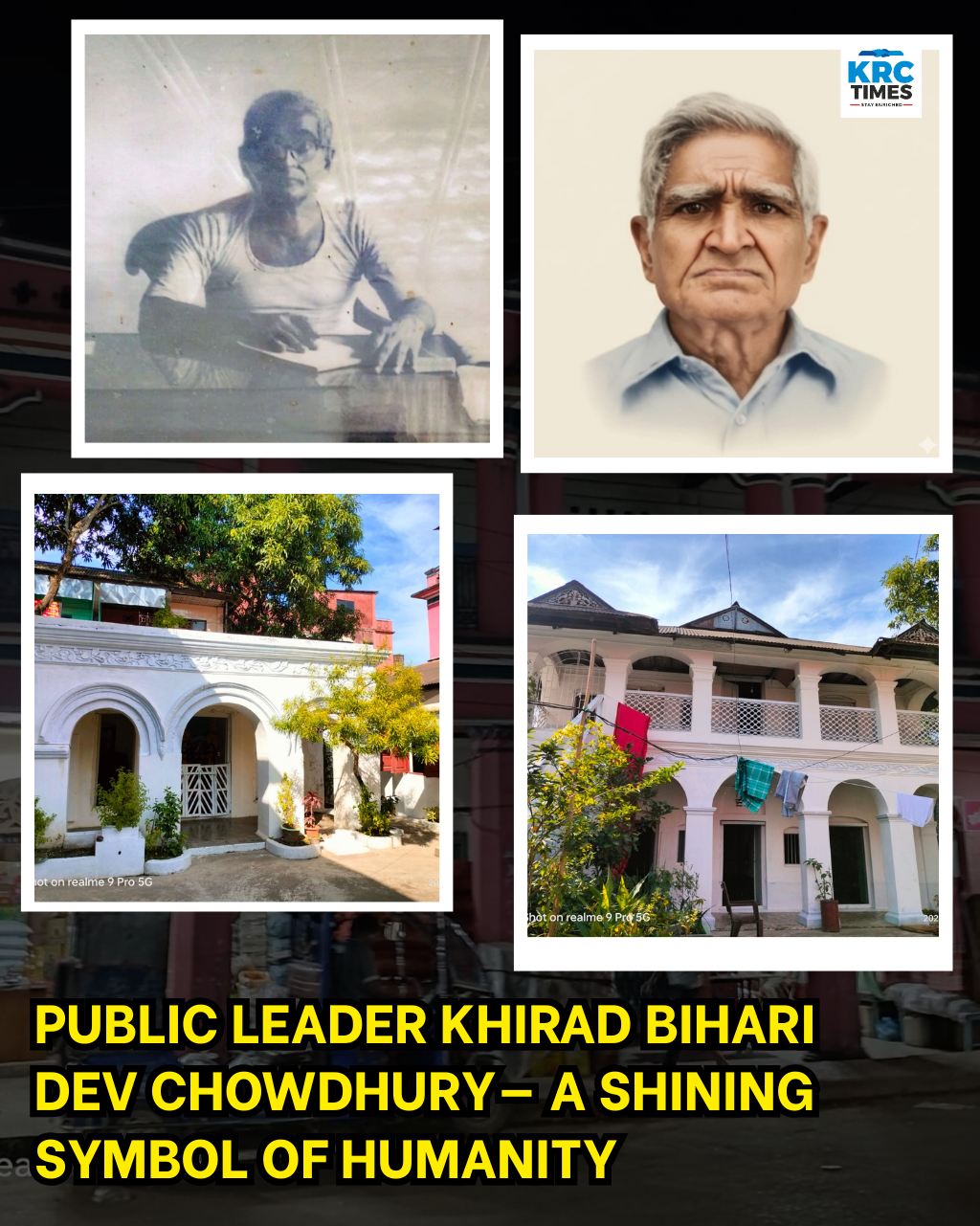
Sreemangal, Bangladesh—the city of tea, hills, and natural beauty. Alongside its lush greenery and the affection of nature, the pages of history shine with the contributions of some great individuals. One such extraordinary name is Khirad Bihari Dev Chowdhury ( Known as K.B. Dev Chowdhury) —a philanthropist, social reformer, education enthusiast, and humane public leader who devoted every chapter of his life to the service of society and humanity.
Early Life and Family Background
Khirad Bihari Dev Chowdhury (K. B. Dev Chowdhury) was born on 4 October 1908 into a distinguished zamindar family. He was the youngest among four brothers. His elder brothers were Rasabihari Dev Chowdhury, Pulin Bihari Dev Chowdhury, and Binod Bihari Dev Chowdhury.
His father was the renowned zamindar, educationist, philanthropist, and social worker Radhanath Dev Chowdhury, and his mother was Jaytara Dev Chowdhury. Zamindar Radhanath Dev Chowdhury was born on 31 August 1875.
Radhanath Dev Chowdhury was one of the most influential zamindars and highest taxpayers of the Assam Province during British India. Along with his vast zamindari estates, he owned various business establishments and 57 agencies. His principal business connections were with Calcutta and England.
Education, Philanthropy, and His Father’s Social Contributions
During the British period, among those who played a quiet yet profoundly influential role in the development of education, society, and culture in Srimangal, Radhanath Dev Chowdhury stands out as a distinguished figure. In memory of his parents—his mother, Dinomoyi Dev Chowdhury, and his father, Chandranath Dev Chowdhury—he took a leading role in establishing educational institutions, contributions that remain respectfully remembered in the history of Srimangal to this day.
Honoring the memory of his mother, he donated valuable land adjacent to the Srimangal Choumuhani area for the establishment of Dinomoyi Girls’ School. At a time when women’s education had not yet gained due recognition in society, this initiative was a progressive and timely act of remarkable courage and foresight.
Similarly, in memory of his father, Radhanath Dev Chowdhury donated land during the British era to establish Chandranath Primary School. This institution greatly facilitated access to education for the general population and marked the beginning of an important chapter in the educational history of Srimangal.
Unfortunately, in later years, due to narrow-mindedness and a lack of historical awareness, the name “Dinomoyi” was removed, and the school was renamed Srimangal Government Girls’ High School. As a result, the present generation remains largely unaware of the institution’s true history, its land donor, and the contributions of its founder. The neglect of such a significant chapter of history, instead of granting it due recognition, is undeniably disappointing.
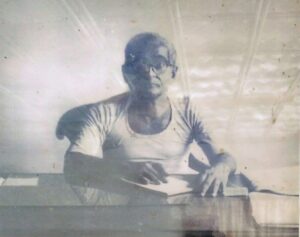
Beyond education, Radhanath Dev Chowdhury also made notable contributions in the religious and cultural spheres. On Habiganj Road in Srimangal town, he built the idol temple and natmandir (theatre hall) of Sri Sri Jagannath Dev’s Akhra. For a long time, this establishment has served as an important center for religious rituals, social gatherings, and cultural practices.
Sreemangal Town Committee and Administrative Role
Under the provisions of the Assam Municipal Act of 1923, the official inauguration of Sreemangal Small Town took place on 1 October 1935.
On this occasion, Radhanath Dev Chowdhury arranged a special celebration by importing a cake from Kent, England, for the inauguration of the Sreemangal Town Committee—an exceptional event in the municipal history of Sreemangal.
From 1 October 1935 to 8 May 1937, Radhanath Dev Chowdhury served as a member of the first council of the Sreemangal Town Committee. At that time, Girija Shankar Guha, the Sub-Divisional Officer of South Sylhet, served as Chairman.
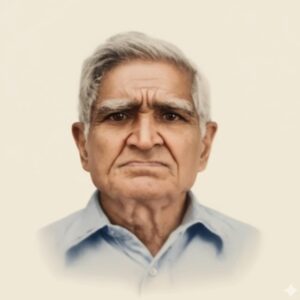
Later, during the third council (20 April 1943 – 2 December 1952), his eldest son Rasabihari Dev Chowdhury was elected as a member.
In the fourth council (1 December 1952 – 14 January 1956), the youngest son Khirad Bihari Dev Chowdhury served as Vice Chairman.
Subsequently, from 14 January 1956 to 20 June 1960, he was elected as a member. Again, during the seventh council (24 February 1965 – 16 December 1971), he served as a member of the Sreemangal Town Committee.
Radhanagar Hill: From Heritage to a Modern Tourist Destination
Surrounded by Sreemangal’s lush greenery and blue skies lies Radhanagar, a breathtaking hilly area. Once a silent hill settlement, today it has become an international-standard tourist destination, attracting domestic and foreign visitors daily.
Five-star hotels, modern resorts, and the aroma of tea gardens have transformed Radhanagar into a dreamland.
Behind this name lies a forgotten history and the contribution of a remarkable personality—Radhanath Dev Chowdhury.
During the British era, he purchased approximately 178 bighas of land in the Doluchhara hills of Sreemangal. Later, his four sons inherited the property. Some portions were sold, while others were gradually encroached upon.
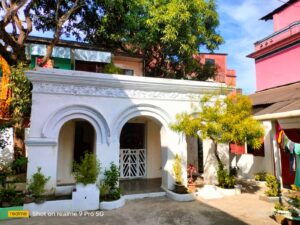
The area became known as “Radhanagar”, named after Radhanath Dev Chowdhury. Through his influence and contributions, the settlement gradually gained recognition.
What was once a secluded hill region has now secured a place on the international tourism map.
Today, the slopes of Radhanagar are adorned with pineapple, lemon, jackfruit, and tea gardens, alongside rows of resorts, hotels, and motels. The internationally acclaimed Grand Sultan Tea Resort & Golf stands proudly on these hills.
Domestic and foreign investors continue to invest here, creating new tourism infrastructure and employment opportunities for local people. Radhanagar has become a hub of investment and tourism.
To the younger generation, Radhanagar represents natural beauty, luxury, and modern entertainment—yet many remain unaware that Radhanath Dev Chowdhury laid the foundation of this development.
Despite his immense contributions, no comprehensive research or memorial institution has yet been established in his honor. Yet Radhanagar—bearing his name—has elevated the tourism potential of Sreemangal and the entire Sylhet region to global prominence.
Preserving his memory is not merely honoring an individual; it is preserving the living history of the region.
If a museum, information center, or memorial were established in his name, future generations would learn how one man’s vision transformed a region into a world-renowned destination.
Radhanagar shines today with the light of development. Now, its history must be illuminated as well—the story of where this dream began.
Death of Radhanath Dev Chowdhury
The zamindar and educationist Radhanath Dev Chowdhury passed away on 1 February 1958 at the age of approximately 83 years. Abolition of Zamindari and Distribution of Family Property
When the zamindari system was abolished in Pakistan in 1950, the vast property in Bhubirbagh area under Nabiganj Thana was taken over by the government under the State Acquisition and Tenancy Act.
Of the remaining 50 hal of land, 25 hal went to the eldest son Rasabihari Dev Chowdhury, and the remaining 25 hal were divided among the other three sons.
Some lands belonging to Khirad Bihari Dev Chowdhury and his brothers remain encroached upon even today.
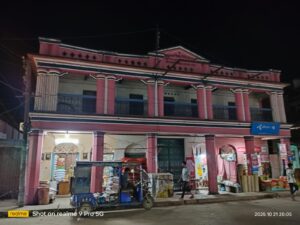
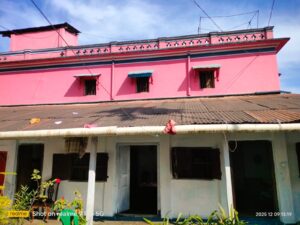
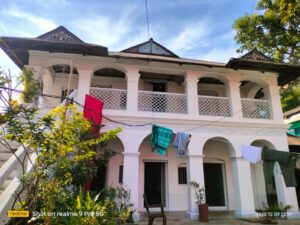
He lived with his family in a beautiful century-old building constructed during the British era on Puran Bazar (Old Bazar) Road at Sreemangal town.
During British rule, he purchased land where Radhanath Cinema Hall now stands, as well as properties in Kumarghat and Manikbhandar of Tripura State, India.
In Biraimpur, he owned 48 bighas of land, of which 31 decimals were donated to establish Radhanath Primary School (now Biraimpur Primary School). Unfortunately, due to administrative decisions, the name Radhanath was changed—despite the donation deed clearly stating that the land would revert to the heirs if the name were altered.
Extensive Properties Across British India
Radhanath Dev Chowdhury and his sons owned properties not only in Sreemangal or Assam, but across various provinces of British India. At that time, Assam, Tripura, and other regions were under a unified administrative system, allowing unrestricted trade and land transactions.
They owned significant land in Assam Province and Tripura State, notably large valuable estates in Kumarghat and an ancestral home in Manikbhandar, Tripura.
During the 1971 Liberation War, many Muslim, Christian, and Hindu families, including freedom fighters and former Sreemangal Chairman M. A. Musabbir, took refuge in that house.
They also operated BD Factory in both Sreemangal and Manikbhandar. After the 1947 Partition, many properties in Tripura and Assam were encroached upon due to border and administrative changes. Nevertheless, their historical legacy remains a source of pride in local history.
Business Ventures and Entrepreneurship
Khirad Bihari Dev Chowdhury was also a successful entrepreneur and visionary businessman. His enterprises were respectively Foreign liquor outlet, Rice and flour mills, Saw mill, Leaf bidi plantation, Timber estate business, Cinema hall, Husk trade, Rod, cement, tin, and hardware business.

These businesses remained operational until 1977.
He also owned two tea estates at Cachar District in Assam, including Chargola Valley Tea Estate, which he managed until 1965. Due to war conditions and passport cancellation, these estates were later encroached upon.
Political Life and Struggles
Driven by humanitarian values and justice, he entered politics to serve the people. During British rule, he was initially associated with the Indian National Congress and later with the Forward Bloc.
During the 1947 Sylhet Referendum, he played a significant role as an active member of the Committee for Inclusion with India, led by Congress leader Laku Datta Chowdhury of Bhunobir in Sreemangal.
After the creation of Pakistan, he lived in near hiding for several years and faced repeated police raids.
In 1957, he joined the National Awami Party (NAP) and remained a dedicated member until his death.
He financially supported party activities and bore the election expenses of Syed Mujibur Rahman, NAP (Mozaffar) candidate, in the 1973 election.
Due to political repression, he was imprisoned in 1958, 1965, and 1974.
During the 1965 Indo-Pak War, he was detained for six months under the State Security Act.
Liberation War and Post-Independence Period
During the 1971 Liberation War of Bangladesh, he was an organizer and motivator, encouraging youths through meetings in Sreemangal and India.
In the 1970 Provincial Assembly election, he contested as a NAP candidate against Awami League candidate Md. Altafur Rahman Chowdhury.

After independence, in 1972, his ancestral residence was attacked due to political rivalry. Despite looting and damage, his family remained safe.
In 1973, army personnel raided his home, wrongfully arresting his second son Kanak Lal Dev Chowdhury, who was later released after intervention following his wife Usha Rani Dev Chowdhury’s meeting with Bangabandhu Sheikh Mujibur Rahman.
In 1974, he was detained on allegations of wheat smuggling but was acquitted after 17 days.
Humanitarianism and Philanthropy
He was closely associated with Sreemangal Victoria High School, Dinmoyee Girls’ School, and numerous social and cultural institutions.
During the 1974 famine, he personally arranged daily meals for approximately 200 impoverished people.
In 1978, President Shaheed Ziaur Rahman stayed at BTRI Rest House during his Sreemangal visit, where Khirad Bihari Dev Chowdhury hosted him with his favorite dishes.
During communal violence following the Babri Mosque incident on 7 December 1989, his ancestral home was again attacked, ransacked and looted.
Family Life
He was the father of ten children—six sons and four daughters. The children were
Kantilal, Utpala, Kanak Lal, Urmila, Uttama, Kanan (Babla), Uttara, Uttam Kumar, Pannalal (Tutul) and Santanu Dev Chowdhury respectively.
Legacy and Passing
A politician, social reformer, and philanthropist, Khirad Bihari Dev Chowdhury was a secular, liberal, and humane individual.
He passed away on 10 September 1995, leaving behind a rich legacy of service to humanity and education.
Last Word
The life of Khirad Bihari Dev Chowdhury teaches us that true greatness lies not in wealth, but in selfless service to society. He was a beacon of light—whose philanthropy, humanity, and leadership continue to shine like an eternal flame in the history of Sreemangal.
A person who dedicates his life to social welfare never truly dies—his deeds make him immortal.
Khirad Bihari Dev Chowdhury is one such immortal soul.