

The programme is expected to be scaled up to 5,000 placements over the next five years
 KRC TIMES NE Desk
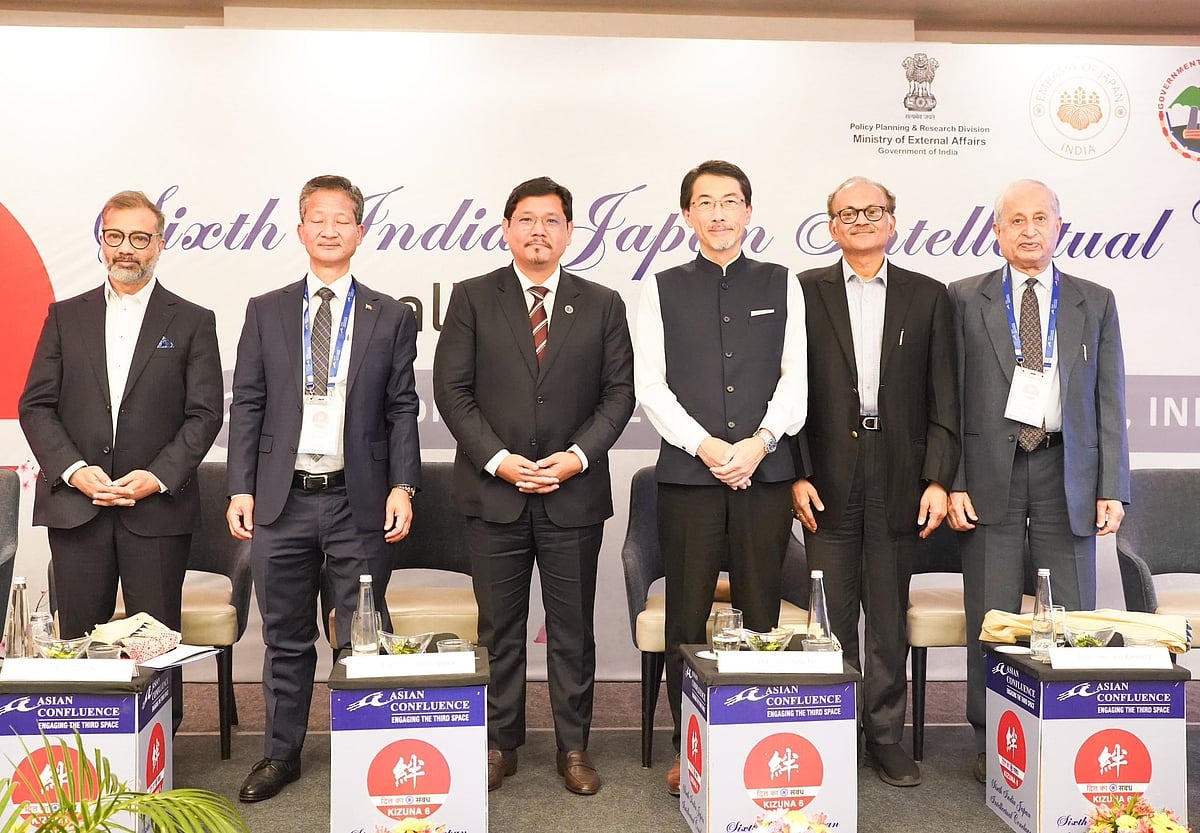
Shillong : Meghalaya Chief Minister Conrad K Sangma on Thursday underscored Japan’s expanding role as a strategic development partner of the State, stating that the collaboration extends well beyond infrastructure to encompass youth empowerment, agriculture and sustainable livelihoods.
Addressing the inaugural session of the sixth India-Japan Intellectual Conclave ‘Kizuna’, Sangma said the ties between India and Japan are anchored in mutual respect, democratic values and a shared commitment to economic cooperation and sustainable growth. Describing the theme “Kizuna” – meaning a lasting bond – as deeply symbolic, he said it aptly reflects the evolving partnership.
Highlighting Meghalaya’s engagement with Japan, Sangma said the State is prioritising investment in people alongside physical infrastructure. He informed that 47 nurses from Meghalaya have already secured placements in Japan.
Following his visit to Japan in April 2025, the State government signed a memorandum of understanding with a Japanese company to train and facilitate placement for 500 youths this year. The programme is expected to be scaled up to 5,000 placements over the next five years.
He further noted that Meghalaya has partnered with another firm to support skilled youth placements in Japan and has established a Japanese language training centre in Shillong to equip aspirants with the required linguistic proficiency.

In the agriculture sector, Sangma announced that India’s first commercial production of shiitake mushroom blocks has commenced in Upper Shillong, with technology and marketing support from a Japanese company. The facility has the capacity to produce 1.5 lakh inoculated blocks annually and is expected to benefit more than 1,000 farmers.
The Chief Minister also revealed that the State is exploring the production of locally brewed sake using indigenous rice varieties in collaboration with a Japanese brewery, signalling a move towards value addition and diversification in agriculture.
Referring to the longstanding partnership with the Japan International Cooperation Agency (JICA), Sangma said the agency has made substantial investments in Meghalaya’s infrastructure, forestry and tourism sectors.
Under the JICA-supported MegLIFE project, 22,500 hectares of forest are being restored across 500 villages in 11 districts, reinforcing the State’s sustainability goals.
He added that renovation work at the Umiam Hydro Power Station and the Umiam-Umtru Stage III Hydroelectric Power Station is being undertaken with JICA support. Additionally, the nearly 19-km river bridge connecting Dhubri in Assam to Phulwari is also being primarily funded by the agency.

Observing that nearly 74 per cent of Meghalaya’s population is below the age of 35, Sangma proposed the creation of a Meghalaya-Japan Skill Corridor to harness the State’s youthful demographic advantage.
“The energy and aspirations of our young population can be effectively paired with Japan’s technological expertise,” he said, adding that such collaboration could create a robust pathway for employment and knowledge exchange.
The Chief Minister also highlighted growing cultural exchanges, noting that the Shillong Cherry Blossom Festival has featured an exclusive Japanese pavilion over the past two years, showcasing Japanese traditions, cuisine and performances.
Inviting Japanese businesses and academic institutions to expand engagement with Meghalaya, Sangma identified priority sectors including circular economy, climate resilience, technology, agriculture and sustainable tourism.
Earlier in the day, Sangma visited an exhibition of artefacts from the Imphal Peace Museum and the North East Archives. The event was attended by senior dignitaries, including representatives from Japan and India, further underscoring the deepening partnership between Meghalaya and Japan.