


The Inspiring Journey of Senior Journalist Brown Nongmaithem
 KRC TIMES Desk
Sanjoo Thangjam
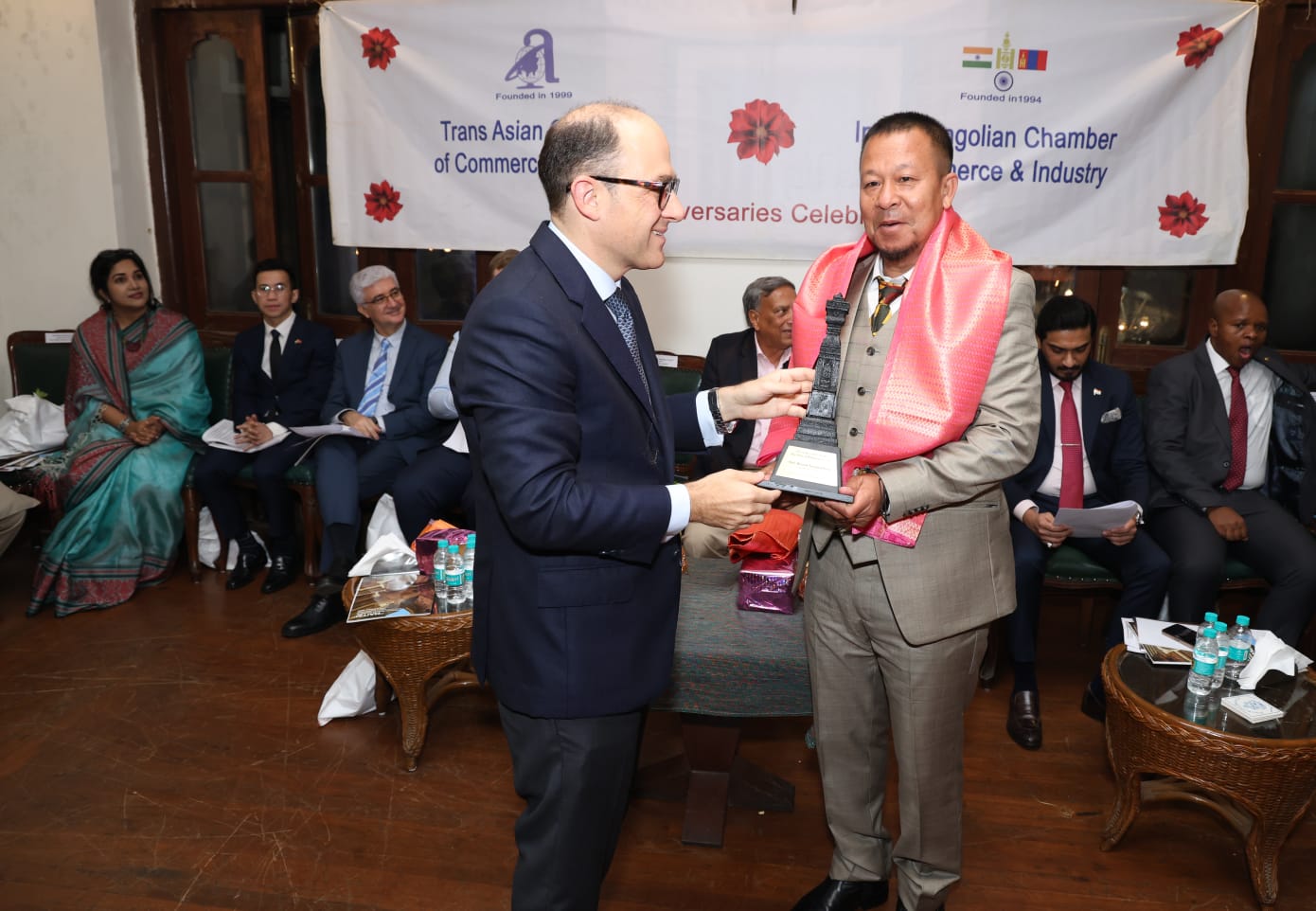
In a moment of pride not only for Manipur but for the entire North East, senior journalist Brown Nongmaithem has been conferred the prestigious “The Pillars of Hindustani Society” award for the year 2025–2026. The honour was presented during the joint anniversary celebrations of the Trans Asian Chamber of Commerce and Industry and the Indo Mongolian Chamber of Commerce and Industry at the iconic Royal Mumbai Yacht Club near the Gateway of India.
The felicitation was held on February 24, 2026, at the Ball Room of Royal Mumbai Yacht Club, near Hotel Taj Palace, opposite Gateway of India, Mumbai. Although the organisers have not widely publicized the details of the felicitation, the award was conferred during their landmark anniversary celebrations, where 33 individuals from across the world were honoured under 33 distinct categories for their contributions to society.
Among them, Brown Nongmaithem was recognised for his fairness, balance and consistent reporting from conflict affected Manipur. For a journalist who has spent over 25 years navigating one of the most complex regions in the country, this recognition is not just an award but a validation of a lifelong commitment to truthful and responsible journalism.
A Journey Marked by Struggle and Resolve
Born in Shillong and partly educated in Ahmedabad at Amrut Firdus High School, Brown’s early life was shaped by the disciplined environment of an Army family. Amongst three siblings, he is the second, with an elder sister, Anita and a younger brother, Rocky — a familial structure that quietly nurtured his sense of balance and responsibility from an early age.
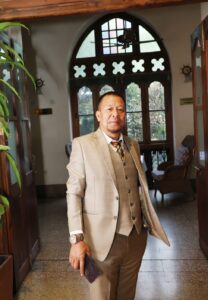
His father, the late Nongmaithem Iboyaima Singh, popularly known as N I Singh, was not only an Army officer but also a filmmaker who once produced an English feature film titled “Storm.”
Like many parents of his generation, he initially disapproved of journalism as a profession, considering it uncertain and financially unstable. He discouraged his son from pursuing it.
However, time and experience altered that perception. When Brown began writing and even covered his father’s creative work in newspapers, he slowly came to recognise the influence and reach of journalism. In a quiet but powerful moment of acceptance, he acknowledged his son’s work and expressed pride, a turning point that remained deeply personal and motivating for Brown.
Finding a Footing in Journalism
After completing his education, including a degree in journalism from Indira Gandhi National Open University, Brown began writing for a small monthly magazine, Anouba Yawol. What started as a modest engagement soon turned into a serious pursuit when he joined the Imphal Free Press.
For over five years, he worked there, learning the fundamentals of reporting and newsroom discipline. However, an abrupt and difficult exit from the organisation left him disheartened and uncertain about his future.
At this critical juncture, support from fellow journalists proved invaluable. Among them was Ningthemcha Bobichand, who encouraged him to continue writing and helped him reconnect with opportunities. Around the same time, senior journalist Sobhapati Samom of The Assam Tribune extended an opportunity to contribute to The News File. These interventions ensured that Brown remained within the profession during one of its most uncertain phases.
A Career of Constant Reinvention
What followed was a journey marked by constant movement across newsrooms. From Erandam Weekly to The News File, and later to The Sunday Indian, Brown steadily built his reputation. At The Sunday Indian, his stories were published in fourteen Indian languages, significantly expanding his reach and visibility.
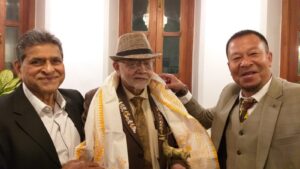
Yet, the instability of the media industry continued to affect his career. Financial downsizing led to his exit from The Sunday Indian. Subsequent associations with Manaba, Huiyen Lanpao and Matamgi Yakairol reflected both his persistence and the fragile nature of regional journalism, where publications often struggle to sustain themselves.
At one point, disillusionment nearly pushed him away from journalism altogether. He briefly considered moving into business, but the instinct to report and tell stories proved stronger than the temptation to leave.
The Turning Point
The defining moment in his career came when he reconnected with colleagues from his earlier days and was offered an opportunity to join New Observer Post. Under the leadership of Onkareshwar Pandey, he found not just employment but a renewed sense of purpose.
Working with New Observer Post and Indian Observer Post, Brown gradually rebuilt his professional identity. His reporting began to gain recognition beyond Manipur, particularly for its balanced perspective in a region often portrayed through extremes. His ability to present facts without bias and to highlight human stories within conflict distinguished his work.
Recognition That Came as a Surprise
The award itself came unexpectedly. A phone call from Mumbai informed him that he had been selected for “The Pillars of Hindustani Society.” Like many seasoned journalists, he approached the news with caution, verifying its authenticity before accepting the invitation.

The ceremony brought together dignitaries including Mariano Agustín Caucino and Justice Shreehari Daawara. The selection process was led by Dr. Sanjay Bhidey, Founder and Convenor of TACCI, who emphasised that the awards are based purely on merit and recognise genuine contributions without expectation of favour.
For Brown, the recognition was both surprising and humbling. After decades of working without formal acknowledgement, the award symbolised not just personal achievement but also the value of persistence in a demanding profession.
The Human Story Behind the Journalist
Behind the professional journey lies a story of quiet resilience supported by family. His wife, Dr Thounaojam Bimola Devi, Assistant Professor, Manipur University of Culture, and his mother, Kumudini Devi, played a crucial role in managing family responsibilities during financially uncertain times. Their support allowed him to continue his work without compromise, even when stability seemed distant.
He is also a father to two daughters, and like many journalists, has balanced the demands of an unpredictable profession with family life.
A Personal Note
The author had the opportunity to work with Brown Nongmaithem at the Imphal Free Press in the late 2000s and later under him at Indian Observer Post as a Special Correspondent. Due to unavoidable circumstances, the association could not continue, but the experience offered valuable insights into his commitment, discipline and belief in fair journalism.
Conclusion
The journey of Brown Nongmaithem is not a story of uninterrupted success but one of endurance. It reflects the reality of journalism in regions like Manipur, where uncertainty is constant and recognition is rare.
His recent honour stands as a reminder that integrity and perseverance do not go unnoticed forever. More importantly, it highlights the role of journalists who continue to work quietly, often without recognition, to bring truth and balance to public discourse.
In recognising Brown Nongmaithem, one also acknowledges the larger spirit of journalism that survives against odds, sustained by individuals who believe in its purpose.
The author is a journalist based in Imphal, Manipur.