

Experts Call for Nationwide Rollout
 KRC TIMES National Bureau
New Delhi: As air pollution continues to pose a serious threat to public health, experts have strongly advocated for the nationwide adoption of a unique “Carbon Garden” model developed at the University of Delhi.
The call came during the “National Conference on Carbon Garden: An Urban Ecosystem Service Model to Combat Toxic Air,” where scientists and environmental experts from across the country discussed nature-based solutions to tackle rising pollution levels in Indian cities.
Air pollution remains one of the leading causes of death globally. According to the World Health Organization, more than 70 lakh people die every year worldwide due to air pollution, with India accounting for nearly 17 lakh deaths annually. Reports also indicate that 13 of the world’s 20 most polluted cities are in India, while in Delhi alone, air pollution contributed to nearly 15 percent of total deaths in 2023.
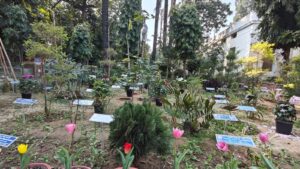
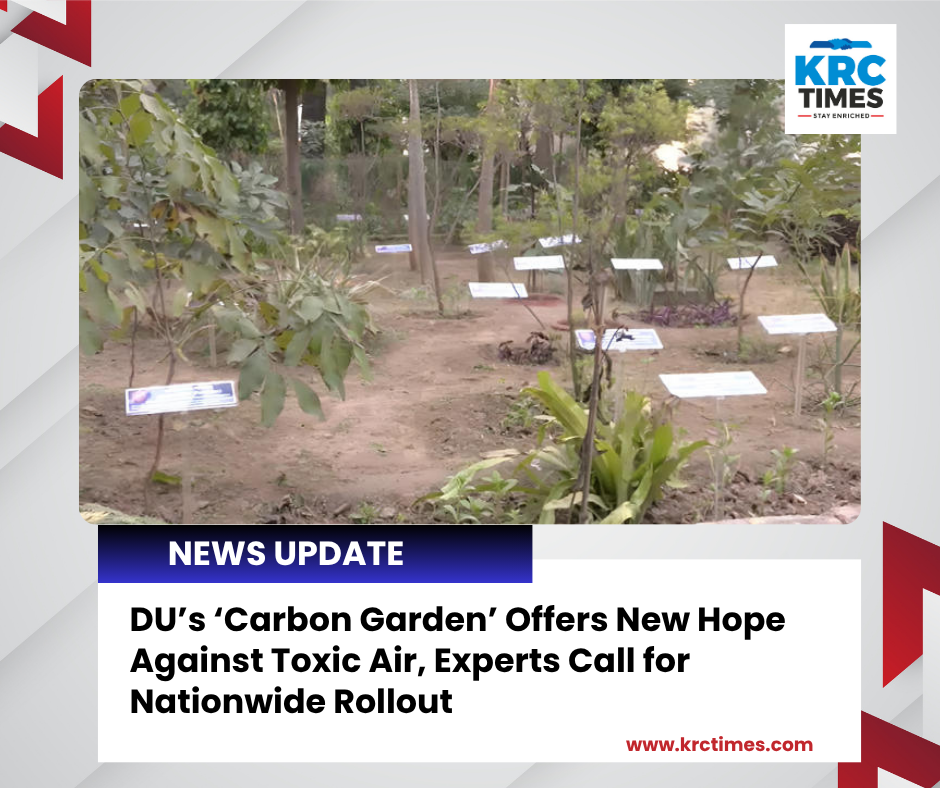
Against this backdrop, Professor Dinabandhu Sahoo has developed India’s first Carbon Garden within the Delhi University campus. The project, which took over three years to design and implement, is being seen as a practical and scalable solution to combat toxic air pollution, especially in densely populated urban areas.
Currently serving as Head of the Department of Botany and Chairperson of the Research, Innovation and Entrepreneurship Council at the university, Sahoo said the model is both economical and adaptable, requiring minimal space. The pilot Carbon Garden has been established within just 2,000 square feet.

“This model allows plants and associated microorganisms to absorb harmful gases like carbon monoxide and convert them into useful resources, while also enriching soil quality,” Sahoo explained.
The garden hosts a diverse range of life forms, including algae, fungi, bacteria, bryophytes, pteridophytes, gymnosperms, and angiosperms. With around 50 plant species—comprising herbs, shrubs, and trees—the ecosystem has been carefully designed to function both as an “urban ecosystem model” and a “mini biodiversity park.”
The use of indigenous plant varieties, including hydrophytes, xerophytes, and mesophytes, further enhances its adaptability. Notably, the system also incorporates ancient microorganisms, some dating back nearly 1.3 billion years, which play a key role in breaking down toxic gases such as methane and hydrogen.
Experts highlighted that while trees absorb carbon dioxide, microorganisms present on bark and leaves produce enzymes capable of converting harmful gases into beneficial compounds. Future expansions of the model may include algal ponds to further accelerate the bioconversion of toxic pollutants.

The initiative is being viewed as a shift in how cities approach environmental challenges. Instead of relying solely on pollution control measures, the Carbon Garden integrates self-sustaining ecological systems within urban spaces.
Experts at the conference agreed that replicating such gardens in schools, colleges, universities, residential areas, and office complexes could significantly improve air and soil quality, while also contributing to better public health and reduced healthcare costs.
“This is just the beginning,” Sahoo said, adding that the larger vision is to replicate the model across the country. He noted that more than 1,000 visitors from different regions have already shown interest in developing similar carbon gardens.
With growing concerns over toxic air and its economic and health impacts, the DU Carbon Garden model is emerging as a promising, low-cost solution that could redefine urban environmental planning in India.