

Power, Uranium, and the Politics of War
 KRC TIMES Desk
Col (Dr.) Ashwani Kumar, MiD, VSM (Retd.)
From the Korean War to the Strait of Hormuz, the real question is no longer capability but who decides who is dangerous.
Threats in modern geopolitics are not defined solely by capability, they are shaped by power, perception, and political alignment. The ongoing confrontation involving the United States, Iran, and Israel brings this reality into sharp focus. It is not merely a question of uranium or military strength, but of who holds the authority to define danger itself.
At the centre of this unfolding crisis lies a deeper tension between sovereignty and control, legality and legitimacy, power and principle.
War Under Constraint: The Limits of Power.
One of the less visible but critical constraints shaping American decision-making is the War Powers Resolution. This legal framework allows the U.S. President to initiate military action, but limits prolonged engagement without congressional approval. In effect, the United States is not only navigating a conflict abroad, it is operating under a political and legal clock at home.
This explains the current strategy as inder:- Assertive, but calibrated. Forceful, yet limited. Designed to exert pressure without committing to a prolonged war. It is a model of control without full-scale conflict.
Lessons from History: Power Without Closure.
History, however, offers caution. From the Vietnam War to the Iraq War and the War in Afghanistan, the United States has repeatedly demonstrated overwhelming battlefield superiority. Yet, victory has often proved incomplete.Vietnam ended without strategic success.

Iraq destabilised despite regime change. Afghanistan concluded without decisive closure.The pattern is unmistakable. Military dominance does not guarantee political resolution.
Today’s approach toward Iran seeks to avoid these pitfalls no large-scale invasion, no prolonged occupation. But this raises a critical question:
Can limited pressure achieve what larger wars could not? The Nuclear Question: Capability or Perception?. At the heart of the present crisis lies concern over Iran’s uranium enrichment. Yet this concern opens a broader debate.
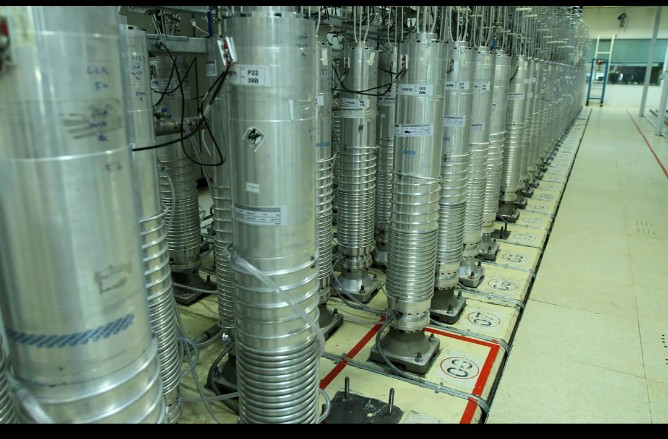
Is Iran a threat because of uranium or because of how it is perceived? Iran possesses enrichment capability, but it does not maintain a publicly acknowledged operational nuclear arsenal. In contrast, several countries already possess nuclear weapons.
Yet the global response differs sharply.The issue, therefore, is not merely technological capability, but trust, alignment, and geopolitical positioning.
Consider Pakistan. It is a nuclear-armed state, yet it does not face the same intensity of pressure. The distinction lies in how states are viewed whether as manageable partners or strategic challengers.
This leads to an uncomfortable but unavoidable conclusion:
Nuclear concern is not applied equally, it is shaped by politics, not parity. Sovereignty and the Right to Security. This brings us to a fundamental question:
Who decides which nation can pursue nuclear capability and why should some be denied?
Under the Nuclear Non-Proliferation Treaty, nations retain the right to develop nuclear technology for peaceful purposes. At the same time, global mechanisms seek to prevent proliferation.
Yet the application of these rules is uneven.
From one perspective, every country has the sovereign right to defend itself and secure its future. In an uncertain world, where threats evolve rapidly, the desire for deterrence is understandable. From another perspective, unchecked nuclear expansion risks destabilising the global order.
Between these positions lies the central dilemma:
Does sovereignty include equal security rights or are those rights selectively applied? Many across the world increasingly feel that the answer is not uniform. The system appears to grant greater freedom to some, and greater restriction to others.
Economic Fallout: Who Pays the Price?.
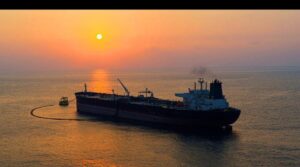
The consequences of this conflict extend far beyond the region. Disruptions in the Strait of Hormuz have triggered fluctuations in global oil prices, impacting economies worldwide. This leads to a pressing question:
Who pays for this instability? The answer is clear: Not policymakers. Not strategic planners. But ordinary citizens across the globe through rising fuel prices, inflation, and economic strain.

And yet, another question remains unanswered: Who compensates the world for these disruptions? The answer is stark: No one. Global geopolitics does not function on compensation, it functions on consequence.
Who Will Question Power?
As the dominant global force, the United States shapes both conflict and consequence. But who, in practical terms, can question it? International institutions remain limited in enforcement
Allies often align with its strategic objectives. Rivals lack collective leverage. The global system itself is deeply interconnected with American influence.
Power, therefore, often operates without immediate accountability. Yet, accountability does not disappear it shifts.
It emerges through: Global opinion. Economic realignment. Strategic repositioning by other nations.Will America Question Itself? If the world cannot directly question, history suggests that the United States eventually questions itself. From Vietnam to Afghanistan, domestic scrutiny has emerged when:
Conflicts prolonged, Costs escalated, Objectives remained unclear. If the present confrontation deepens, similar questions may arise: What is the objective and at what cost? Lessons from the Korean War?
A useful parallel lies in the Korean War.
Despite overwhelming military strength, the conflict did not end in victory but in stalemate. It froze along the 38th parallel, creating a divided peninsula that remains unresolved decades later.
The lesson is enduring: Power can shape outcomes but it cannot always conclude them. The Rise of Managed Conflict. The present situation reflects a broader shift in warfare: Not full-scale war. Not lasting peace. But sustained, controlled confrontation.
This is a model of: Pressure without invasion. Control without occupation. Conflict without closure. It avoids the cost of total war but risks creating permanent instability. India’s Strategic Perspective. For India, the implications are immediate and significant.
Energy flows, trade routes, and economic stability remain closely tied to developments in Hormuz. Any disruption affects inflation, planning, and growth. India must respond with clarity: Security Priorities. Strengthening maritime capabilities. Securing energy supply chains. Strategic Approach. Maintaining balanced diplomacy.
Preserving strategic autonomy. India’s strength lies in its ability to navigate complexity without becoming entangled.
To conclude: The Question That Remains.
From Korea to Hormuz, one truth persists: Wars are no longer defined only by who possesses power but by who defines threat. The United States can project force. Iran can endure. Other powers can adjust.
But the deeper question remains unresolved: Who decides what constitutes danger and on what basis?Until this question is addressed with fairness and clarity, the world will continue to witness conflicts shaped not just by capability but by perception and power.

Author’s Note.
History rarely repeats itself in identical form, but its patterns endure. The Korean War demonstrated how conflicts can stabilise without resolution, creating long-term geopolitical fault lines.
Today, similar dynamics are visible in the Gulf. The challenge before global powers is not merely to manage conflict, but to ensure that temporary stability does not become permanent uncertainty.
In a world defined by selective responses and unequal power, lasting peace requires not just strength but consistency, credibility, and strategic foresight.
About the Author
Col (Dr.) Ashwani Kumar, MiD, VSM (Retd.) is a highly decorated Army veteran, twice honoured by the President of India, with extensive experience across operations, intelligence, and military education. A participant in the Indian Peace Keeping Force, he brings firsthand insight into complex conflict environments.
He has served in an elite military intelligence organisation and held assignments abroad, offering deep understanding of global security dynamics. As Head of Department at a premier military training establishment, he contributed significantly to shaping military leadership and doctrine.
His writings reflect a blend of combat experience, strategic insight, and analytical depth, providing authoritative perspectives on contemporary geopolitical issues.
Views expressed are personal.