

A May 2 Pilgrim’s Perspective
 Dr. M. M. Goel
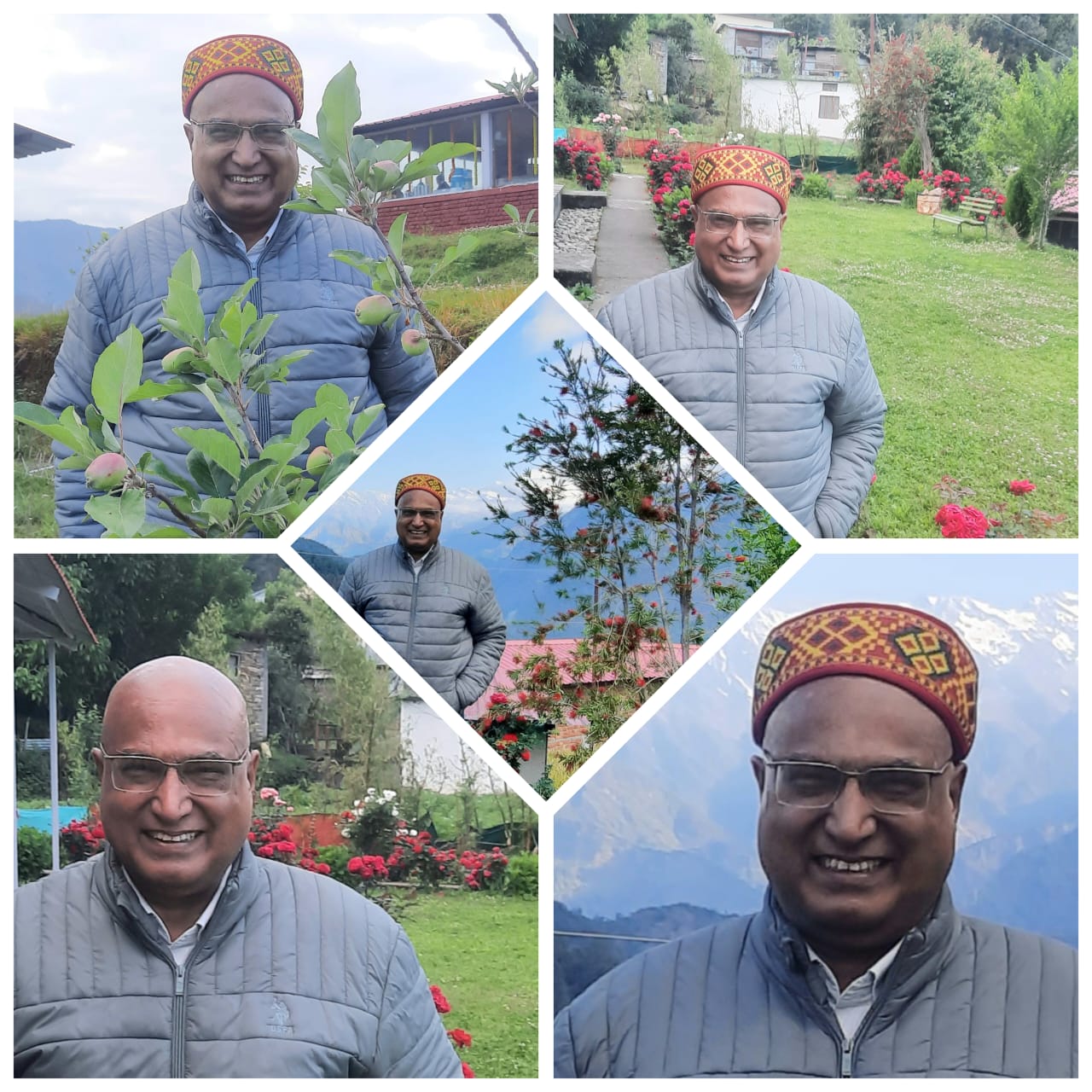
Our visit to Kedarnath on May 2, 2026 offered more than a pilgrimage. It offered a direct lesson in the larger challenges of managing tourism in fragile Himalayan ecosystems. After travelling nearly eleven hours by road from Kurukshetra, we reached Phata with hope and a positive mindset for the helicopter journey. Helicopter services there are operated by eight stakeholders, including Rajas Aero Sports and Adventures Pvt. Ltd. from Turiya Heli Resort Helipad.
Our flight was scheduled between 12 noon and 3 p.m. A few sorties to Kedarnath operated and returned, but adverse weather forced suspension of services just before our turn. After 3 p.m., the ride was officially cancelled. Notably, some consideration was later extended to passengers scheduled between 3 p.m. and 6 p.m., while those in our slot were neither accommodated nor offered rescheduling.
It is pertinent to note that passengers weighing above 80 kg are required to pay an additional charge of Rs 150 per kilogram. Despite complying with all requirements and waiting patiently, we had to return without darshan, carrying considerable disappointment and mental distress.
Weather-related disruptions are understandable in mountain regions, but such situations call for empathy, transparent communication, and a humane institutional response. Pilgrims who undertake long and demanding journeys in good faith deserve procedural clarity and fair consideration, including suitable compensation where services are cancelled after prolonged waiting and inconvenience.

This personal experience at Phata points to a larger public policy question. The ongoing debate on carrying capacity in the Char Dham circuit is not merely an administrative matter. It is a moral, ecological, and economic imperative.
The Needonomics School of Thought (NST), a Kurukshetra-based think tank, views this issue through the lens of balance between human aspiration and nature’s limits. In fragile hill ecosystems, where the margin for error is narrow, sustainable tourism must replace the prevailing culture of excess-driven footfall and ad hoc expansion.
At present, tourism management in the Himalayan belt often relies on piecemeal interventions—temporary caps, reactive restrictions, and cosmetic infrastructure upgrades. Such measures fail to address the structural imbalance between visitor numbers and ecological resilience. Needonomics therefore advocates a shift from fragmented responses to a coherent, science-based framework rooted in the principle of “need over greed.”
Scientific studies on carrying capacity provide a credible and replicable methodology. These assessments consider ecological sensitivity, waste absorption capacity, water availability, infrastructure load, and disaster vulnerability. Applying such parameters rigorously to the Char Dham circuit can help establish clear thresholds for sustainable visitation. More importantly, the same framework can guide tourism management in other ecologically sensitive destinations across India.
Recurring disasters in the Himalayan region underscore the consequences of ignoring these limits. The 2013 Uttarakhand floods demonstrated how unregulated construction, excessive tourist inflow, and environmental neglect can amplify natural hazards into human tragedy. The lesson is clear: unless tourism practices are aligned with ecological capacity, the cycle of damage and recovery will continue.

NST emphasizes a prognosis-based approach rather than a postmortem response. Monitoring and evaluation of causative factors—land-use change, traffic congestion, waste generation, and climate variability—must become continuous and data-driven. Technology can play a decisive role through real-time tracking of visitor numbers, environmental indicators, and risk thresholds. Such a forward-looking framework can integrate carrying capacity with disaster preparedness so that preventive action replaces reactive crisis management.
At the same time, tourism remains a major source of livelihood with a high employment multiplier across transport, hospitality, and local crafts. Restriction without alternative planning could adversely affect local economies. Therefore, the Union government must support state and local authorities by addressing financial and administrative constraints. Investment in sustainable infrastructure, capacity-building, and digital governance systems can help safeguard both livelihoods and landscapes.
From a Needonomics perspective, the objective is not to restrict tourism but to redefine it. Conscious pilgrimage—where visitors, service providers, and policymakers act with a shared sense of responsibility—can transform the Char Dham experience. Pilgrimage, after all, is as much about inner discipline as physical travel. Regulating numbers, promoting off-season travel, encouraging eco-friendly practices, and fostering respect for local ecosystems are practical steps in that direction.
Waiting at Phata on May 2 was therefore more than a moment of disappointment. It became a reminder that policy must move beyond managing crowds to respecting limits, protecting fragile ecosystems, and preserving the dignity of pilgrims. In that sense, rethinking Char Dham policy is not only about better administration; it is about building a model of sustainable development in which prosperity remains meaningful because it remains sustainable.