


The author’s writing reflects both the precision of a collector and the curiosity of a historian, making the work accessible without sacrificing scholarly depth
 Biswadeep Gupta
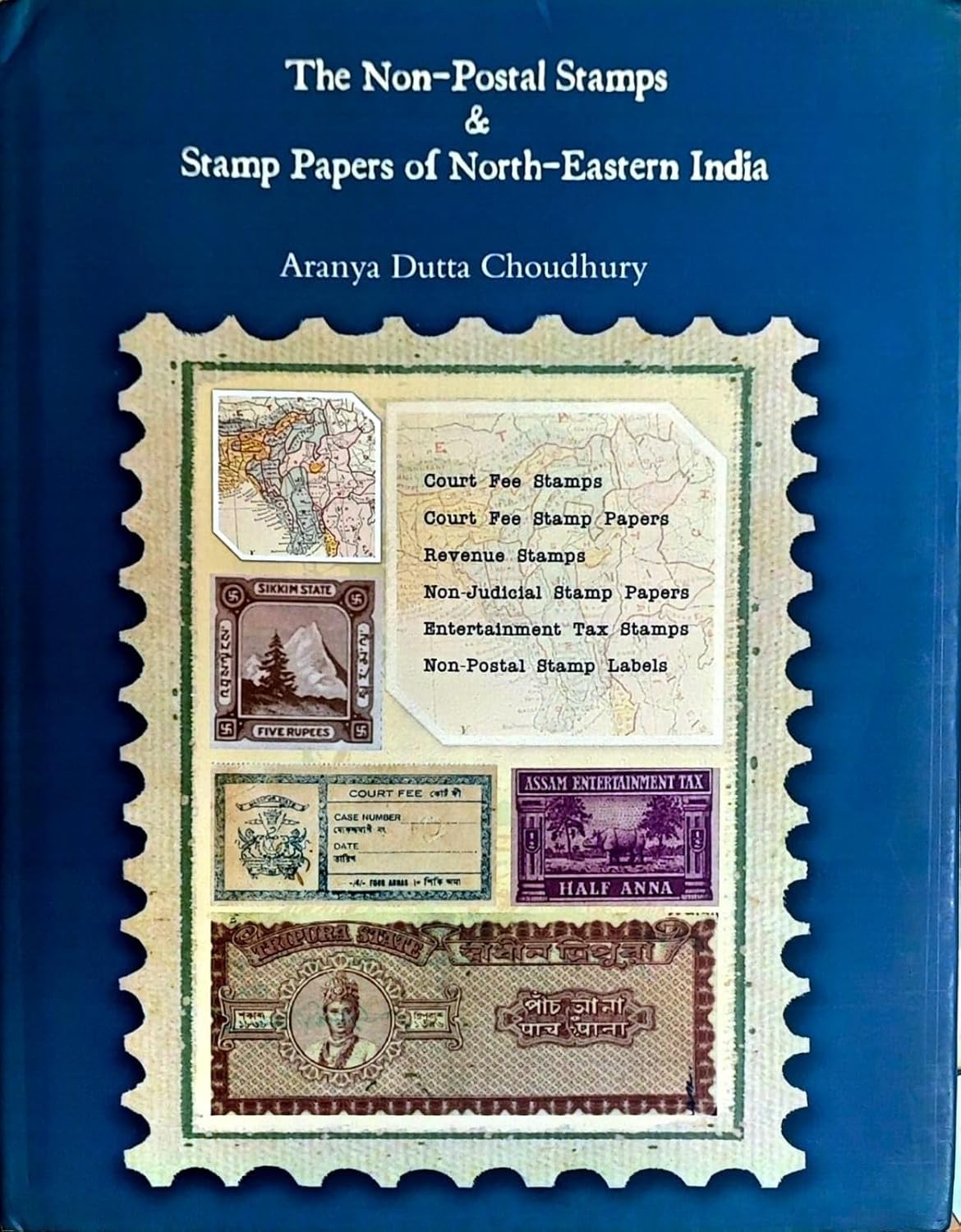
Imphal : Philately in India has traditionally revolved around postage stamps, their imagery, and their historical associations. Yet, a parallel and equally significant domain has long remained in the shadows—that of non-postal fiscal instruments. In The Non-Postal Stamps & Stamp Papers of North-Eastern India, Aranya Dutta Choudhury brings this overlooked subject into the mainstream with authority, clarity, and evident passion.
Drawing upon years of dedicated research and deep engagement with archival material, Aranya presents a comprehensive exploration of revenue stamps, court fee issues, and stamp papers from Manipur, Tripura, Sikkim, and Assam. What emerges is not merely a catalogue of rare items, but a textured narrative that situates these artefacts within the administrative, legal, and economic frameworks of their time. The author’s writing reflects both the precision of a collector and the curiosity of a historian, making the work accessible without sacrificing scholarly depth.

One of the defining strengths of the book lies in its ability to transform seemingly obscure material into a compelling story. From the early hand-stamped papers of Manipur to the intricately designed printed issues of Tripura, each section reveals how these fiscal tools were integral to governance and trade. Aranya’s observations on design variations, printing styles, and usage contexts are particularly insightful, offering readers a nuanced understanding of how these items evolved across regions and regimes.
The visual presentation of the book deserves special mention. Rich, full-colour illustrations are used not merely as embellishments but as essential components of the narrative. They allow collectors to identify rare varieties and appreciate the fine details of engraving, typography, and layout that define these issues. In this regard, the production quality significantly enhances the reader’s experience.
Credit must also be given to Sayantan Publications of Kolkata for the excellent printing and overall presentation of the volume. The careful attention to paper quality, colour reproduction, and layout ensures that the intricate details of each specimen are rendered with clarity and fidelity. In a work so dependent on visual accuracy, this level of production is not just commendable but crucial.
Importantly, the book fills a conspicuous gap in Indian philatelic literature. While the postage stamps of British India and the princely states have been widely studied, non-postal issues have remained fragmented across private collections and scattered references. By bringing these elements together into a single, cohesive work, Aranya has created a valuable reference that is likely to serve collectors and researchers for years to come.
Ultimately, The Non-Postal Stamps & Stamp Papers of North-Eastern India is more than a specialist study—it is an invitation to rethink what constitutes philatelic heritage. It urges readers to look beyond the familiar and recognise the historical significance embedded in these fiscal artefacts.
For philatelists, historians, and serious collectors, this book is not only informative but indispensable.