

Officials said the idea is aimed at reducing the number of accompanying vehicles while simultaneously improving administrative coordination
 KRC TIMES Assam Bureau
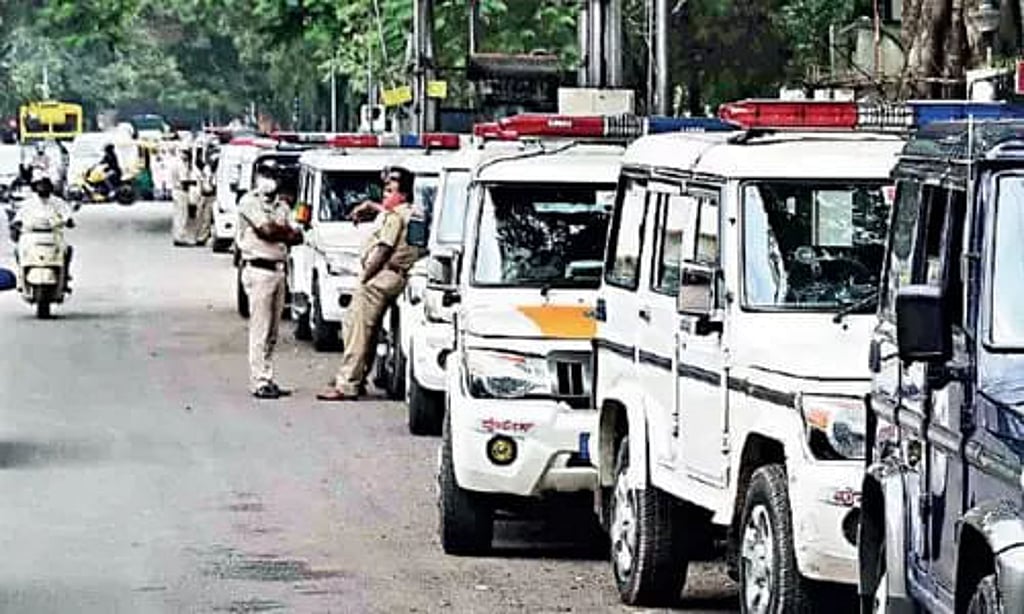
GUWAHATI : As Prime Minister Narendra Modi calls for austerity measures and reduced VIP convoys amid economic uncertainty linked to the Iran war and rising global oil prices, Assam Chief Minister Himanta Biswa Sarma is already operating with one of the leanest high-security convoys among Indian Chief Ministers.
Despite being under Z Plus security cover, Himanta Biswa Sarma’s convoy within Guwahati reportedly consists of only six vehicles, according to official sources. Unlike many high-profile political movements seen across the country, the Assam Chief Minister’s convoy does not include separate ambulance or jammer vehicles during routine travel in the city.
Officials said this minimal convoy structure is not a recent adjustment following the Centre’s call for fuel conservation and expenditure control. Sources familiar with the Chief Minister’s security arrangements stated that Sarma has consciously maintained a compact and operationally efficient convoy system over the last five years, including after assuming office for a second consecutive term.
Prime Minister Narendra Modi recently urged governments and public representatives to adopt fuel-saving measures, reduce non-essential expenditure, encourage the use of electric vehicles, and limit convoy sizes in view of the economic pressure arising from global geopolitical tensions and volatile oil prices.
Against this backdrop, Assam’s convoy model is being viewed as an example of administrative minimalism without compromising security requirements.
However, officials noted that the convoy size tends to increase during the Chief Minister’s visits outside Guwahati, mainly due to the addition of district administration teams, police officials, and departmental officers accompanying review meetings and field inspections.

To address this, the Assam government is now considering the introduction of a “caravan-style” official vehicle for district tours. According to sources, the proposed system would allow senior bureaucrats, district officials, and key administrative personnel to travel together with the Chief Minister in a larger integrated vehicle during inter-district visits.
Officials said the idea is aimed at reducing the number of accompanying vehicles while simultaneously improving administrative coordination. Travel time could also be utilised for governance-related discussions, project reviews, and planning meetings on the move, helping save both time and public resources.
The proposal is seen as being in line with the Centre’s broader austerity narrative and could emerge as a model for reducing VIP movement expenditure without affecting governance efficiency or security management.
The move also reflects a wider trend among BJP-led governments to project administrative restraint, fuel conservation, and cost-cutting measures following the Prime Minister’s appeal for economic prudence amid global instability.
Assam’s Mrigashree Baruah emerges first runner-up at Miss Grand India 2026
Assam’s Mrigashree Baruah delivered a standout performance at the Miss Grand India 2026 finale, finishing as the first runner-up as contestants from Northeast India made a strong impact at the national beauty pageant held in New Delhi.
The fourth edition of the competition concluded at Talkatora Stadium on May 12, with Tamil Nadu’s Lakshita Thilagaraj being crowned Miss Grand India 2026. The 22-year-old computer science engineer from Chennai will now represent India at the Miss Grand International 2026 pageant scheduled for October.
Baruah’s impressive finish highlighted the growing visibility of northeastern contestants on the national stage. Meghalaya’s Tanvi Marak secured the second runner-up position, while contestants from Sikkim and other northeastern states also featured prominently among the finalists.
Saanjh Khurana of Uttar Pradesh, Reshmi Deokota of West Bengal, and Sneha Tamang of Sikkim completed the top six rankings, underlining the strong representation from the Northeast at this year’s event.
The pageant, held from April 29 to May 12, featured nearly 29 contestants representing states and union territories across India. Participants competed in multiple rounds, including talent, swimsuit, national costume, and a Bollywood-themed gala segment.

This year’s edition also marked the debut participation of several states on the Miss Grand India platform, including Manipur, Andhra Pradesh, Haryana, Uttarakhand, and Tamil Nadu.
During the final question-and-answer segment, several northeastern contestants drew attention for their outspoken responses on issues ranging from inclusivity and discrimination to women’s safety and sexual violence.
Speaking on inclusivity and constitutional values, Assam’s Mrigashree Baruah called for greater openness and acceptance in society. She said people should be “open to knowledge, open to people, open to newness of life,” while invoking Article 21 of the Constitution, which guarantees the right to life with dignity.
Sneha Tamang of Sikkim directly addressed the issue of racial discrimination faced by people from the Northeast. Stressing the need for equality and recognition, she said northeastern people continue to face questions about their identity despite being an integral part of India.
Meanwhile, Meghalaya’s Tanvi Marak spoke strongly on crimes against women, advocating stricter punishment in rape cases and asserting that justice and humanity must remain the top priority for policymakers.
Winner Lakshita Thilagaraj focused her final response on promoting peace and empathy through education. Emphasising India’s diversity as a strength, she argued that compassion and understanding should be taught to children from an early age.
Contestant Saanjh Khurana also highlighted concerns around women’s safety, stating that true empowerment remains incomplete if women continue to feel unsafe in society.
Lakshita Thilagaraj succeeds Rajasthan’s Vishakha Kanwar, who held the Miss Grand India title in the previous edition.