

The disclosure comes amid continued national efforts to strengthen border infrastructure and curb illegal cross-border movement
 KRC TIMES Assam Bureau
Guwahati : The Assam government on Monday informed the Legislative Assembly that fencing work along a portion of the India-Bangladesh border in the state remains incomplete due to objections raised by Bangladesh authorities, while significant stretches along riverine areas continue to pose logistical challenges for border management.
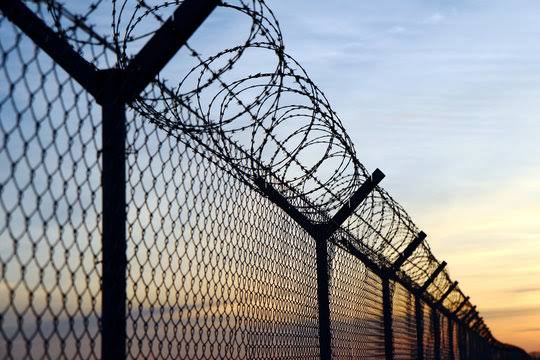
Replying to a question raised by AGP MLA Diptimayee Choudhury, Assam Border Protection and Development Minister Atul Bora said that barbed-wire fencing has been completed along 228.541 km of Assam’s 267.5-km international border with Bangladesh, covering sections in the districts of Dhubri, South Salmara-Mankachar, Cachar and Sribhumi.
However, fencing could not be undertaken along a 4.35-km stretch in Sribhumi district due to objections from the Border Guard Bangladesh (BGB). According to the minister, the disputed section lies along the banks of the Kushiyara River, where Indian citizens reside close to the international boundary.
“Fencing work along 4.35 km of the border could not be undertaken due to objections by the Border Guard Bangladesh. Indian citizens reside along the bank of the Kushiyara River in Sribhumi district,” Bora told the House.
The minister further informed legislators that an additional 34.609 km of the border remains unfenced because it passes through riverine terrain, where conventional fencing is difficult to install and maintain. Of this, 30.37 km falls in Dhubri district and 4.239 km in South Salmara-Mankachar district.
To address security concerns in these vulnerable stretches, the Border Security Force (BSF) has deployed technological surveillance systems and enhanced river patrol mechanisms.

Send your resume:
biswa@jigyasu.co.in
krcfoundation@gmail.com
“In the unfenced riverine stretches, the BSF monitors the border through the Comprehensive Integrated Border Management System (CIBMS) and boat observation outposts,” Bora said.
The disclosure comes amid continued national efforts to strengthen border infrastructure and curb illegal cross-border movement. In May this year, Union Home Minister Amit Shah announced that the Centre planned to establish a robust security grid along India’s borders with Bangladesh and Pakistan within the next year through the deployment of advanced surveillance technologies and modern monitoring systems.
According to a report submitted in March by the Parliamentary Standing Committee on External Affairs, approximately 3,232 km of the 4,096-km India-Bangladesh border has been fenced so far, while around 689 km remains uncovered. The committee noted that more than 174 km of the remaining unfenced stretch consists of riverine terrain, making physical fencing impractical.
India shares its longest international border with Bangladesh, stretching 4,096 km across five states. West Bengal accounts for the largest share at 2,216.7 km, followed by Tripura (856 km), Meghalaya (443 km), Mizoram (318 km), and Assam with approximately 263 km of the international boundary.
The issue of incomplete fencing has remained a recurring concern in Assam, particularly in districts bordering Bangladesh, where authorities have sought a combination of physical barriers, technological surveillance and coordinated security measures to strengthen border management and prevent illegal infiltration, smuggling and other cross-border activities.