

The Daughter of the Hills Who Challenged the British Empire
 KRC TIMES Desk
Col (Dr.) Ashwani Kumar, MiD, VSM (Retd)
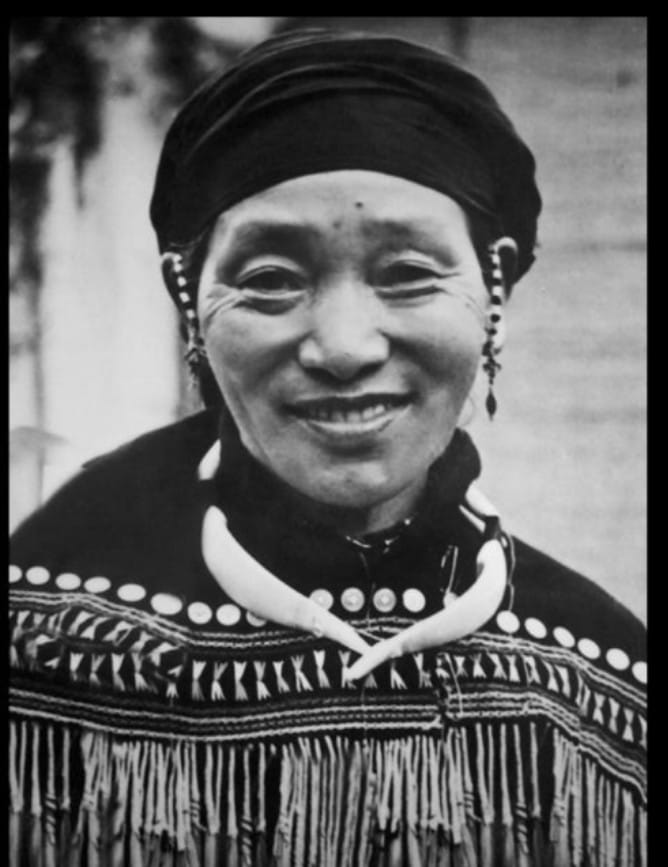
While the names of many freedom fighters are celebrated across India, countless heroes from the North-East remain unknown to much of the nation. Among them stands Rani Gaidinliu, a fearless tribal leader whose courage shook the foundations of British rule long before India achieved independence. Arrested at just sixteen years of age and imprisoned for nearly fourteen years, she became one of the youngest revolutionaries to sacrifice her youth for the freedom of her people and her country.
A Childhood in the Hills.
Rani Gaidinliu was born on 26 January 1915 in the village of Longkao (then Nungkao) in present day Manipur (Manipur was officially granted full statehood on January 21, 1972, under the North-Eastern Areas (Reorganisation) Act, 1971. Prior to becoming a full state, it was administered as a Union Territory from 1956 and as a princely state that acceded to the Indian Union in 1949), among the Rongmei Naga community. She belonged to a simple tribal family that deeply respected its ancient customs, traditions, and spiritual beliefs.
Like many children of the remote hills during that era, she received little formal education because schools were virtually non existent. Yet the forests, mountains, village elders, and tribal traditions became her classroom, shaping her into a courageous and determined young girl.
The Beginning of a Revolution.
At the age of just thirteen, Gaidinliu came under the influence of her cousin and spiritual guide, Haipou Jadonang, founder of the Heraka movement. The movement initially sought to revive the traditional faith and cultural identity of the Zeliangrong tribes. However, it gradually transformed into a powerful movement against British colonial rule. The British administration imposed taxes, interfered in tribal customs, and attempted to weaken indigenous institutions. Jadonang urged his people to resist these injustices peacefully but firmly.
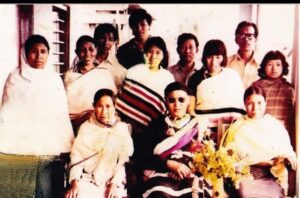
Young Gaidinliu quickly emerged as one of his most devoted disciples. Her leadership qualities, courage, and spiritual conviction impressed the tribal communities, who began to see her as a future leader.
Carrying Forward the Struggle.
In 1931, the British arrested Jadonang on charges widely regarded as politically motivated and executed him by hanging. His death shocked the tribal communities but failed to crush their spirit.
At only sixteen years of age, Gaidinliu assumed leadership of the movement. She called upon the people to refuse British taxes and reject colonial authority. Under her leadership, tribal volunteers organized themselves into small guerrilla groups, using their intimate knowledge of the difficult terrain to evade British forces.
The British administration viewed this young tribal girl as a serious threat. Rewards were announced for information leading to her capture, and military expeditions were launched into the forests and hills of present day Manipur, Nagaland, and Assam.
Arrest and Long Imprisonment.
In October 1932, British forces finally captured Gaidinliu after surrounding one of her hideouts.
She was tried and sentenced to life imprisonment. Although still a teenager, she spent the next fourteen years in prisons at Guwahati, Shillong, Aizawl, and Tura. During her imprisonment, she never abandoned her ideals. Her courage inspired many others across the North-East to continue resisting colonial rule.
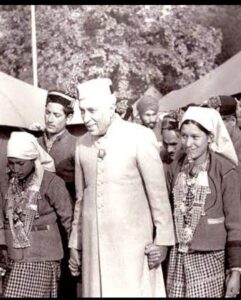
In 1937, Jawaharlal Nehru met her in Shillong Jail. Deeply moved by her bravery, he called her the “Daughter of the Hills” and bestowed upon her the title “Rani”, meaning Queen. Despite his efforts, the British refused to release her because they feared she would once again unite the tribal people against their rule.
Freedom at Last.
India became independent in 1947, and Rani Gaidinliu finally walked out of prison after spending nearly fourteen precious years behind bars. Most people would have retired from public life after such suffering. Instead, she devoted herself to the welfare of the Zeliangrong people, preservation of tribal heritage, promotion of education, and national integration.
She strongly believed that the tribal communities of the North-East were an inseparable part of India. At the same time, she emphasized preserving their unique traditions, languages, and culture.
Recognition for Her Service.
Independent India gradually recognised her immense contribution to the freedom struggle. She received the Tamrapatra Freedom Fighter Award in 1972, the Padma Bhushan in 1982, and the Vivekananda Seva Award in 1983. After her death in 1993, the Government of India honoured her with a commemorative postage stamp and later issued a commemorative coin in her memory.
These honours acknowledged not merely an individual but the sacrifices of countless tribal freedom fighters whose stories deserve equal recognition in India’s national history.
A Legacy Beyond the Battlefield.
Rani Gaidinliu’s contribution extends far beyond armed resistance. She proved that patriotism is not measured by one’s education, wealth, or position. A young girl from a remote tribal village challenged one of the world’s greatest colonial empires through determination, faith, and leadership.
Her life also reminds us that India’s freedom struggle was fought not only in Delhi, Mumbai, Kolkata, or Lahore, but equally in the forests, mountains, and remote villages of the North-East.
Lessons for the New Generation.
The story of Rani Gaidinliu offers timeless lessons. Young Indians must understand that age is never a barrier to leadership. Courage grows from conviction, not from power. National unity becomes stronger when every culture and community receives equal respect. Above all, forgotten heroes deserve remembrance because they shaped the India we proudly call our own.
To sum up, today, when India speaks of Ek Bharat, Shreshtha Bharat, the life of Rani Gaidinliu carries renewed relevance. She united spirituality with patriotism, tribal identity with national integration, and personal sacrifice with public service.
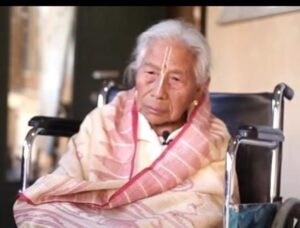
Her story deserves to be taught in every school, remembered in every home, and celebrated across the nation. The brave girl who entered prison as a teenager emerged as one of India’s greatest daughters a beacon of courage whose light continues to shine across the hills of the North-East.
Author’s Note.
This article is dedicated to the memory of Rani Gaidinliu, whose extraordinary sacrifice remains one of the least known chapters of India’s freedom movement. As a soldier and student of history, I believe that honouring such forgotten heroes strengthens our understanding of the nation’s shared heritage and reminds us that freedom was won through sacrifices made in every corner of India.
About the Author.
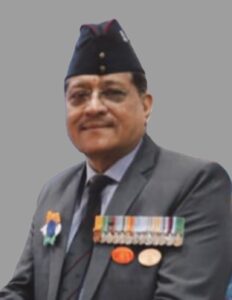
Col (Dr.) Ashwani Kumar, MiD, VSM (Retd.), writing under the pen name Ashk Machhanvi, is a retired Indian Army officer, intelligence professional, researcher, curative historian and author. His writings focus on India’s military history, strategic affairs, civilisational heritage, and the lives of unsung national heroes, especially from regions that have remained underrepresented in mainstream historical narratives.
Disclaimer:
This article is based on historical records, published research, government publications, and other publicly available sources. It has been written for educational and public awareness purposes. Every effort has been made to ensure factual accuracy, however, readers are encouraged to consult additional scholarly sources for deeper study. Images accompanying this article, if any, remain the property of their respective copyright holders and are used solely for historical and illustrative purposes.