

A Book Restores the Northeast’s Forgotten Wartime Legacy
 KRC TIMES Desk
Sanjoo Thangjam
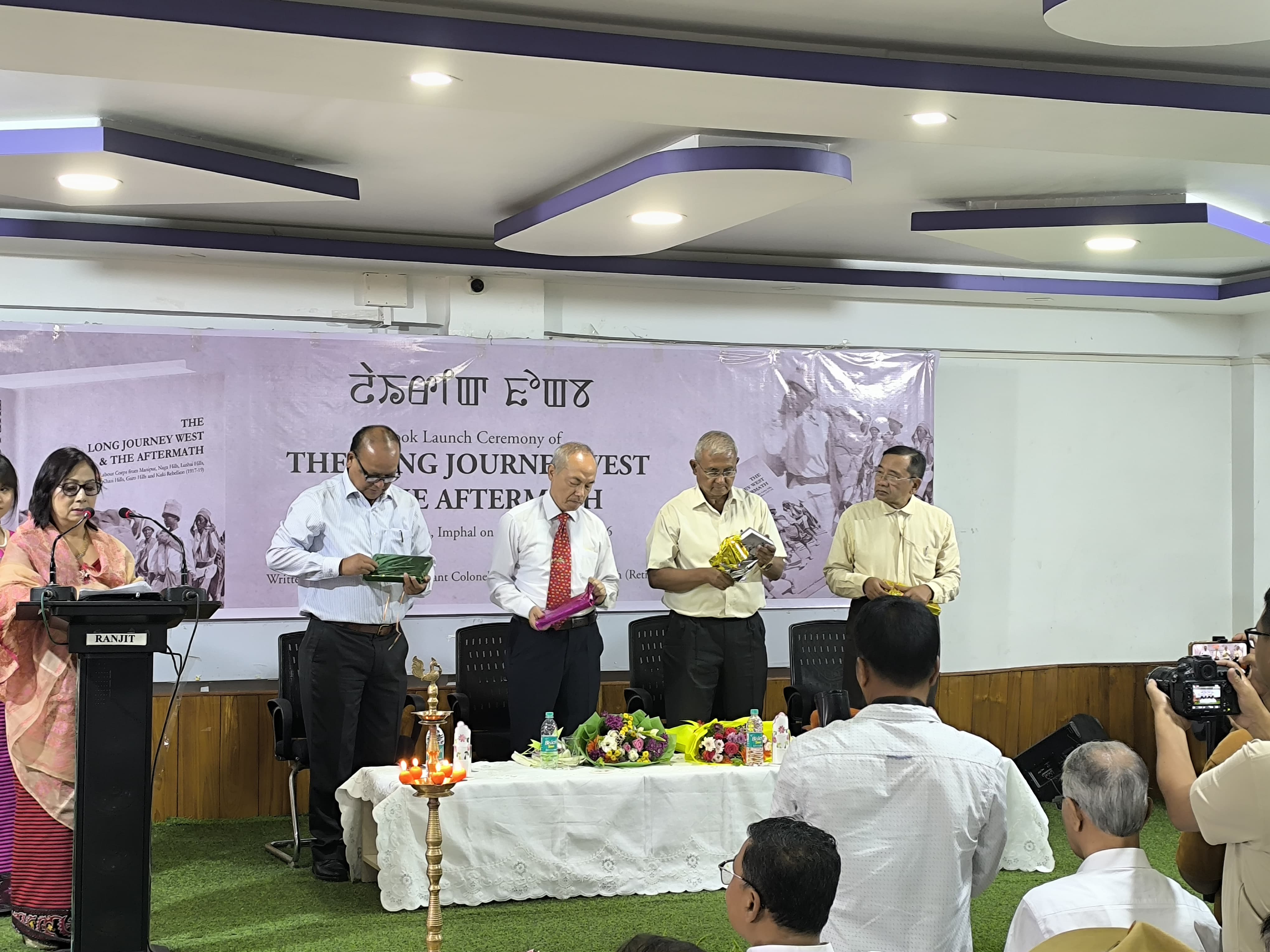
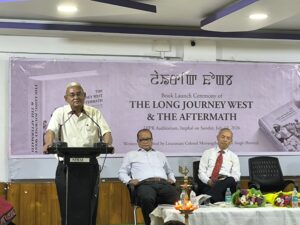
The resonant strains of Sana Leibak Manipur, rendered by Kongthoujam Bobin, R.K. Nandeshwori, Chitra Pangambam and Kennedy Khuman, set a reflective mood at the DIPR Auditorium in Imphal on Sunday as scholars, veterans and history enthusiasts gathered to witness the launch of a work that illuminates one of the least explored chapters of Northeast India’s past.
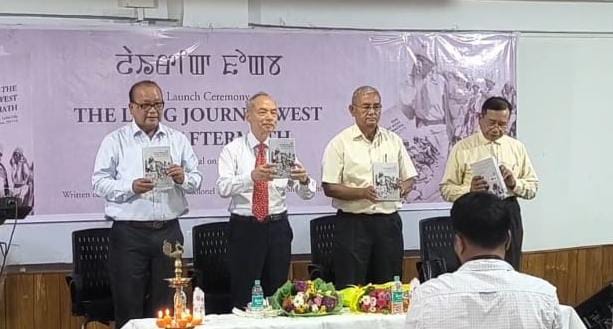
The occasion marked the release of The Long Journey West & The Aftermath: Labour Corps from Manipur, the Naga Hills, the Lushai Hills, the Khasi Hills, the Garo Hills and the Kuki Rebellion, 1917–1919, the debut book of Lt. Col. Moirangthem Ranjit Singh (Retd.). More than a volume of history, the book is a tribute to thousands of men from the hills and valleys of the region who journeyed across continents during the First World War to serve the Allied war effort in France.
Gracing the function were Lt. Gen. (Dr.) Konsam Himalay Singh, PVSM, UYSM, AVSM, YSM (Retd.) as Chief Guest, Dr. R.K. Nimai, IAS (Retd.) as President, and Capt. L.B. Singh, Indian Navy Veteran, as Guest of Honour. Members of the author’s family and his in-laws joined an audience comprising former civil servants, scholars and admirers of the region’s history.
In their addresses, the dignitaries commended the author for his painstaking scholarship. Lt. Gen. Himalay Singh observed that the work bears the imprint of years of diligent archival research, while Dr. Nimai praised its engaging narrative, remarking that it reads “almost like a novel.” He also encouraged the author to continue his inquiries into the military history of the region with a future study of the famed Double Company.
Commissioned into the 16 Rajput Regiment in 1972, Lt. Col. Ranjit Singh cultivated an abiding interest in the history of Manipur and the wider Northeast from his student days. Even after retiring from the Army in 2007, he continued to write and research, contributing regularly to The Sangai Express. His first book is the culmination of decades of curiosity and dedication.
Drawing upon archival records and previously overlooked sources, the study reconstructs the remarkable story of the labour corps recruited from Manipur and the neighbouring hill districts. Numbering thousands, these men left their homes for a distant and unfamiliar Europe, where they spent nearly a year performing arduous yet indispensable duties behind the front lines.
The book follows their recruitment, their long sea voyage to France, their wartime experiences and the fate of those who never returned.
Interwoven with this narrative is a nuanced account of the Kuki Rebellion of 1917–19, placing local resistance and wartime mobilisation within a broader historical framework. In doing so, the volume enriches our understanding of how global events touched the lives of communities in the Northeast.
The launch of the book was thus more than a ceremonial occasion. It was an affirmation that the sacrifices and journeys of these forgotten men deserve a permanent place in the collective memory of the region and the nation alike.