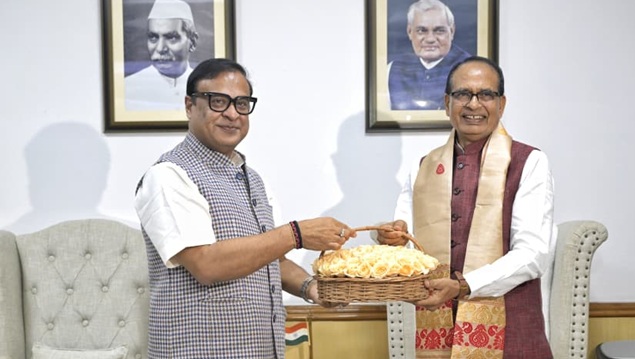
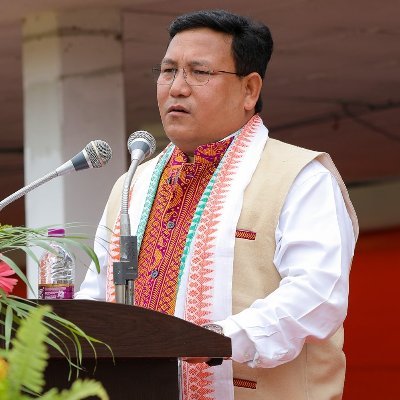
Senior officials from multiple state government departments, district administrations and central agencies participated in the review meeting, with several joining virtually
 KRC TIMES Assam Bureau
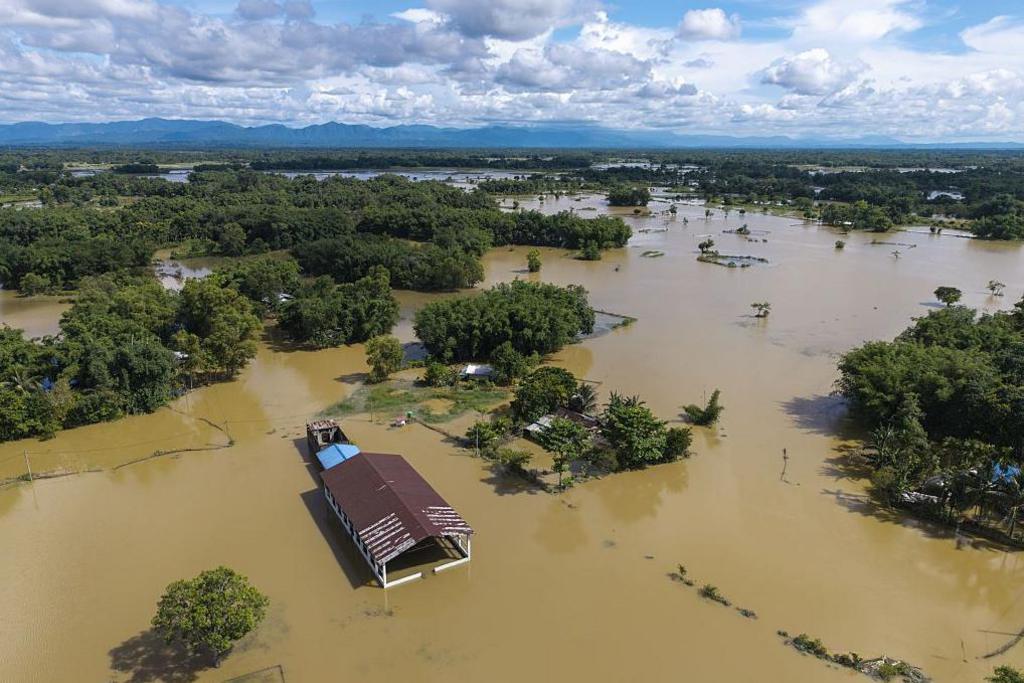
Guwahati | A six-member Inter-Ministerial Central Team (IMCT) on Wednesday concluded its assessment of the recent floods in eastern Assam after reviewing the extent of the damage and relief operations with Chief Secretary Ravi Kota at Janata Bhawan in Dispur.
The high-level meeting marked the culmination of a four-day field visit to some of the worst-affected districts, during which the central delegation assessed the impact of the unprecedented floods that inundated parts of Charaideo, Sivasagar, Jorhat and Golaghat.
During the review, Additional Chief Secretary for Revenue and Disaster Management and Chief Executive Officer of the Assam State Disaster Management Authority (ASDMA), L. Sweety Changsan, presented a detailed account of the factors that triggered the floods, the scale of destruction, ongoing relief measures and the challenges encountered by the state administration in responding to the disaster.
The IMCT, led by M. Ramachandrudu, Joint Secretary (DM-II), Ministry of Home Affairs, visited Charaideo on July 26, Sivasagar on July 27, and Jorhat and Golaghat on July 28, interacting with district authorities, affected residents and officials involved in rescue and relief operations.
Senior officials from multiple state government departments, district administrations and central agencies participated in the review meeting, with several joining virtually. Representatives from the National Disaster Response Force (NDRF), Indian Army, Northeast Frontier Railway (NFR), Food Corporation of India (FCI), Bharat Sanchar Nigam Limited (BSNL) and the Department of Telecommunications (DoT) also attended the deliberations.
Unusual Rainfall Triggered Unprecedented Flooding
The Assam government informed the central delegation that this year’s floods differed significantly from previous flood events, particularly as Charaideo and Sivasagar, districts that have historically remained outside the state’s major flood zones, witnessed extensive inundation.

Send your resume:
biswa@jigyasu.co.in
krcfoundation@gmail.com
Officials attributed the disaster to exceptionally heavy rainfall in neighbouring Nagaland on July 19, particularly in the districts of Mokokchung, Wokha and Mon, coupled with intense localised downpours in parts of eastern Assam. The combined effect of upstream runoff and heavy rainfall overwhelmed drainage systems and river channels, leading to widespread flooding across the affected districts.
The state described the event as an extraordinary weather phenomenon that caused extensive damage to homes, agricultural land, public infrastructure and livelihoods.
Relief, Rescue and Damage Assessment
During the meeting, officials briefed the IMCT on the rescue and relief operations undertaken in the aftermath of the floods. Rescue missions were carried out jointly by the State Disaster Response Force (SDRF), NDRF, Assam Fire and Emergency Services, the Indian Army and local volunteers, ensuring the evacuation of stranded residents from inundated areas.
The government said relief assistance has been distributed in accordance with existing disaster management guidelines. To strengthen ongoing operations, family relief kits containing rice, dal, mustard oil, salt and candles are being transported from neighbouring districts to Sivasagar and Charaideo, where relief efforts continue.
Officials noted that the process of assessing losses to houses, crops, roads, bridges and other public infrastructure is still underway. A comprehensive memorandum detailing the extent of the damage and financial assistance required will be submitted to the Centre after the conclusion of the flood season.
Assam Seeks Greater Central Support
The state government urged the central delegation to recommend relaxation of the existing norms under the State Disaster Response Fund (SDRF) to enable broader assistance for people affected by the unprecedented flooding.
Senior officials argued that the scale and nature of the disaster warrant greater flexibility in relief provisions, particularly in districts that are not traditionally categorised as flood-prone but suffered extensive losses this year.
The IMCT assured the Assam government that the findings from its field visits and the discussions held with state officials would be compiled into a detailed report and submitted to the Government of India for further consideration.
Multi-Agency Participation
Apart from team leader M. Ramachandrudu, the IMCT included representatives from the Central Water Commission, Ministry of Finance, Ministry of Rural Development, Ministry of Road Transport and Highways, and the National Remote Sensing Centre (NRSC).
The review meeting was also attended by senior Assam government officials from departments including Revenue and Disaster Management, Animal Husbandry and Veterinary, Industries, Panchayat and Rural Development, reflecting the multi-sectoral impact of the floods and the coordinated response required for relief, rehabilitation and long-term recovery.
The central team’s visit follows widespread flooding triggered by intense rainfall across eastern Assam earlier this month, with several districts witnessing unprecedented inundation, large-scale displacement and significant damage to public infrastructure, agriculture and livelihoods. Its report is expected to play a key role in determining the extent of central assistance for relief and reconstruction in the affected areas.