

The United Nations has expressed concern and demanded impartial investigations. Amnesty International has described the crackdown as violent and sweeping
 KRC TIMES Desk
Dr. Abhijeet Jasrotia
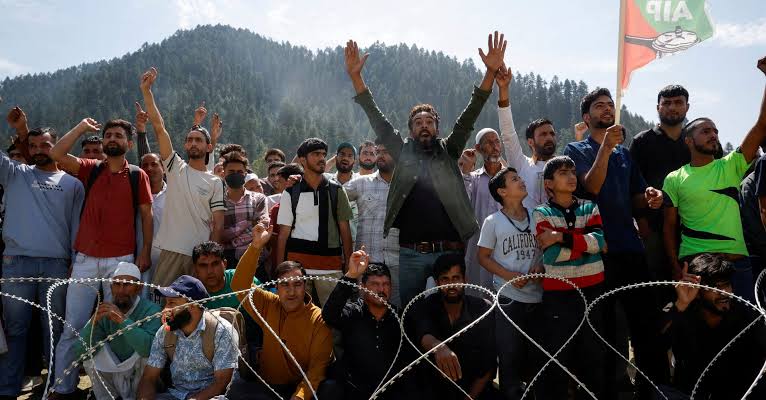
The people of Pakistan-occupied Jammu and Kashmir are rising against decades of oppression. For months, peaceful protesters led by the Joint Awami Action Committee have faced bullets, internet blackouts, mass arrests and a complete denial of basic rights. What began as demands for cheaper electricity and flour has grown into a clear rejection of Pakistan’s illegal control. Dozens have been killed. Hospitals are under force control. Food and medicine supplies have been blocked. This is not a local dispute. It is the natural result of Pakistan’s long exploitation of a territory that has always been an integral part of India.
The Bharatiya Janata Party has spoken against these atrocities from the first day. Our leaders in Jammu and at the national level have repeatedly condemned the use of lethal force against unarmed civilians. We have reminded the world that PoJK is not “Azad” Kashmir. It is Indian territory under illegal occupation. The unanimous Parliamentary Resolution of 1994 remains our guiding document. It declares the entire state of Jammu and Kashmir, including the areas under Pakistan’s control, as an inseparable part of India. We stand by that resolution without compromise. Under the leadership of Prime Minister Narendra Modi, India has never accepted Pakistan’s claim. We will reclaim every inch of our land at the appropriate time.
The current uprising has deep roots. Since 2023 the people of PoJK have protested rising prices of wheat and electricity. Pakistan extracts resources from the region while giving little in return. The Mangla Dam generates power, yet local residents pay high tariffs. In 2025 the movement expanded into a 38-point charter that included demands for transparent governance, better services and the abolition of 12 assembly seats reserved for refugees settled elsewhere in Pakistan. These seats allow mainland Pakistani parties to control the so-called assembly and keep real local voices weak.
When the authorities banned the Joint Awami Action Committee under anti-terror laws in June 2026, the people refused to stay silent. Protests spread from Rawalakot to Muzaffarabad, Mirpur, Kotli and other districts. Security forces opened fire. Death tolls reported by local groups and independent observers range from dozens to over a hundred. Internet and mobile services remain restricted. Essential supplies have been cut off. This is the face of Pakistan’s rule.
India’s Ministry of External Affairs has called out these wanton killings and urged the international community to hold Pakistan accountable. The United Nations has expressed concern and demanded impartial investigations. Amnesty International has described the crackdown as violent and sweeping. Yet the Pakistani establishment continues to label peaceful citizens as enemies and terrorists. Defence Minister Khawaja Asif even equated the protesters with India. Such statements only confirm the desperation of a failing state.
While the BJP has raised its voice consistently, especially from Jammu, the mainstream political parties of the Kashmir Valley have shown little sustained concern for the suffering in PoJK. These parties have often positioned themselves as champions of human rights and self-determination. They speak passionately about Palestine. They organise statements, social media campaigns and public expressions of solidarity whenever events unfold in Gaza.
Yet when their own Kashmiri brethren across the Line of Control face bullets for demanding basic dignity, their response remains muted or limited to brief comments. This selective approach is not new. For years the same parties remained largely silent while Pakistan systematically denied political rights, economic justice and freedom of expression in PoJK. Their focus stayed fixed on issues that served domestic political narratives rather than the real pain of people living under occupation.
The contrast is clear. The BJP has never treated PoJK as a distant or secondary matter. Our workers and leaders in Jammu have held press conferences, issued statements and demanded international attention. We have highlighted the forced demographic changes, the denial of democratic rights and the economic plunder that Pakistan has practised for decades. We have pointed out that the so-called elections currently underway are a farce designed to hide repression.
When Pakistan tried to mark 5 August as “Youm-e-Istehsal,” the people of PoJK themselves rejected the propaganda and turned the day into mass anti-Pakistan protests. Women, youth and ordinary citizens joined in large numbers. This is the truth Pakistan cannot hide behind internet shutdowns.

The uprising also exposes the hollow nature of Pakistan’s Kashmir narrative. For decades Islamabad has claimed to support the rights of Kashmiris while treating the people under its own control as subjects. It has used the territory for strategic depth, as a base for terrorism, and as a source of resources. The same state that lectures the world on human rights responds to peaceful demands with anti-terror laws and live ammunition. The pattern is familiar. Similar repression has been seen in Balochistan and other regions of Pakistan. The people of PoJK are simply the latest to say enough.
India’s position is firm and consistent. PoJK is an integral part of our country. The people living there are our own people. Their struggle for basic rights strengthens the case for the complete reunification of Jammu and Kashmir. We call upon the international community to look beyond Pakistan’s propaganda and examine the ground reality. Independent investigations into the killings, enforced disappearances and communication blackouts are necessary. The ban on civil society groups and the use of lethal force against unarmed protesters must be condemned without double standards.
The BJP will continue to speak for the people of PoJK. We will continue to remind the nation and the world that occupation cannot be permanent and that justice delayed is justice denied. The selective silence of certain Valley parties only underlines the difference between genuine concern for Kashmiris and political convenience. While they raise their voice for distant causes, we stand with our people on both sides of the Line of Control. The uprising in PoJK is a wake-up call. Pakistan’s iron fist has failed. The demand for dignity cannot be silenced forever. India remains committed to the full recovery of its territory and the protection of its people. The day of reckoning for illegal occupation is approaching.
The writer is spokesperson for BJP