


The government is undertaking district-wise climate risk and vulnerability mapping to identify areas that may require additional intervention
 KRC TIMES NE Desk
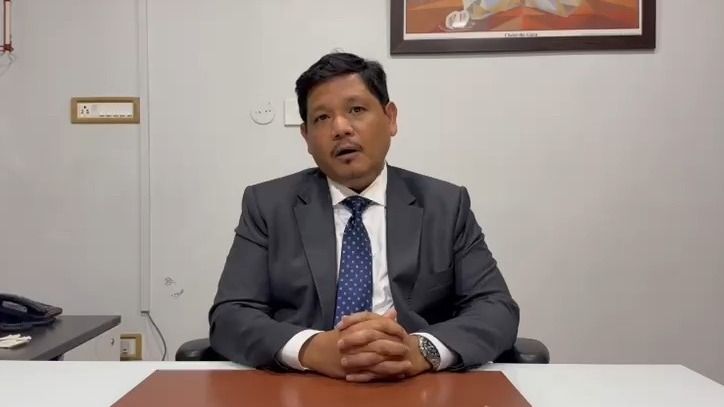
SHILLONG | Chief Minister Conrad K Sangma has directed officials to strengthen Meghalaya’s preparedness for possible climate-related disruptions, with water security, agriculture and vulnerable catchment areas identified as key priorities.
Meghalaya Chief Minister Conrad K Sangma reviewed the state’s climate preparedness at a meeting of the Meghalaya State Council on Climate Change, stressing the need for advance planning despite uncertainty over the impact of El Niño.
Sangma said the pre-monsoon season had remained near normal but warned that changing weather patterns could create challenges in the months ahead.
“El Niño is a reality, but its impacts are difficult to predict,” Sangma said in a post on X, underlining the need to focus on preparedness and adaptation.
The government is undertaking district-wise climate risk and vulnerability mapping to identify areas that may require additional intervention. Officials also discussed improving coordination between departments and establishing Block-Level Climate Action Teams.
Water security emerged as a major concern. The state plans to rejuvenate springs and protect other critical water sources, while plantation activities will be expanded in vulnerable catchment areas to strengthen local water systems.

The meeting also reviewed measures to improve agricultural resilience, including expanding natural farming through greater coordination among departments and farmer-to-farmer training. Officials discussed crop-related challenges, including soft rot affecting ginger.
Sangma said the period between November and March would be particularly important for preparedness and called for clear action plans and standard operating procedures for different climate scenarios.
He directed officials to immediately activate District Climate Adaptation and Resilience Task Forces and strengthen information, education and communication activities at the grassroots level.
Elected representatives will also be involved in awareness programmes to help communities understand potential climate risks and appropriate responses.
The chief minister called for regular monitoring at district, block and village levels to assess the implementation and effectiveness of adaptation measures.
He also stressed the need to ensure adequate drinking water supplies if rainfall falls below normal, saying Meghalaya must remain prepared for challenging and potentially unprecedented conditions.
The state has previously implemented climate-focused initiatives under its State Action Plan on Climate Change, including measures related to water security, ecosystem conservation and community-led landscape management.