

A 3,200 MW supercritical thermal power plant is under development at Chapar in Dhubri district
 KRC TIMES Assam Bureau
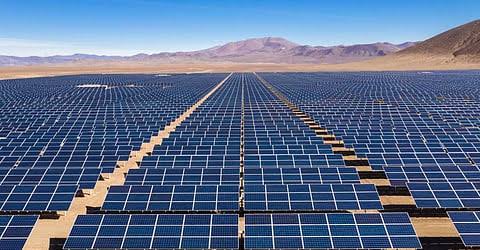
Guwahati | Assam is set to add more than 8,000 MW of power generation capacity in the coming years, with a major focus on solar and other renewable energy sources, official sources said. Of the proposed capacity, around 3,200 MW will come from conventional sources, while the remaining capacity will be generated through non-conventional energy projects.
A 3,200 MW supercritical thermal power plant is under development at Chapar in Dhubri district. The project is expected to be commissioned in phases from December 2030. Statutory clearances have also been obtained for power projects with a combined capacity of 4,900 MW in Karbi Anglong and Dima Hasao districts, with sites already identified, sources said.
Several renewable energy projects are also at different stages of development and commissioning. A 70 MW AC grid-connected, ground-mounted solar photovoltaic project at Khudigaon Pt-II in Bilasipara, Dhubri district, has already been commissioned under the build-own-operate model.

A 50 MW AC grid-connected ground-mounted solar PV project is being developed at No. 3 Sitalmari village under the Borsola Revenue Circle in Dhekiajuli. The Assam Power Distribution Company Limited (APDCL) has also formed a joint venture with NLC India Renewables Ltd to develop 1,000 MW of solar power projects. Land identification for the projects is underway.
Another joint venture between APDCL and SJVN Green Energy Ltd has been formed to develop 1,000 MW of renewable power projects, with land identification in progress.
Assam has so far installed around 1,300 MW of aggregate solar capacity, generating an estimated 1,872 million units of electricity annually. The figure is calculated because actual generation from individual rooftop solar plants is not currently being recorded; APDCL records only the solar energy exported to the grid.
Under the PM Surya Ghar scheme, around 1,85,581 households have installed rooftop solar systems with a combined capacity of 612 MW in the residential sector. On wind power, officials said Assam’s potential remains considerably lower than that of states such as Gujarat, Tamil Nadu, Karnataka and Rajasthan.
The National Institute of Wind Energy (NIWE) had earlier installed wind-monitoring masts at several locations in Assam at a hub height of around 80 metres. Assessments at that height found limited potential for conventional utility-scale wind power at most monitored sites.
However, preliminary assessments suggest that some valleys and elevated areas could record higher wind speeds at greater hub heights, particularly around 120 metres. Officials said such locations could be studied further through detailed assessments using 120-metre-class monitoring masts or LiDAR technology.
Sites with adequate wind speeds, suitable terrain, land availability and grid connectivity could subsequently be considered for pilot or commercial projects, although large-scale wind development is not currently considered viable across the state.