


The Architect of a United India and a Visionary Statesman
 KRC TIMES Desk
Lalit Gargg
The making of a nation does not end with the attainment of independence. Its real test lies in transforming freedom into the enduring strength of unity, integrity, security and collective resolve. This was the greatest challenge confronting India after independence.
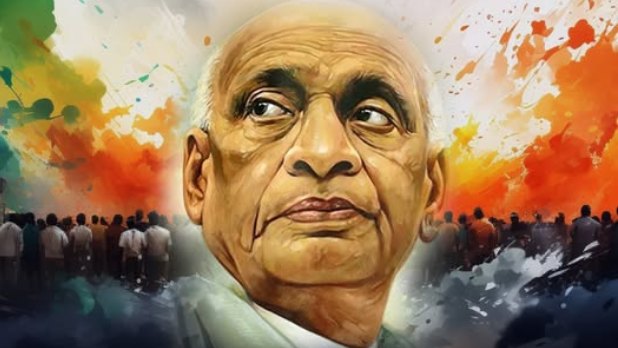
The country was grappling with the fragmentation of princely states, the trauma of Partition, communal tensions, insecurity along its borders and numerous political and administrative challenges facing a newly born democracy. At this critical juncture, if there was one leader who shouldered the historic responsibility of uniting India—not merely geographically, but politically and nationally—it was Sardar Vallabhbhai Patel.
National Unity Day, observed on his 151st birth anniversary, is not merely an occasion to remember a great statesman; it is an opportunity to renew our commitment to India’s collective strength, national pride and the enduring values of visionary leadership. Sardar Patel possessed the resilience of a rock against which even the fiercest storms of adversity seemed powerless.
His determination, organisational acumen and extraordinary ability to mobilise people during the freedom struggle earned him a distinctive place in India’s national leadership. The Kheda Satyagraha and the Bardoli Movement established him as a champion of farmers’ rights and struggles. It was the women of Bardoli who bestowed upon him the title ‘Sardar’, a name that eventually became synonymous with his national identity.
However, his most consequential historical contribution emerged after independence, when the foremost task was to consolidate India into a united nation. At that time, India comprised more than 562 princely states. Several rulers aspired to retain their independent status or remain outside the Indian Union. Had this situation continued, India’s political map could have been irreparably fragmented.

Sardar Patel confronted this formidable challenge through his political determination, exceptional diplomatic skills and pragmatic wisdom. Wherever necessary, he pursued dialogue and persuasion; wherever circumstances demanded, he demonstrated firmness; and wherever national interests were at stake, he refused to yield to pressure. The integration of Hyderabad into the Indian Union stands as a remarkable example of his resolve.
This was not merely an exercise in merging princely territories; it was a historic mission that laid the foundation of a unified modern nation. Patel’s greatest strength was that he regarded politics not as an instrument of acquiring power, but as a solemn responsibility towards nation-building. For him, national interest always stood above party considerations, ideological differences, regional affiliations and community interests.
He understood that independence could not be safeguarded through emotional slogans alone. It required a strong administrative framework, disciplined governance, a clear foreign policy and robust internal security arrangements. His concerns regarding Pakistan’s policies, the Kashmir question and the challenges confronting India’s border regions reflected this larger vision of national security.
His letter of November 7, 1950, to the then Prime Minister Jawaharlal Nehru, cautioning him about China’s policy towards Tibet, remains an important document demonstrating his strategic foresight. He believed that relations with neighbouring countries must be guided not only by goodwill but also by vigilance and an unwavering commitment to protecting national interests.
Another significant dimension of Sardar Patel’s vision was his contribution to building India’s administrative framework. In the immediate aftermath of independence, many advocated the abolition of the administrative services inherited from British rule. Patel, however, recognised their institutional importance and understood that a newly independent country needed a strong, professional and nationally integrated administrative machinery.
He provided a firm foundation for the All-India Services, particularly the Indian Administrative Service and the Indian Police Service. He believed that such institutions were indispensable for preserving national unity and administrative stability, ensuring that governance continued to function effectively irrespective of political changes.
He instilled confidence among civil servants that their allegiance was no longer to a foreign administration, but to independent India and its people. This is why he is widely remembered as the architect and guardian of India’s civil services. His political approach was characterised by firmness, but never by inflexibility. He understood that a nation cannot be strengthened through laws and administrative institutions alone; it also requires social trust, mutual respect and a sense of civic responsibility.
He viewed national unity not as the suppression of diversity, but as the development of a shared national consciousness amidst diversity. India’s languages, cultures, traditions and faiths may differ, but loyalty to the nation and respect for its constitutional values must bind every citizen together. At a time when ideological disagreements, regional assertions, caste divisions and growing political bitterness are increasingly visible in society, this message of Sardar Patel assumes even greater significance.
As India moves forward with the ambitious vision of becoming a developed, self-reliant, prosperous and globally influential nation by 2047, the thoughts, vision and nation-building philosophy of Sardar Vallabhbhai Patel have become more relevant than ever.
The united India he envisioned was founded not merely upon geographical integration, but upon national solidarity, social harmony, administrative strength and collective responsibility. Today, India faces significant challenges as well as unprecedented opportunities in economic growth, technological self-reliance, social equality, internal security, good governance and global leadership.
Patel’s unwavering commitment to the nation, indomitable willpower and pragmatic leadership can provide valuable guidance in addressing these challenges. The dream of a developed India can become a reality only when the country’s diversity becomes its strength, national interest remains paramount and every citizen actively participates in the process of nation-building. In this sense, Sardar Patel is not merely a towering figure of history; he is an enduring source of inspiration for shaping the direction and destiny of India in 2047.
The personality of Sardar Vallabhbhai Patel represented an extraordinary synthesis of indomitable courage, iron willpower, discipline, forthrightness, organisational excellence, administrative competence and unwavering patriotism. Along with his determination and resolute character, he possessed exceptional pragmatism, foresight and an unparalleled capacity for decisive leadership.
He was not merely a freedom fighter or India’s first Deputy Prime Minister and Home Minister; he was a visionary nation-builder who gave lasting strength and stability to the unity and integrity of the country. His life teaches us that great nations are not built through aspirations and declarations alone. They are shaped through strength of character, discipline, dedication to duty, sacrifice and collective commitment. These timeless values are precisely what contemporary India and future generations need most.
Today, India is advancing towards becoming an economic powerhouse, assuming a greater role in global leadership and establishing itself as a developed nation. Yet, the foremost prerequisites for this journey are internal unity and national security. Economic prosperity can be sustainable only when a country is socially cohesive, politically stable and strategically strong. Sardar Patel’s life conveys a profound message: the true strength of a nation lies not merely in its material resources, but in the collective resolve of its people, the quality of its leadership and the unity of its national consciousness.
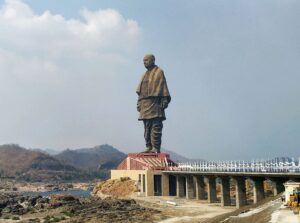
Sardar Vallabhbhai Patel passed away on December 15, 1950, but his nationalist vision continues to remain an integral part of India’s national consciousness. The 182-metre-high Statue of Unity, inaugurated in Gujarat in 2018, stands as a monumental tribute to his towering personality and extraordinary contribution to the nation. Yet, his true legacy does not reside merely in the height of a statue; it lives on in our collective efforts to preserve India’s unity and integrity.
Sardar Patel was not simply the architect who integrated the princely states; he was a visionary statesman who transformed a fragmented national consciousness into a unified national resolve. On his birth anniversary, we must pledge to regard India’s unity not merely as a historic achievement, but as a present-day responsibility and the most valuable inheritance for future generations. That would be the most fitting tribute to the Iron Man of India and the true fulfilment of the purpose of National Unity Day.

