

The project is expected to be completed by September 2027, with commercial commissioning and production targeted for January 2028
 KRC TIMES Assam Bureau
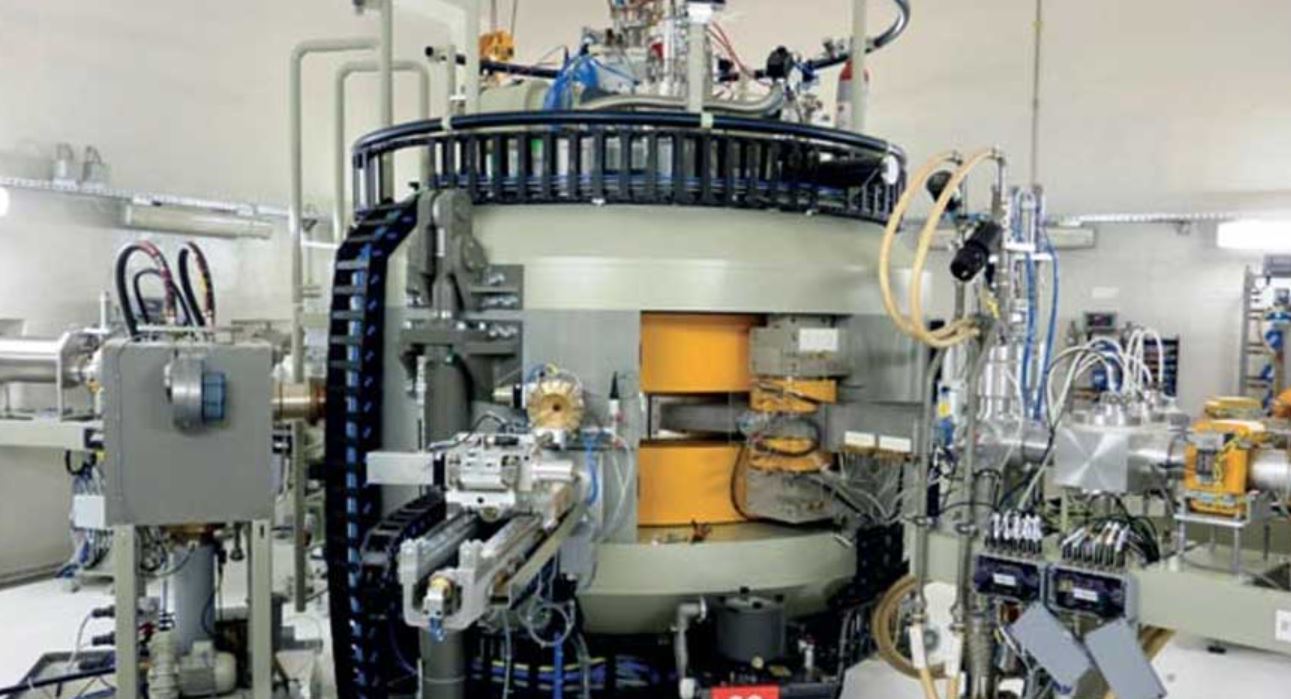
GUWAHATI | Assam is set to strengthen its nuclear medicine and advanced cancer diagnostic infrastructure with the development of the Northeast’s first privately owned medical cyclotron facility in Guwahati, involving an investment of around Rs 62 crore. The foundation stone for the specialised cyclotron vault was laid on November 1 at the Assam Industrial Development Corporation (AIDC) Industrial Estate in Bonda.
The facility is being developed by Nucleomed Private Limited and will be the 14th medical cyclotron installation in the country. The project is expected to be completed by September 2027, with commercial commissioning and production targeted for January 2028.
The ceremony was attended by medical experts and industry representa tives, including Olivier Legrain, CEO and Vice-Chairman of Belgium-based Ion Beam Applications (IBA). Several senior medical professionals from Assam also participated in the event. What will the facility produce?
The proposed installation will house an 18 MeV medical cyclotron capable of producing up to 30 curies of Fluorine-18 Fluorodeoxyglucose (F-18 FDG), a radi oactive tracer widely used in Positron Emission Tomography-Computed Tomography (PET-CT) scans. F-18 FDG helps doctors identify areas of increased metabolic activity in the body, allowing them to detect and assess cancer. PET-CT imaging is also used to investigate and evaluate several other medical conditions.
The facility is expected to supply F-18 FDG to PET-CT centres across the Northeast and other parts of the country. According to Nucleomed Director Dr Kandarpa Saikia, it will also manufacture short- and ultra-short-half-life isotopes required for cancer treatment and other medical applications.

A dedicated theranostics ward is also planned on the premises. Theranostics combines diagnostic imaging with targeted treatment, helping doctors identify specific disease-related targets and use them to guide therapy. Project follows Advantage Assam 2.0 The project was initiated in November 2025 following Advantage Assam 2.0, the state’s investment and infrastructure development initiative.
With piling and preliminary construction work completed, the next phase involves building the specialised vault designed to house the cyclotron equipment. The Atomic Energy Regulatory Board (AERB) has approved the structural design of the nuclear installation in accordance with the specified safety standards. Architect Ranjee Baruah and structural engineer Bhaskarjyoti Das are overseeing the project, while former IIT Guwahati Director S N Buragohain is serving as an adviser.
Plans to serve markets beyond the Northeast The proposed facility is expected to reduce the region’s dependence on radi oactive tracers transported from other parts of India. It may also create opportunities to supply medical isotopes to markets beyond the Northeast. Dr Saikia said improved air connectivity from Assam could facilitate the transportation of cyclotron-produced isotopes to other parts of the country and Southeast Asian markets.
Timely transportation is particularly important because several medical isotopes have short radioactive half-lives and must reach hospitals and diagnostic centres within a limited period after production. Dr Saikia acknowledged the support of the Assam government, particularly Chief Minister Himanta Biswa Sarma, along with the AIDC and the Industries Department, in facilitating the project.
Expanding Assam’s nuclear medi cine infrastructure Dr Saikia has been associated with the development of nuclear medicine in Assam since 2001, when he helped establish the nuclear medicine department at B Barooah Cancer Institute. He later established Nucleomed Imaging and Diagnostics and contributed to the introduction of the state’s first privately operated PET-CT scanner.
The proposed cyclotron facility represents another expansion of specialised medical infrastructure in Assam. Once operational, it is expected to strengthen the regional supply of radioactive tracers, support PET-CT services and improve access to advanced nuclear medicine. Its eventual impact will depend on the completion of construction, regulatory clearances, production capacity and the development of an efficient distribution network.