

The Maldives must balance its expanding engagement with Pakistan against its longstanding strategic partnership with India, while any meaningful revival of SAARC will depend on addressing the region’s unresolved security concerns
 KRC TIMES Desk
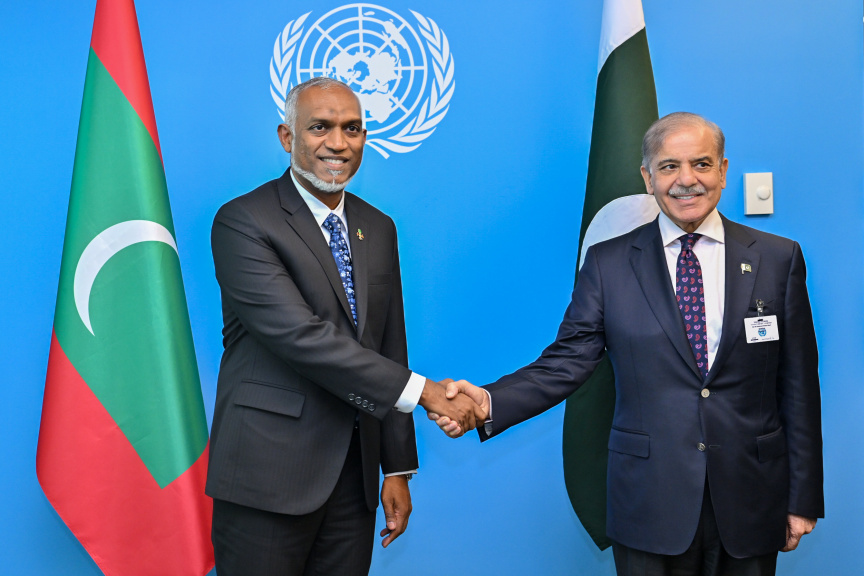
Maldivian President Mohamed Muizzu’s three-day visit to Pakistan has brought South Asia’s fragile regional diplomacy back into focus. The first visit by a Maldivian President to Pakistan in 11 years was intended to strengthen bilateral relations and widen cooperation across several sectors. The signing of 20 memoranda of understanding (MoUs) reflects the ambition on both sides to deepen economic and institutional ties. Yet the visit acquired a wider geopolitical dimension with Muizzu’s call for reviving the South Asian Association for Regional Cooperation (SAARC).
The appeal for regional cooperation is welcome. South Asia remains one of the least integrated regions in the world, despite shared borders, cultural connections and common developmental challenges. However, the revival of regional institutions cannot be achieved through diplomatic statements alone. It requires political trust, sustained engagement and, above all, a willingness to confront the disputes that have repeatedly obstructed cooperation.
The economic agreements signed during Muizzu’s visit offer an immediate test of the two countries’ intentions. Both sides have agreed to raise bilateral trade from $13.9 million to $200 million within two years. The 20 MoUs cover areas such as health, education, information technology, agriculture, tourism and professional training. These sectors offer scope for mutually beneficial exchanges, particularly if the agreements are followed by concrete projects and institutional mechanisms.
But the number of agreements signed should not be mistaken for their success. Trade targets are meaningful only when supported by stronger commercial links, investment, connectivity and regular engagement between businesses. The real test will be whether the proposed cooperation delivers measurable benefits to ordinary citizens.
The security dimension of the visit deserves closer attention. The Maldives occupies a strategically important position in the Indian Ocean, close to major international shipping lanes and energy routes. Maritime surveillance, coastal security, law enforcement and the prevention of illegal activities at sea are therefore central to its national interests. Pakistan’s interest in expanding defence and maritime cooperation with Male must be viewed against this strategic backdrop.
For India, developments in the Maldives carry particular significance. The two countries share geographical proximity and long-standing security interests in the Indian Ocean. India has played an important role in the Maldives through defence training, maritime surveillance, capacity-building, disaster response and other forms of assistance. Stability in the island nation is closely linked to the security of India’s wider maritime neighbourhood.
Consequently, New Delhi will naturally monitor the expansion of Pakistan’s defence and maritime engagement with Male. However, it would be premature to interpret every diplomatic initiative by the Maldives as a strategic move against India. The Maldives, like any sovereign country, has the right to diversify its international partnerships and pursue its national interests. Its foreign policy should be assessed through its actual decisions and long-term strategic conduct, rather than through the optics of individual visits.
For Muizzu, the challenge is to maintain a balanced foreign policy without allowing external partnerships to become sources of regional tension. The Maldives benefits from constructive relations with both India and Pakistan, but its strategic location also places a special responsibility on its leadership to ensure that bilateral engagements contribute to stability in the Indian Ocean.
The more consequential aspect of the Pakistan visit, however, was Muizzu’s call to revive SAARC. Established in 1985, the organisation was conceived as a platform for regional cooperation in economic development, social progress and cultural exchange. Its eight members-India, Pakistan, Bangladesh, Nepal, Bhutan, Sri Lanka, the Maldives and Afghanistan-share many challenges that do not respect national boundaries.
Poverty, unemployment, public health, climate change, energy security, food security and disaster management are among the areas where regional coordination could make a substantial difference. Cooperation in these fields is not merely a diplomatic aspiration; it is a practical necessity for a region exposed to common economic and environmental vulnerabilities.
Yet SAARC has remained largely paralysed for years. Its last summit was held in Kathmandu in November 2014. The summit scheduled to take place in Islamabad in 2016 was called off amid escalating tensions between India and Pakistan. No summit has been held since. The prolonged inactivity has exposed the organisation’s vulnerability to bilateral political disputes and the absence of a minimum consensus among its members.
The central obstacle remains the deep mistrust between India and Pakistan, particularly over cross-border terrorism. India has consistently maintained that terrorism emanating from Pakistani territory makes normal political and economic engagement difficult. Repeated security crises have eroded confidence and made it increasingly difficult to sustain regional initiatives.
Pakistan cannot expect regional cooperation to progress while these concerns remain unaddressed. At the same time, the burden of reviving SAARC cannot be placed on one member alone. All participating countries must demonstrate a willingness to create an environment in which dialogue can continue despite political differences. Any credible effort must recognise that security concerns are not peripheral to regional cooperation; they are fundamental to it.
Muizzu’s call for SAARC’s revival would therefore have greater significance if accompanied by a clear recognition of the political and security realities that have prevented the organisation from functioning. An appeal for partnership must go beyond general expressions of goodwill. It must also acknowledge the need to build trust and address the sources of persistent regional tension.

That does not mean South Asia should abandon the idea of regional cooperation until every dispute is resolved. There is considerable scope for practical collaboration in public health, education, climate resilience, disaster management and trade. Countries can pursue limited, issue-based cooperation even when broader political relations remain strained.
Alternative regional platforms such as the Bay of Bengal Initiative for Multi-Sectoral Technical and Economic Cooperation (BIMSTEC) and the Bangladesh-Bhutan-India-Nepal (BBIN) initiative have provided avenues for connectivity and economic engagement. These arrangements have their own importance, but they cannot entirely substitute for SAARC’s wider geographical and institutional reach. A functioning regional organisation remains desirable, provided its members are prepared to make it meaningful.
Ultimately, Muizzu’s Pakistan visit should be judged on two fronts: whether the bilateral agreements translate into tangible outcomes and whether his appeal for regional cooperation generates sustained diplomatic engagement. The Maldives has every reason to expand its international partnerships, but its long-term interests lie in a stable Indian Ocean and constructive relations with its neighbours.
Pakistan, meanwhile, must recognise that regional leadership and cooperation require credibility, restraint and a commitment to addressing security concerns. India, too, has a stake in a stable and economically integrated South Asia, though no revival of regional diplomacy can be meaningful without addressing the realities that have undermined trust.
SAARC was established on the promise that shared challenges could bring South Asian countries together. That promise remains relevant, but the organisation cannot be revived by nostalgia or ceremonial declarations. It needs political will, mutual confidence and a willingness to confront difficult questions. Muizzu has reopened an important debate. Whether it leads to a genuine regional initiative will depend on whether South Asia’s leaders are ready to move beyond diplomatic gestures and tackle the issues that have kept the region divided.