


Disruption in the Strait of Hormuz is reshaping regional trade routes and raising the strategic importance of Oman’s ports. For China, India, Japan and South Korea, Muscat’s Indian Ocean access could offer an important alternative to vulnerable maritime corridors
 KRC TIMES Desk
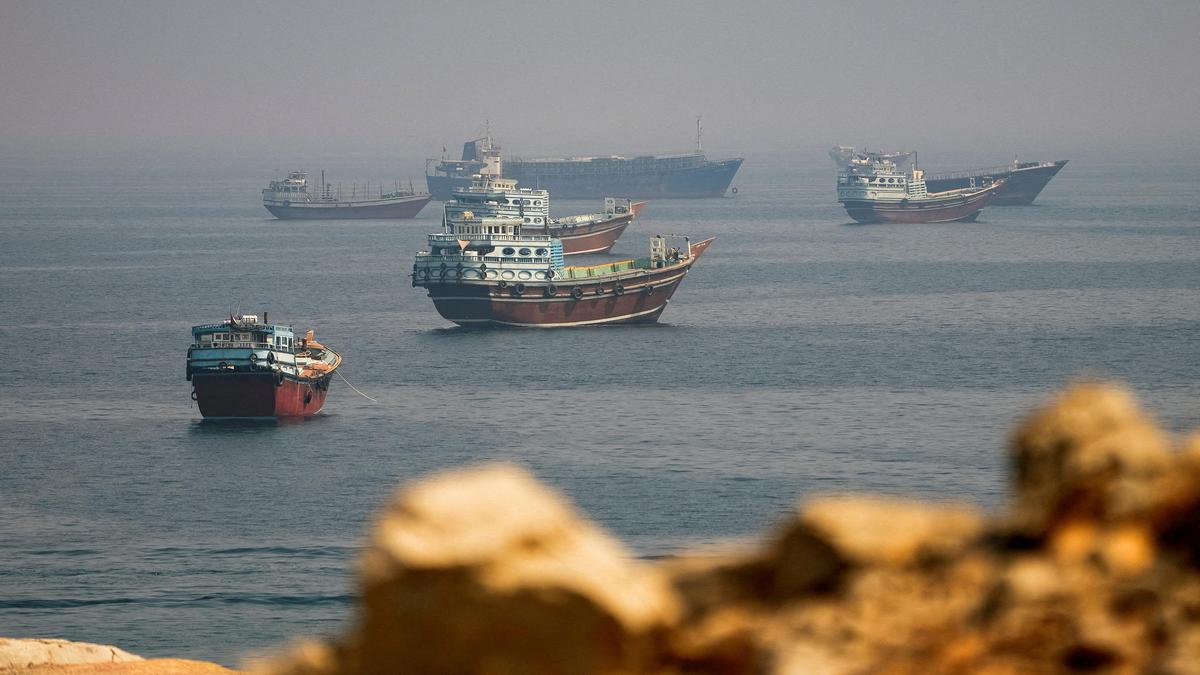
For decades, Oman’s geographical location has been viewed as both an opportunity and a limitation. While its coastline along the Arabian Sea and the Indian Ocean offers direct access to international shipping routes, the country has remained on the margins of the Gulf’s economic expansion, dominated by larger neighbours such as Saudi Arabia and the United Arab Emirates.
The ongoing Iran war, however, has changed the strategic significance of that geography. With shipping through the Strait of Hormuz severely disrupted, Oman’s ports are emerging as increasingly important alternatives for moving goods and energy in and out of the Gulf. What was once considered a peripheral location is now attracting greater attention from regional powers and major Asian economies.
The ports of Sohar, Duqm and Salalah are at the centre of this shift. Although they cannot match the cargo-handling capacity or commercial networks of established regional hubs such as Dubai’s Jebel Ali, they offer something that has become particularly valuable during the crisis: access to the Gulf region without depending entirely on the Strait of Hormuz.
Shipping data underline the scale of the disruption. On October 6, only seven commodity vessels reportedly transited the strait. Meanwhile, oil exports through the Gulf of Oman and the Red Sea more than doubled compared with pre-war levels. The situation remains uncertain, with Iran’s security chief declaring on November 11 that the strait would remain closed.
For Oman, the crisis presents an opportunity to convert geographical advantage into long-term economic influence.
Ports gain strategic importance
Oman has spent years developing its maritime infrastructure as part of a broader effort to diversify its economy beyond oil and gas. Its ambition is to become one of the world’s leading logistics centres by 2040.
Duqm occupies a particularly important position in this strategy. Located along Oman’s Arabian Sea coastline, outside the Strait of Hormuz, the port has deep-water facilities capable of accommodating very large vessels. It is also linked to a special economic zone intended to attract industrial, manufacturing and logistics investments.
The war has not created this infrastructure, but it has changed the commercial calculations surrounding it. When traditional shipping routes become unreliable, ports located beyond vulnerable maritime chokepoints acquire additional value.
Sohar also offers access outside Hormuz, although it is geographically closer to the strait. Salalah, meanwhile, is strategically positioned on the Arabian Sea but remains exposed to instability around the Bab el-Mandeb Strait and the Red Sea.

However, geographical advantage alone cannot make Oman a substitute for the region’s established logistics centres. Sustained growth will require regular shipping services, warehouses, road connectivity, efficient customs procedures, industrial customers and reliable links to inland markets. Businesses will continue using alternative ports only if they offer competitive costs, sufficient capacity and dependable operations.
Oman is already attempting to build these connections. In early September, a Saudi delegation visited Sohar, Duqm and Salalah to assess their capabilities and explore investment and logistics cooperation. Saudi crude is also moving through Omani waters, with Saudi Aramco offering additional cargo loadings to Asian refiners from Sohar.
Muscat has also held discussions with Egypt on a proposed direct shipping route connecting Duqm and Salalah with Egyptian ports. The initiative is intended to strengthen industrial supply chains and improve access to African and Asian markets. However, the participating operators and the launch schedule have yet to be announced.
China’s growing interest in Omani connectivity
China has a particular interest in the changing maritime geography of the Gulf. Over the past two decades, Beijing has expanded its economic presence across the region through investments in energy, infrastructure, manufacturing, technology and logistics.
This growing involvement has also increased China’s exposure to regional instability. The Middle East accounted for roughly half of China’s crude oil imports in 2025, making the security of maritime supply routes a major economic concern.
The Iran war has highlighted the risks of this dependence. Chinese state-controlled shipping companies, including COSCO Shipping Energy Transportation and China Merchants Energy Shipping, have kept their tankers away from Hormuz and Bab el-Mandeb since late July. Before the conflict, the two companies handled approximately half of China’s crude imports from the Middle East.
At the same time, ship-to-ship transfers involving Chinese- and Hong Kong-owned vessels in the Gulf of Oman exceeded 600,000 barrels per day during June and July. Similar arrangements have continued into the autumn. Saudi Aramco also invited Chinese refiners to bid for late-October crude cargoes through ship-to-ship transfers near Sohar.
These developments suggest that China is seeking greater flexibility in accessing Gulf energy supplies. Stronger commercial links with Omani ports and logistics networks could help Beijing diversify its routes without taking on a larger military responsibility for protecting the region’s maritime infrastructure.
Oman is already an important energy supplier to China, accounting for around 6 per cent of its crude oil imports in 2025.
The relationship received a significant diplomatic boost during Sultan Haitham bin Tarik’s visit to Beijing in early November. It was the first visit to China by an Omani head of state since diplomatic relations were established in 1978.
The two countries signed 14 cooperation agreements covering areas such as artificial intelligence, green energy and supply chains, alongside a currency swap agreement. A further 23 commercial and investment agreements were also concluded.
The agreements covered space, navigation, digital currencies and industrial supply chains. Notably, they did not include defence or maritime security arrangements. The joint statement instead called for the restoration of safe passage through the Strait of Hormuz and renewed negotiations between Washington and Tehran.

This reflects China’s broader approach to the Gulf: expand economic influence while avoiding the military commitments associated with the United States’ security role in the region. Oman’s growing importance could help Beijing reduce some of its commercial vulnerabilities without fundamentally changing that approach.
India, Japan and South Korea also have stakes
China is not the only Asian economy that stands to benefit from stronger Omani connectivity. India has substantial economic and strategic interests in the country’s ports and maritime infrastructure.
The India-Oman Comprehensive Economic Partnership Agreement came into force in June, providing a framework for expanding bilateral trade and investment. Oman’s ports also offer important links between India, the Gulf and East Africa. Shipping networks connect Sohar, Duqm and Salalah with Indian ports such as Mundra, Nhava Sheva and Hazira.
For India, these links are relevant not only to energy security but also to the movement of manufactured goods, industrial inputs and other commodities. Greater use of Omani ports could strengthen India’s access to regional markets and reduce dependence on vulnerable maritime routes.
Japan and South Korea have equally strong reasons to diversify their energy supply channels. The Middle East accounted for 94 per cent of Japan’s crude oil imports and 69 per cent of South Korea’s in 2025.
The need for alternative routes is already visible. In October, two Qatari liquefied natural gas cargoes that had exited Hormuz conducted ship-to-ship transfers off Sohar. One was bound for South Korea and the other for Pakistan.
The growing interest from Asian economies could provide Oman with a broader commercial base. It would also strengthen Muscat’s long-standing policy of maintaining diplomatic and economic relationships with countries that often have competing interests, including Iran, the Gulf Cooperation Council, the United States, India and China.
Security and infrastructure remain major challenges
Despite the opportunity, Oman faces significant obstacles in turning its ports into permanent alternatives to established Gulf logistics hubs.
The first challenge is capacity. Duqm, in particular, needs a stronger industrial base and a more consistent flow of cargo to justify large-scale investment. Without regular commercial activity, the cost of maintaining and expanding infrastructure could become a burden.
Security is another concern. In March, drones struck fuel storage facilities at Duqm and Salalah, forcing a temporary suspension of operations at the latter. Iran denied involvement in the attack on Salalah.
Although Salalah’s location on the Arabian Sea offers an advantage over ports inside the Gulf, it remains vulnerable to instability around the Red Sea and Bab el-Mandeb. Duqm is outside the immediate reach of the Hormuz disruption, but the wider maritime environment remains exposed to military escalation.
An incident on November 7, when US forces disabled a St Kitts-flagged cargo vessel in the Gulf of Oman, further demonstrated that insecurity can extend beyond the Strait of Hormuz. US Central Command said the vessel had attempted to breach the blockade of Iran.
Oman’s diplomatic position is also becoming more complicated. Muscat has been involved in discussions with Tehran on a joint mechanism to manage shipping through Hormuz. On November 5, the foreign ministers of the two countries stressed the need for practical arrangements and technical mechanisms to restore normal maritime movement.

Iran has reportedly made US recognition of a bilateral Iran-Oman arrangement for Hormuz one of its conditions for normalising transit. At the same time, US President Donald Trump has threatened military action against Oman if it obstructs a US-Iran agreement. These pressures place Muscat’s diplomatic balancing strategy under considerable strain.
Pipelines could reshape the energy map
The possibility of new energy infrastructure could further strengthen Oman’s position. A pipeline connecting Gulf oil-producing regions to Duqm would provide an additional route to the Indian Ocean, potentially reducing dependence on Hormuz.
In late September, the chief executive of TotalEnergies said Saudi Arabia had begun work on a pipeline to Duqm. However, Rystad Energy has indicated that the project remains at the feasibility stage, while Aramco has declined to comment.
Oman’s state-owned energy company, OQ, meanwhile, plans to double its onshore oil storage capacity at Duqm to 10 million barrels within three years.
Such projects could enhance Oman’s role in regional energy logistics, but they would require substantial investment. Pipelines and storage facilities would also create fixed infrastructure that could become targets during a future conflict.
Other Gulf producers are pursuing alternative routes as well. The UAE has said that a second bypass pipeline to Fujairah is nearly half complete. The project would build on existing infrastructure that already allows some Emirati oil exports to avoid Hormuz.
For Asian energy importers, diversification is therefore likely to become a long-term priority, extending beyond the current conflict. Their strategy could involve a combination of pipelines, Omani ports, Indian Ocean shipping routes, Red Sea corridors and overland connections.
A strategic opportunity beyond the war
The Gulf’s established logistics centres are unlikely to lose their dominance overnight, and the Strait of Hormuz will remain indispensable to regional trade. Yet the current crisis has demonstrated the economic risks of depending too heavily on a single maritime corridor.
Oman’s significance lies in offering an additional point of access to a region that remains central to global energy supplies and international commerce. Its ports cannot replace Hormuz or match the scale of the UAE’s logistics infrastructure, but they can provide shipping companies and trading partners with more choices during periods of disruption.
For China, India, Japan and South Korea, that flexibility has growing strategic value. For Oman, the challenge is to turn temporary demand for alternative routes into lasting investment, regular shipping traffic and deeper commercial partnerships.
The country has spent years trying to transform its geographical position into an economic advantage. The Iran war has given that ambition a new urgency. Whether Oman can emerge as a durable gateway to the Gulf will depend not simply on where its ports are located, but on how effectively it builds the infrastructure, commercial networks and diplomatic relationships needed to make them indispensable.

