


Satellite-tracking programme in Tamenglong captures remarkable migration across the Arabian Sea, offering fresh insights into the endurance and movement of the migratory raptor
 KRC TIMES National Bureau
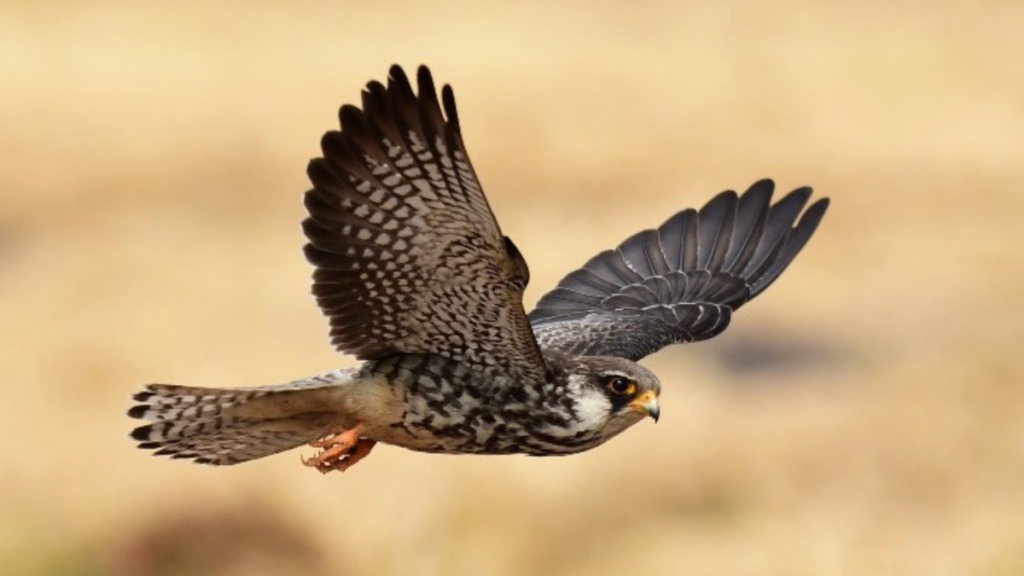
IMPHAL | An Amur falcon named Alang, satellite-tagged in Manipur’s Tamenglong district, has completed an extraordinary non-stop flight of around 5,700 km from India to Somalia in 101 hours, providing scientists with valuable data on one of the most remarkable bird migrations.
The female falcon reached Somalia at around 5.30 am on November 21 after crossing the Arabian Sea as part of its annual southward migration to Africa.
Alang is among three Amur falcons fitted with satellite transmitters at Chiuluan village in Tamenglong on November 11, 2025, under a tracking initiative aimed at understanding the species’ migratory routes and strengthening conservation efforts.
Dr Suresh Kumar of the Wildlife Institute of India (WII), Dehradun, who has been monitoring the birds, confirmed Alang’s arrival in Somalia along with Kh Hitler, former Divisional Forest Officer of Tamenglong.
“Alang has arrived in Somalia at 5.30 am on November 21, having covered 5,700 km flying non-stop for 101 hours, while Apapang has covered 4,100 km so far, flying non-stop for 95 hours,” Dr Kumar said.
The other two tagged birds are Apapang, an adult male, and Ahu, a female. The birds were named after a roosting site and two rivers in Tamenglong district. Ahu, however, lost satellite contact during its migration in Somalia last year.

Alang and Apapang began their onward journey towards Africa on November 17 after spending nearly 25 days at their stopover site in Chiuluan. Both had returned to their Tamenglong roosting site on October 22 this year after completing their annual migration across 23 countries in Asia and Africa.
The latest tracking data highlights the extraordinary endurance and navigational abilities of Amur falcons, small migratory birds of prey known for undertaking long-distance journeys between their breeding and wintering grounds.
The birds breed in southeast Russia and northeast China during summer before travelling south towards Africa. Their annual migration covers approximately 20,000 km, making it one of the longest journeys undertaken by any raptor.
During the southward journey, the falcons pass through parts of Asia before reaching northeast India, particularly Manipur and Nagaland, in October. The region serves as a crucial stopover, where they feed on insects and accumulate energy reserves before undertaking the demanding flight across the Arabian Sea.
They generally leave northeast India in November and spend the winter in southern Africa before beginning their return migration in April and May, travelling through Afghanistan and East Asia.
The satellite-tagging initiative was first launched by the Tamenglong Forest Division in November 2018. The programme has since helped researchers gather information about migration routes, stopover locations and the movement of individual birds across international boundaries.
Locally known as Akhuaipuina (Taomuanpui), Amur falcons are protected under Schedule I of the Wildlife (Protection) Act, 1972. Their seasonal arrival in northeast India has also made conservation of their roosting sites a priority for forest authorities and local communities.
Alang’s successful journey to Somalia underscores the scientific value of satellite tracking in understanding migratory behaviour and identifying the international habitats that need protection to ensure the survival of the species.