

Zelensky’s refusal to sign without these guarantees led to the deal’s collapse during his Washington visit
 KRC TIMES Desk
As of March 2, 2025, the proposed U.S.-Ukraine minerals deal has encountered significant setbacks and has not been signed. Here’s what happened based on the latest available information:
The deal, initially framed as a landmark agreement, aimed to give the United States access to Ukraine’s substantial mineral resources, including rare earth elements and other critical minerals like titanium and lithium. In exchange, Ukraine sought investments and security guarantees to support its reconstruction and defense against Russia. The negotiations, heavily influenced by President Donald Trump’s transactional approach, began with a U.S. demand for $500 billion worth of Ukraine’s mineral wealth to offset past military aid, a condition Ukrainian President Volodymyr Zelensky rejected as tantamount to “selling” his country.
Over time, the terms evolved. A draft agreement emerged that proposed a joint U.S.-Ukraine “Reconstruction Investment Fund,” where Ukraine would contribute 50% of future revenues from state-owned natural resources. The U.S. would manage the fund alongside Ukraine and commit to long-term financial support, though specifics on the U.S. stake and concrete security guarantees remained vague. Zelensky emphasized that any deal must prioritize Ukraine’s security and not merely serve American interests, while Trump framed it as a way for U.S. taxpayers to recoup aid costs.
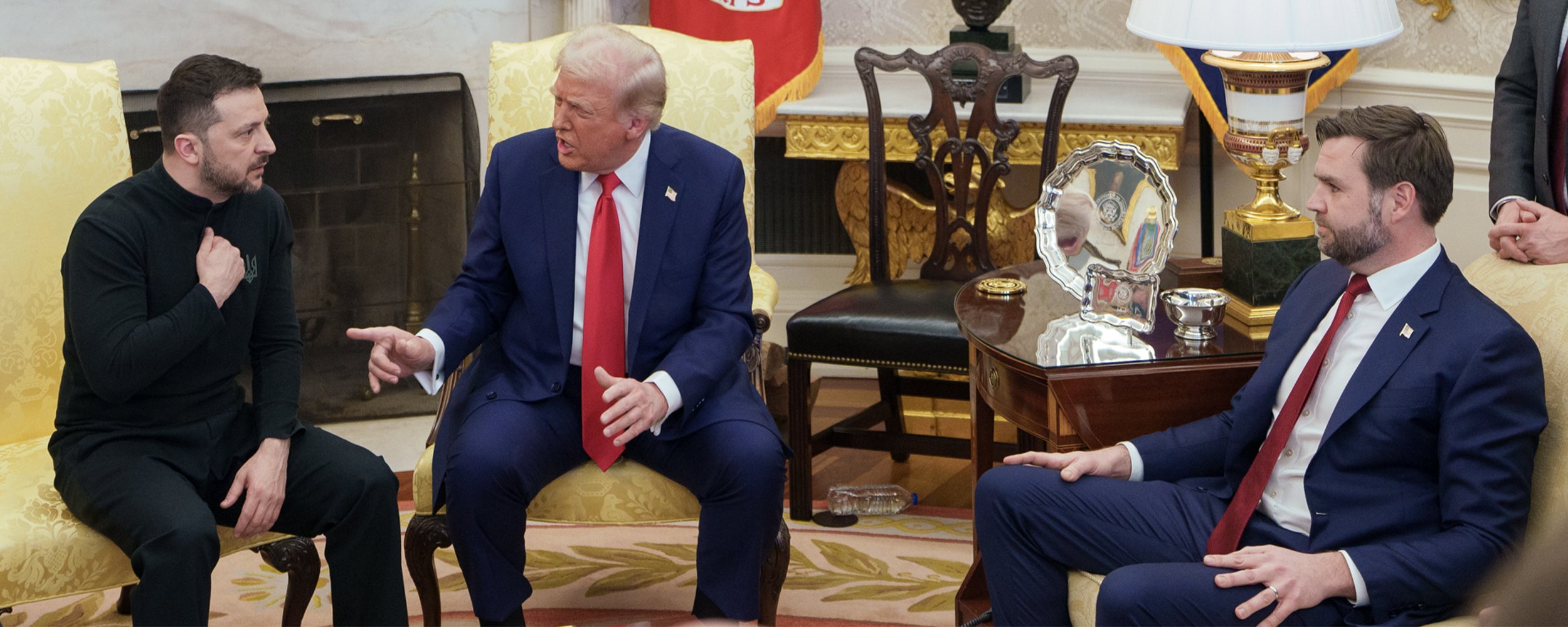
Tensions escalated during Zelensky’s visit to Washington on February 28, 2025, intended to finalize the deal. The meeting with Trump and Vice President JD Vance turned contentious, with disagreements over Ukraine’s stance on a ceasefire with Russia and Trump’s engagement with Russian President Vladimir Putin. The encounter deteriorated into a heated argument, leading to Zelensky being asked to leave the White House after about two and a half hours. Consequently, the minerals deal was not signed, and plans to do so were scrapped.
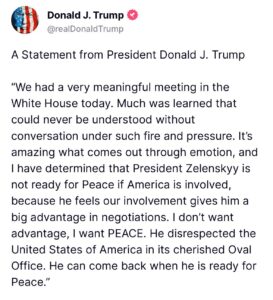
Post-meeting reports indicate a deepening rift between Trump and Zelensky. Trump accused Zelensky of disrespect and reiterated his reluctance to continue U.S. support without a deal, while Zelensky insisted on security guarantees that the draft lacked. A senior White House official stated that Trump has no interest in revisiting the deal currently, further stalling progress. European leaders have since reached out to Trump officials to salvage the agreement, but its status remains uncertain.
The failure to sign has raised doubts about the deal’s feasibility, especially given Ukraine’s ongoing war with Russia and the commercial risks of developing its mineral deposits without firm security commitments. While Ukraine possesses significant untapped resources, the lack of detailed terms, combined with political friction, has left the deal in limbo as of the current date.
Zelensky’s stance
Ukrainian President Volodymyr Zelensky’s stance on the proposed U.S.-Ukraine minerals deal reflects a blend of pragmatic necessity and staunch defense of Ukraine’s sovereignty and security interests, shaped by the ongoing war with Russia and his country’s dire need for reconstruction support. As of March 2, 2025, here’s a breakdown of his position based on the latest developments:

Zelensky approached the deal with a clear priority: securing Ukraine’s long-term stability and protection against Russian aggression. He viewed access to Ukraine’s mineral wealth—estimated to include vast reserves of titanium, lithium, rare earth elements, and other critical resources—as a bargaining chip to obtain substantial U.S. investment and, crucially, security guarantees. For him, any agreement had to go beyond a transactional exchange of resources for money; it needed to ensure Ukraine’s ability to rebuild its war-torn economy and defend itself militarily. This stance stems from the reality that Ukraine’s mineral deposits, while valuable, are largely unexploited due to the conflict, and their development hinges on a stable security environment—something the U.S. could help provide.
Initially, Zelensky rejected the U.S. proposal under President Trump’s terms, which demanded $500 billion worth of Ukraine’s minerals to offset past military aid. He saw this as exploitative, likening it to “selling” Ukraine’s future and undermining its autonomy. His resistance signaled a refusal to let Ukraine be reduced to a resource colony for American interests, especially given the sacrifices his country has made since Russia’s invasion. Instead, he pushed for a partnership model, as seen in the draft “Reconstruction Investment Fund,” where Ukraine would contribute 50% of future state-owned resource revenues in exchange for U.S. financial and technical support. However, even this compromise came with a caveat: Zelensky insisted that the deal must include concrete security commitments, not just vague promises, to protect Ukraine from further Russian incursions.
During his February 28, 2025, meeting with Trump in Washington, Zelensky’s stance hardened as negotiations faltered. He clashed with Trump over Ukraine’s refusal to accept a ceasefire with Russia—a condition Trump appeared to favor after discussions with Putin—arguing that such a move would weaken Ukraine’s position without guarantees of lasting peace. Zelensky’s frustration peaked when he perceived the U.S. as prioritizing its economic gains over Ukraine’s survival, leading to a heated exchange that ended with him being asked to leave the White House. Post-meeting, he publicly emphasized that Ukraine would not sign any deal that didn’t place its security first, framing it as a matter of national dignity and survival.
Zelensky’s position also reflects domestic pressures. With Ukraine’s economy battered and its people enduring years of war, he needs to deliver tangible benefits—reconstruction funds, jobs from mineral development—without appearing to cede control to foreign powers. His stance is thus a balancing act: leveraging Ukraine’s resources to gain Western support while resisting terms that could compromise its sovereignty or leave it vulnerable to Russia. As of now, his rejection of an unequal deal has stalled the agreement, underscoring his unwillingness to bend unless the U.S. meets his core demand for security alongside investment.
Details on security guarantees
Volodymyr Zelensky’s insistence on security guarantees as a cornerstone of the U.S.-Ukraine minerals deal reflects Ukraine’s precarious position amid its ongoing war with Russia. While the exact details of what Zelensky sought in these guarantees were not fully spelled out in public statements or the draft agreement as of March 2, 2025, his stance and broader context provide insight into their nature and why they were non-negotiable. Here’s a detailed look at what these security guarantees likely entailed and their significance:
Nature of the Security Guarantees Zelensky Sought
Military Support Commitments: Zelensky likely demanded firm, long-term assurances of U.S. military aid, including weapons, training, and logistical support. This could mean a multi-year pledge similar to NATO-style mutual defense commitments, ensuring Ukraine could deter or repel future Russian aggression. Given Russia’s occupation of parts of eastern Ukraine—where many mineral deposits are located—such guarantees would be critical to securing and exploiting those resources.
Defense Against Russian Incursions: Beyond general aid, Zelensky probably sought specific U.S. promises to intervene—diplomatically or militarily—if Russia targeted mineral-rich areas or disrupted reconstruction efforts tied to the deal. This might include rapid-response mechanisms, like deploying U.S. advisors or equipment, to protect key infrastructure.
NATO Membership or Equivalent: Zelensky has long pushed for Ukraine’s integration into NATO as the ultimate security umbrella. In the context of the minerals deal, he may have requested a bilateral security pact with the U.S. that mimics NATO’s Article 5—where an attack on Ukraine would be treated as an attack on the U.S.—or at least a clear path to NATO membership as a condition for granting mineral access.
Economic and Territorial Safeguards: Security guarantees likely extended to protecting Ukraine’s economic sovereignty over its resources. This could involve U.S. pledges to sanction Russia or other actors attempting to seize mineral assets, alongside assurances that American involvement wouldn’t erode Ukraine’s control over its own wealth.
Legally Binding Terms: Zelensky would have wanted these guarantees enshrined in a formal treaty, not just verbal promises or a loosely worded memorandum. A binding agreement would lock in U.S. support regardless of changes in administration, a concern given Trump’s unpredictable stance on Ukraine aid.
Why Security Guarantees Were Central to Zelensky’s Stance
Ongoing War and Russian Threat: Russia’s invasion, ongoing as of 2025, has devastated Ukraine’s infrastructure and economy, with fighting concentrated in the mineral-rich east (e.g., Donbas). Without security, any investment in mining or reconstruction risks being destroyed or captured by Russia, rendering the deal meaningless to Ukraine.
Economic Viability of Mineral Development: Ukraine’s untapped deposits—titanium in Zhytomyr, lithium in Polokhiv, rare earths in Donetsk—are either near conflict zones or require massive investment to extract. Companies like BHP or Rio Tinto, potentially involved via U.S. backing, would hesitate without a stable environment, which only robust security can ensure.
Political Leverage and Domestic Credibility: Zelensky faces intense domestic pressure to show that Ukraine isn’t being exploited. Trading resources for vague U.S. promises without ironclad protection would risk portraying him as weak, especially after years of war sacrifices. Security guarantees would justify the deal to his people as a strategic win, not a sellout.
What the Draft Agreement Lacked
The draft “Reconstruction Investment Fund” proposal, where Ukraine would contribute 50% of future resource revenues, reportedly included U.S. commitments to “long-term financial support” but was vague on security specifics. Sources suggest it offered broad language about “partnership” and “stability” without detailing military aid volumes, timelines, or responses to Russian attacks. Trump’s focus on recouping U.S. aid costs—emphasized during the February 28, 2025, meeting—clashed with Zelensky’s need for explicit defense pledges, especially as Trump pushed for a Ukraine-Russia ceasefire, which Zelensky saw as a potential trap weakening Ukraine’s position without guaranteed U.S. backing.
Outcome and Implications
Zelensky’s refusal to sign without these guarantees led to the deal’s collapse during his Washington visit. He argued that minerals were useless if Ukraine couldn’t defend them, a point underscored when he clashed with Trump over ceasefire talks with Putin. The lack of detailed, binding security provisions in the U.S. offer—contrasted with Zelensky’s demand for a shield against Russia—became the breaking point. As of now, this gap remains unresolved, leaving Ukraine’s mineral wealth a tantalizing but unrealized asset in its quest for reconstruction and survival.
Watch the full video
Promotional | Subscribe KRC TIMES e-copy