


India has maintained a position of formal neutrality since Russia’s invasion of Ukraine began in February 2022
 KRC TIMES Desk
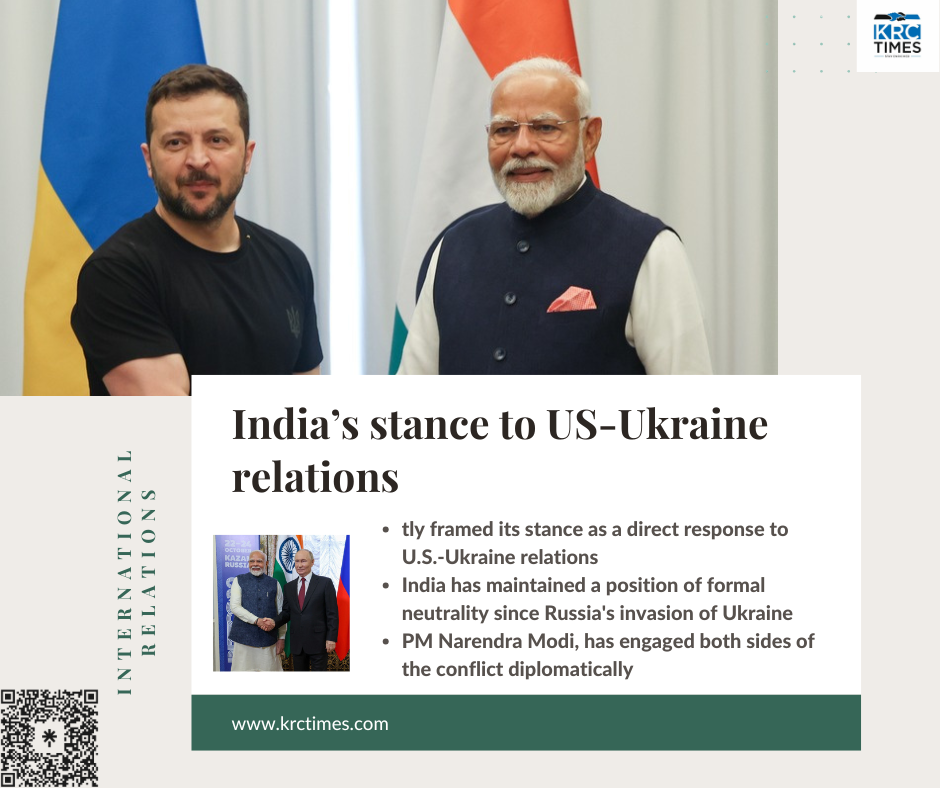
India’s reaction to U.S.-Ukraine relations, particularly in the context of the ongoing Russia-Ukraine conflict, reflects its broader foreign policy of strategic autonomy and its effort to balance relationships with multiple global powers, including the United States, Russia, and Ukraine. India has not explicitly framed its stance as a direct response to U.S.-Ukraine relations but rather as a response to the broader geopolitical situation involving the conflict.
India has maintained a position of formal neutrality since Russia’s invasion of Ukraine began in February 2022. This stance is evident in its consistent abstentions from United Nations votes condemning Russian aggression, such as the UN General Assembly resolution in February 2025 calling for a “comprehensive, just, and lasting peace in Ukraine” and explicitly condemning Russia, where India abstained alongside 65 other nations, while the U.S. voted against it. India’s reluctance to openly criticize Russia stems from its longstanding strategic partnership with Moscow, particularly in defense and energy sectors, where Russia remains a key supplier of military hardware and oil. For example, Russia has historically provided India with advanced technologies like the S-400 missile defense system, which bolsters India’s deterrence against regional rivals like China and Pakistan.
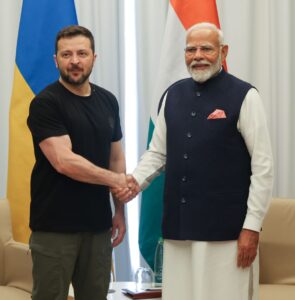
At the same time, India has deepened its strategic ties with the United States over the past two decades, viewing the U.S. as a critical partner in countering China’s rise in the Indo-Pacific. The U.S. has largely accommodated India’s neutral stance on Ukraine, recognizing India’s complex historical relationship with Russia and its strategic importance in the broader U.S. Indo-Pacific strategy. U.S. officials, such as Assistant Secretary of State Donald Lu in February 2023, have expressed hope that India could leverage its influence with Russia to push for peace, though there is little evidence of India taking an active mediation role beyond rhetorical support for dialogue.
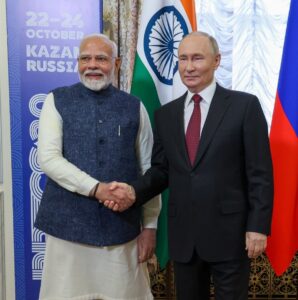
India’s leadership, notably Prime Minister Narendra Modi, has engaged both sides of the conflict diplomatically. Modi’s visit to Kyiv in August 2024—the first by an Indian PM since Ukraine’s independence in 1991—followed a trip to Moscow in July 2024, where his embrace of Russian President Vladimir Putin drew criticism from Ukraine and mild rebuke from the U.S. In Kyiv, Modi emphasized India’s support for peace and offered humanitarian aid, such as BHISHM medical cubes, signaling a balanced approach rather than a shift in policy. Indian Foreign Minister S. Jaishankar has articulated that New Delhi sees stability in its ties with Russia as a pillar of its foreign policy, while also maintaining that “this is not an era for war,” a statement Modi made directly to Putin in 2022.
The U.S. reaction to India’s position has been pragmatic. While Washington has urged India to take a stronger stance against Russia, it has refrained from punitive measures like sanctions under the Countering America’s Adversaries Through Sanctions Act (CAATSA) over India’s Russian defense purchases, likely due to the overriding priority of maintaining India as an anti-China ally. Posts on X and analyses from sources like the Carnegie Endowment suggest that India’s neutrality is seen as a calculated move to avoid alienating Russia, which could otherwise drift closer to China—a scenario India dreads given its tense border disputes with Beijing.
In summary, India’s reaction to U.S.-Ukraine relations is one of cautious navigation: it avoids aligning fully with the U.S.-led Western condemnation of Russia to preserve its strategic ties with Moscow, while strengthening its partnership with Washington where interests align, particularly against China. This balancing act has allowed India to maintain flexibility, though it risks straining ties with Ukraine and some Western partners if the conflict escalates or U.S. policy shifts under the Trump administration, which has shown signs of rethinking aid to Ukraine as of early 2025.
Promotional | Subscribe KRC TIMES e-copy