


If Pakistan refuses to dismantle the infrastructure of terror, it must be made to pay a diplomatic and economic price
 KRC TIMES Desk
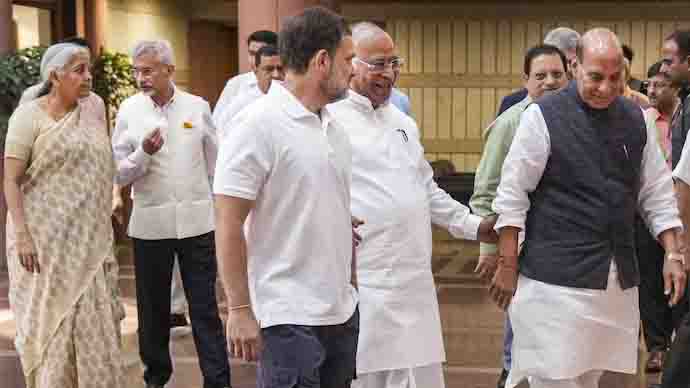
In a rare display of political unanimity, the Government has launched a major diplomatic initiative that sees leaders across the political spectrum coming together to expose and isolate Pakistan on the global stage over its sponsorship of terrorism.
The formation of all-party delegations, comprising both ruling and opposition MPs, is a strong message that India is united in its resolve to combat cross-border terrorism and ensure accountability from Islamabad. The immediate trigger for this robust move is the brutal terrorist attack in Pahalgam.
The terror attack not only shocked the nation but also reinforced what has been a long-standing grievance for India – Pakistan’s complicity in fostering terrorism as an instrument of state policy. The subsequent Operation Sindoor, launched on May 7, targeted terror infrastructure in Pakistan and PoJK, signalling India’s readiness to respond with decisive military precision.
However, the Government has made it clear that kinetic action alone will not suffice. The war against terror, especially state-sponsored terror, must be fought on diplomatic fronts as well. Hence, the all-party delegations to various parts of the world represent a significant second front – the global battle for perception, support, and pressure.
With over 30 MPs from diverse parties, including the BJP, Congress, TMC, DMK, CPI(M), Shiv Sena (UBT), NCP (SP), AAP, NC and others, the move underscores one critical fact: India is in no mood to let Pakistan off the hook. Not diplomatically. Not morally. Not strategically.
The unity is striking. Despite domestic political rivalries, the opposition has firmly stood behind the Government’s initiative. Congress has confirmed its participation, with senior leaders joining the mission. Even leaders from parties that are staunch critics of the BJP have extended support. What makes this initiative particularly significant is the strategic intent behind it.
These delegations will engage with Governments, think tanks, and civil society in different countries. Each group, consisting of seven to eight members, is tasked with conveying a clear message: Pakistan’s continued export of terrorism is not just an India-Pakistan problem – it is a global security threat. The idea of bipartisan diplomatic delegations is not new globally – the United States, for example, has used such formats to send strong messages of unity on foreign policy matters.
The broader message is unmistakable: terrorism is not a partisan issue. It is a threat that transcends political boundaries. By aligning its internal political forces to speak with one voice internationally, India strengthens its case and elevates its moral authority in demanding that the world act decisively.
The choice of countries is also deliberate. By covering influential blocs such as the European Union, ASEAN, the Gulf Cooperation Council, and African Union member states, India is laying the groundwork to build a global consensus.
In particular, outreach to countries like the United States, Japan, South Korea, Egypt, South Africa, and Oman is crucial, not only for strategic partnerships but also for building pressure on global platforms like the United Nations, G20, IMF and the Financial Action Task Force. India’s goal is clear: to garner international support for the imposition of stringent diplomatic and economic sanctions on Pakistan until it takes irreversible action against terror groups operating from its soil.
This includes lobbying for greylisting or blacklisting by FATF, reducing bilateral aid and military cooperation by influential nations, and discouraging investment and trade flows until Pakistan complies with international norms.
At the heart of this initiative lies a clear doctrine: peace cannot be held hostage to the whims of a state that uses terror as leverage. If Pakistan refuses to dismantle the infrastructure of terror, it must be made to pay a diplomatic and economic price.
And with the united backing of its political spectrum, India is determined to ensure exactly that. The current diplomatic offensive is more than symbolic; it is a strategic move to shift the global narrative and build lasting pressure on Pakistan. The success of this initiative could redefine how the world responds to state-sponsored terrorism – and India is taking the lead.

Register your business, organisation, and services in ‘InfoCom Silchar Diary’
e-mail: infocom.krc@gmail.com
Know More | Apply Here

