

The programme concluded with a lively interactive session, allowing the audience to raise questions and clarify their doubts with the speakers
 KRC TIMES Barak Valley Bureau
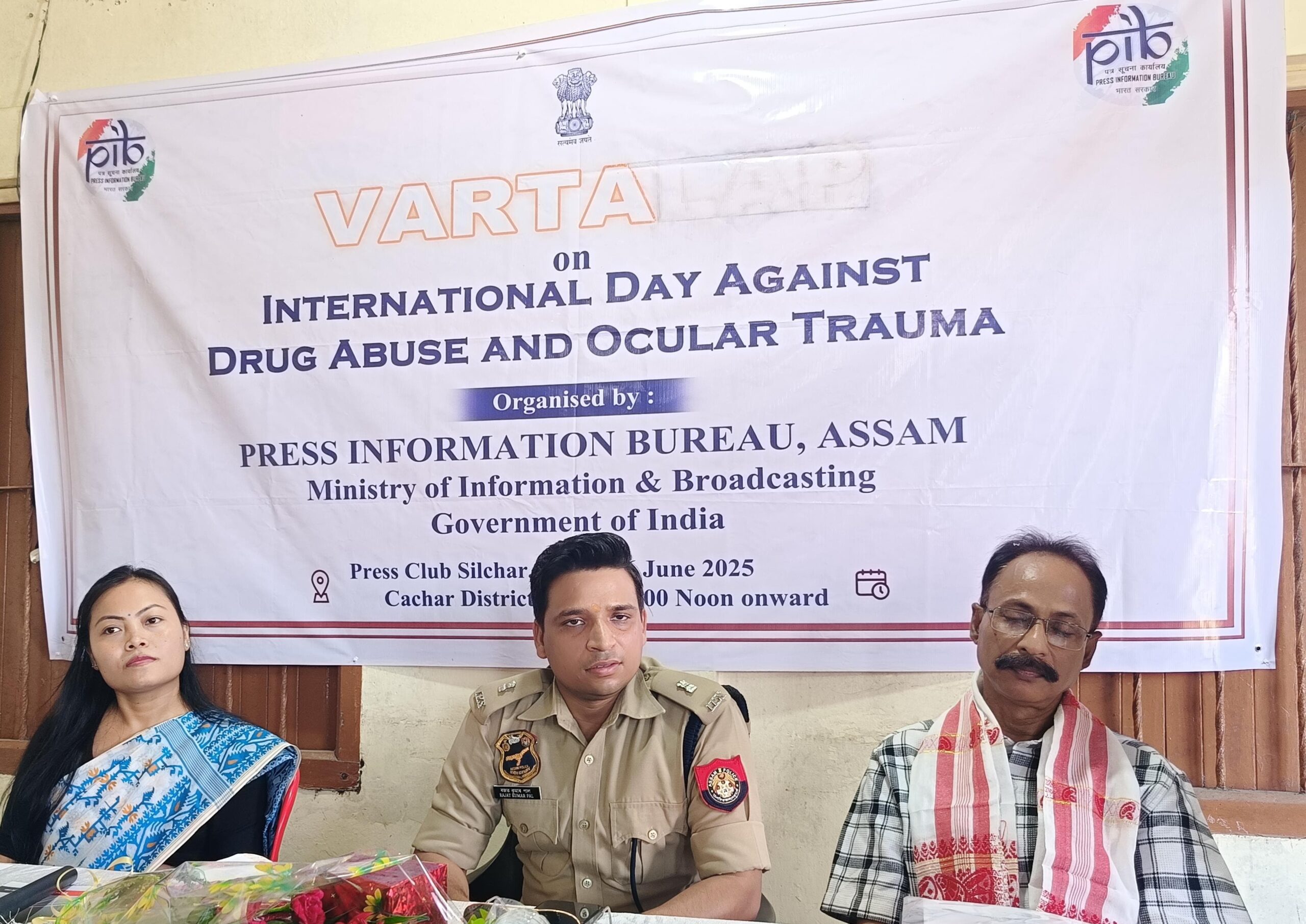
Silchar: An awareness programme titled Varta was organised on Thursday at the Silchar Press Club by the Press Information Bureau (PIB), Assam, Ministry of Information and Broadcasting, Government of India. The event marked the observance of the International Day Against Drug Abuse and Illicit Trafficking and aimed to raise awareness about the prevention of ocular trauma.
The session began with a welcome address by W. Panthoibi Singha, Field Publicity Officer, Central Bureau of Communication (CBC), Silchar. She stressed the importance of community engagement and the media’s role in addressing pressing health and social issues.
Delivering the keynote address, Additional Superintendent of Police (Crime), Cachar, Rajat Kumar Pal, elaborated on this year’s theme: International Day Against Drug Abuse and Illicit Trafficking. He spoke on the increasing vulnerability of youth to substance abuse, the current trends in drug-related crimes in the region, and the crucial role of law enforcement and community involvement in addressing the problem.
“Drug abuse severely impacts physical, mental, and social well-being,” Pal noted. “It can lead to liver, heart, and brain damage, weaken the immune system, and cause anxiety, depression, hallucinations, and paranoia. Socially, it breaks families, disrupts education or careers, and leads to financial and legal troubles. In extreme cases, it can cause addiction, overdose, or even death. Youth, particularly school and college students, are most at risk.”
He further explained that illicit drug trafficking the illegal production and distribution of banned substances is a serious global issue linked to organised crime, violence, and corruption. “Addicts need treatment, not punishment. De-addiction centres should be their first destination,” he added.
Pal also outlined law enforcement strategies to combat trafficking, which include coordinated policing, tightened border surveillance, and enhanced vigilance in high-risk zones. “We aim to work in tandem with communities, educational institutions, and healthcare providers to raise awareness and build a drug-free society,” he said. Enforcement and rehabilitation, he noted, must go hand in hand.
The second speaker, Dr. Sibananda Roy, Joint Director of Health Services, Cachar, addressed the topic Advisory to Prevent, Minimise and Mitigate Ocular Trauma. He highlighted various causes of eye injuries and stressed the importance of timely medical attention. Dr. Roy pointed out that occupational and domestic settings often pose risks for such trauma.
“Ocular trauma refers to physical or chemical injuries to the eye or its surrounding area,” he explained. “Such injuries can be caused by toxic substances or blunt force, leading to symptoms like pain, redness, or discomfort when moving the eye.”
He emphasised the need for preventive care, especially the use of dark goggles or sunglasses to guard against harmful UV rays. Dr. Roy also cautioned against rubbing the eyes when exposed to foreign substances.
The programme concluded with a lively interactive session, allowing the audience to raise questions and clarify their doubts with the speakers.
Promotional | 5E for Success