Progress, Politics, and the Test of Delivery
 KRC TIMES Assam Bureau
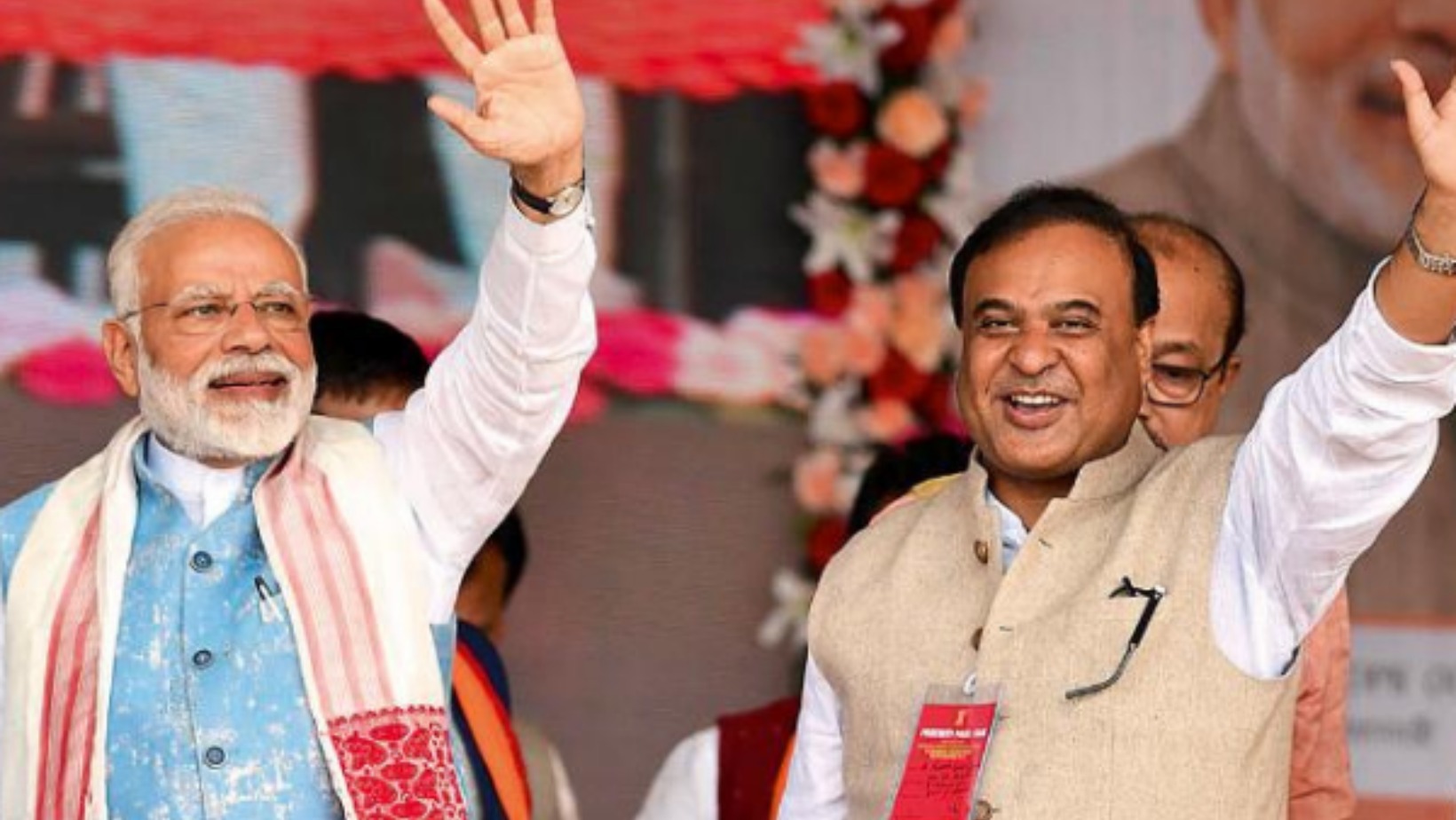
Prime Minister Narendra Modi’s two-day visit to Assam has once again thrust the Northeast into the national spotlight. Development projects worth nearly ?18,530 crore were inaugurated or launched during the visit, encompassing healthcare, infrastructure, connectivity, housing, and industrial expansion. On the surface, these numbers suggest a transformative leap forward for Assam.
Yet, in a state where geography, identity, and history are tightly interwoven, the weight of such announcements goes far beyond monetary value. Each new road, bridge, or medical college carries with it questions of equity, cultural preservation, environmental vulnerability, and the credibility of governance. This visit, like several others in recent years, is both a political performance and a policy push.
It celebrates Assam as a pivotal player in India’s growth story, but it also challenges the state to reconcile ambition with delivery. The real measure of success will not be the crores sanctioned, but whether ordinary Assamese citizens feel their lives tangibly improved-whether villages cut off during floods get connected, whether patients find affordable healthcare nearby, and whether job-seeking youth find employment at home rather than migrating out.
Healthcare: Healing Be yond Announcements Among the most nota- ble projects unveiled was the foundation stone of the Darrang Medical College, along with a nursing college and a General Nursing and Midwifery (GNM) school in Mangaldai. Together, these institutions represent an investment of around ?570 crore, promising to reshape healthcare access in central Assam.
For decades, patients from districts like Darrang, Udalguri, and Sonitpur have been forced to travel either to Guwahati or outside the state for specialised treatment. The new medical college holds out hope of reversing this pattern, providing tertiary care closer to home. Simultaneously, it of- fers local students the chance to pursue medical education without the burden of leaving their communities.

But optimism must contend with persistent challeng es. Assam has often struggled with shortages of faculty, outdated equipment, and the migration of trained doctors to metropolitan centres. Several medical colleges in the state already face under-staffing. The question is whether the new institutions will be equipped and staffed adequately, or whether they will replicate the same deficiencies under a different banner.
Unless policy ensures incentives for retention of professionals in rural and semi-urban areas, the promise of these healthcare investments risks remaining symbolic. Connectivity: Bridges as Lifelines Connectivity lay at the heart of the Prime Minister’s announcements. The proposed Narengi-Kuruwa bridge over the Brahmaputra, a 2.9-kilometre structure with an estimated cost of ?
1,200 crore, is expected to ease traffic congestion in Guwahati while improving access to northern Assam. The Brahmaputra, majestic and life-giving, has also long been a barrier. For people living on its northern bank, reaching Assam’s capital often means hours of detours and depen- dence on ferries vulnerable to weather. A permanent bridge promises to redraw maps of mobility.
Even more ambitious is the Guwahati Ring Road Project. At 121 kilometres and projected to cost nearly ?7,000 crore after factoring in land acquisition and exemptions, the project is one of the largest infrastructure undertakings in Assam’s history. It involves a 56 km four-lane northern bypass, widening of an 8 km stretch of NH-27, improve- ment of a 58 km bypass, and a 3 km major bridge across the Brahmaputra.
For Assam, often described as “geographically isolated” within India, such invest- ments are more than asphalt and steel. They represent attempts to weave peripheral regions into national com- merce and accelerate integra- tion with South and Southeast Asian markets under India’s Act East Policy. Yet they also present risks: cost overruns, environmental disruption, and uneven benefits.
If bypasses skirt small villages without building feeder roads, prosperity may concentrate only in Guwahati and a handful of towns. True connectivity means linking the margins, not just the hubs. Industry and the Bio-Economy: From Bamboo to Ethanol Assam’s industrial profile, historically limited to oil, tea, and timber, is now being recast through energy and bio-economy initiatives.
At the centre of this vision is the ?4,200 crore Numaligarh Refinery bio-ethanol project, which will be India’s first bamboo-based ethanol refin ery. It is designed to process 3,00,000 metric tonnes of bamboo annually, producing 49,000 metric tonnes of ethanol for blending with fuel. The project serves multiple purposes.
It aligns with India’s national ethanol-blending programme, reduces dependence on fossil fuels, and creates livelihood opportunities for bamboo cultivators across the Northeast. Bamboo, once dismissed as “the poor man’s timber,” has long been underutilised despite the region’s vast reserves. Now, it may emerge as a cornerstone of Assam’s industrial future.
The refinery’s expansion dovetails with other major schemes: refinery capacity enhancement, affordable housing through 5.5 lakh homes under the PM Awas Yojana-Gramin worth ?8,450 crore, and urban industrial growth. Taken together, these suggest a state moving from the periphery of India’s industrial landscape to a position of national relevance.

But the gains will only be real if they translate into sustained local employment. If skilled jobs go primarily to professionals from outside, while locals remain suppli- ers of raw bamboo or casual labourers, the promise of inclusive industrialisation will ring hollow. Culture and Identity: The Soul of Development Development in Assam has always been inseparable from questions of identity.
The Prime Minister, aware of this, invoked the state’s civilisational heritage, citing Srimanta Sankardeva, the 15th-century saint-reformer, and participating in centenary events honouring music icon Bhupen Hazarika. Such gestures are more than ceremonial.
For a state marked by movements to preserve language, land, and culture, recognition from the highest office of the land reassures communities that economic progress will not come at the cost of assimila- tion. Development without respect for heritage risks alienation. Roads and bridges may connect markets, but only cultural inclusion can connect hearts.
The Political Undertone: Between Optics and Strategy With general elections on the horizon, the political subtext of the visit is inescapable. Inaugurations and foundation stones make for powerful visuals of governance in action. Yet to dismiss the visit as mere electoral theatre would be simplistic. Assam today is no longer a peripheral frontier-it is the fulcrum of India’s Act East Policy.
Its roads and refineries are not just state projects but national strategic assets, connecting India to ASEAN trade routes and cross-border energy corridors. Thus, while politics colours the announcements, the stakes are undeniably real. Assam’s transformation is tied not only to its own progress but to India’s regional ambitions.
The Unfinished Questions: Floods, Equity, and Capacity Despite the fanfare, Assam’s ground realities temper celebration. The state continues to face annual devastation from floods and erosion caused by the Brahmaputra and its tributaries. Entire stretches of newly built roads are washed away within years. Embankments fail, displacing thou- sands.
Unless infrastructure is built with climate resilience at its core, crores invested risk being undone each monsoon. Unemployment is another pressing challenge. For years, educated youth from Assam have migrated to Bengaluru, Delhi, and Mumbai for jobs. Will the new refineries, medical colleges, and road projects create sustainable employment at home? Or will benefits accrue primarily to contractors and firms from outside? Equity of distribution also looms large.
A ?1,200 crore bridge may be a marvel, but if interior villages remain un- connected, inequality deepens. The promise of 5.5 lakh rural homes is significant, but if corruption, delays, or political favouritism creep in, trust erodes. Finally, institutional capacity remains a perennial worry. India’s development history is filled with projects that began with enthusiasm but ended with inefficiency.
The Guwahati Ring Road could be transformative-or it could languish in litigation, land disputes, and poor maintenance. Robust monitoring, transparent tendering, and citizen participation will decide which path it takes. Symbolism and Substance Despite the caveats, symbolism matters. The Prime Minister’s repeated visits signal that the Northeast is no longer at the margins of India’s imagination.
By placing development, culture, and identity in the same frame, the government projects Assam as central to India’s growth narrative. That shift in perception carries weight. For generations of Assamese who have felt neglected by Delhi, it offers a new sense of inclusion.The challenge is to convert symbolism into substance.

Citizens measure progress not by the number of crores announced but by whether they can reach hospitals in time, whether their homes survive floods, whether their children find jobs, and whether their traditions remain respected.
Conclusion: Assam’s Bridges of Promise The two-day visit is, at once, a celebration and a challenge. It celebrates Assam’s integration into the national development trajectory with projects worth over ?18,000 crore. But it also challenges both state and central governments to ensure these promises survive beyond paperwork and press releases.
Progress in Assam must ultimately be measured not in kilometres of highways or tonnes of ethanol, but in reduced flood vulnerability, improved livelihoods, accessible healthcare, and cultural preservation. Development here is not only about economics. It is about bridging aspirations with delivery, tradition with modernity, and local realities with national visions. The Prime Minister’s visit rekindled hope. But hope is fragile.
The true test lies in whether, five years from now, Assamese citizens look back and say their lives were tangibly better, their futures brighter, and their identities secure. If pursued with sincerity, Assam’s story could indeed become a beacon of balanced, inclusive growth for the rest of India.