

As of June 24, 2025, both nations signaled an end to the 12-day conflict
 KRC TIMES Desk
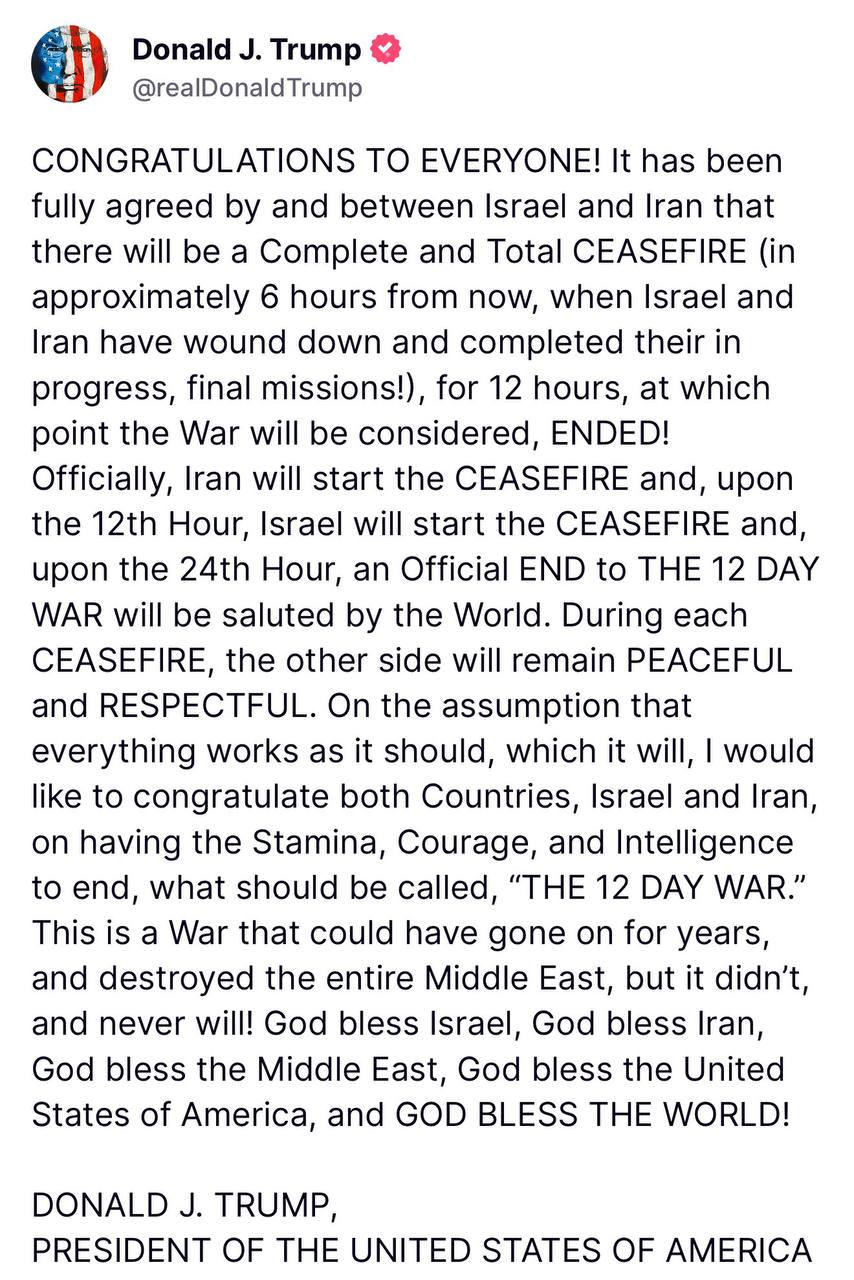

The Iran–Israel war, which began on June 13, 2025, with Israeli surprise attacks on Iranian military and nuclear facilities, appears to have concluded with a fragile ceasefire. As of June 24, 2025, both nations signaled an end to the 12-day conflict, mediated by Qatar and brokered by U.S. President Donald Trump. The ceasefire, announced on June 23, 2025, faced initial violations, with both sides accusing each other of continued attacks, but it was holding by June 24, as civilian restrictions were lifted and airspace reopened in both countries.
Key Developments:
Israeli Offensive: Israel’s Operation Rising Lion targeted Iran’s nuclear sites (Natanz, Fordow, Isfahan), assassinated key military leaders, nuclear scientists, and politicians, and destroyed much of Iran’s air defenses. Israel achieved air superiority, striking with impunity, but its long-term goal of fully dismantling Iran’s nuclear program remains uncertain.
Iranian Response: Iran retaliated with over 400 ballistic missiles and drones aimed at Israeli military and civilian targets, though many were intercepted. Iran’s missile capabilities were significantly degraded, with launch sites and stockpiles heavily damaged.
U.S. Involvement: On June 22, 2025, the U.S. conducted strikes on three Iranian nuclear sites (Fordow, Natanz, Isfahan) using bunker-buster bombs, escalating its role. Trump claimed the strikes “obliterated” Iran’s nuclear program, but U.S. intelligence reports suggest the setback was limited to a few months, as enriched uranium stocks survived.
Houthi Role: The Iran-aligned Houthis in Yemen fired missiles at Israel and declared U.S. strikes a “declaration of war,” ending a U.S.–Houthi ceasefire.
Casualties and Damage: Iran reported over 224 deaths, mostly civilians, and 2,500 injuries. Israel reported 29 deaths and around 900 injuries, primarily from missile strikes.
Diplomatic Efforts: Talks in Geneva between Iranian and European officials showed no progress on ending Iran’s uranium enrichment. Iran’s Foreign Minister Abbas Araghchi met Russian officials in Moscow on June 23, seeking support, but Russia’s aid was limited to diplomatic gestures.
Current Status:
The ceasefire, effective June 24, 2025, is fragile due to deep mistrust. Both sides claimed victory: Israel for crippling Iran’s military and nuclear capabilities, and Iran for enduring the assault.
Iran’s nuclear program, while damaged, remains operational, with some facilities protected underground. Experts doubt Israel or the U.S. achieved a lasting strategic victory.
Regional tensions persist, with risks of escalation involving Iranian proxies like Hezbollah, Hamas, or Iraqi militias, though no major actions have been reported post-ceasefire.
Global reactions vary: G7 nations supported Israel’s right to self-defense, while Latin American countries like Cuba and Venezuela condemned U.S. strikes.
Uncertainties:
The ceasefire’s durability is questionable, given prior violations and ongoing regional conflicts (e.g., Gaza war).
Iran’s potential retaliation against U.S. assets, possibly via proxies, remains a concern, though Tehran’s response has been restrained so far.
Israel’s missile interceptor stocks and long-range operational capacity may face challenges if hostilities resume.
Promotional | Subscribe KRC TIMES e-copy