

Alleging It Targets Their Communities
 KRC TIMES Manipur Bureau
India’s democratic foundation rests on the principle of universal adult suffrage, enshrined in Article 326 of the Constitution. Yet, in Manipur, this democratic right is increasingly under strain due to allegations of electoral fraud and unchecked illegal immigration from neighboring countries like Myanmar and Bangladesh.
In this backdrop, the Election Commission of India (ECI) is launching a Special Intensive Revision (SIR) of the electoral rolls a move welcomed by many as a step toward restoring electoral integrity but staunchly opposed by certain Kuki leaders and organizations.
Their resistance, while framed around concerns for displaced tribal populations, is being viewed by others as an attempt to obstruct a process that could expose the in- clusion of ineligible and potentially illegal immigrants in the state’s voter rolls.
The Purpose of SIR: Cleaning the Electoral Slate The SIR is a constitutionally mandated ex- ercise under Article 326 and Section 16 of the Representation of the People Act, 1950, aimed at verifying that only Indian citizens are included in the voter list.
Manipur, with a porous 398-km-long border with Myanmar, has seen a sharp increase in illegal immigration, particularly after the 2021 Myanmar coup. This has raised alarm over foreign nationals fraudulently enrolling as voters using forged documents such as Aadhaar cards and ration cards.
The ECI’s plan involves door-to-door verification and exclusion of easily falsifiable identification documents, such as Aadhaar and Voter IDs, from standalone eligibility. The goal is to update and correct voter rolls ahead of the 2026 delimitation and the 2027 Assembly elections.
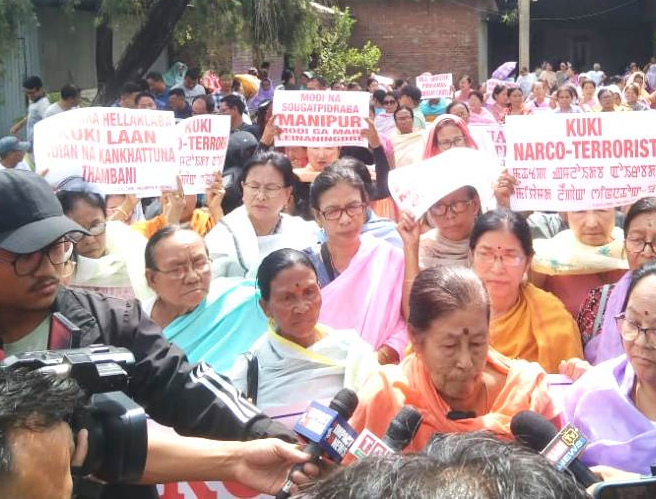
Opposition from Kuki Leadership Leaders such as H.S. Benjamin Mate, Chairman of the Kuki Organisation for Human Rights Trust (KOHUR), and Dr. Lamtingthang Haokip, along with groups like the Manipur Tribal Forum Delhi (MTFD), have strongly opposed the SIR.
They argue that the revision, taking place during on- going ethnic violence and displacement, is untimely and risks disenfranchising thousands of displaced Kuki voters. Mate describes the SIR as “institutional injustice” and a “demographic weapon” used against the Kuki community.
He warns that proceed i n g with it could escalate tensions further, even suggesting that Kukis might consider declaring their lands sovereign if pushed beyond toler ance.““However, such rhetoric has drawn criticism.
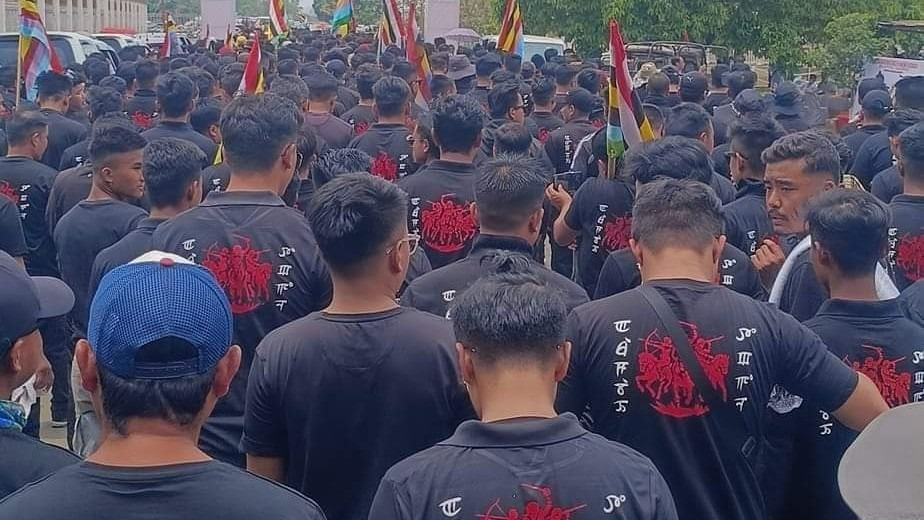
Detractors argue that such extreme positions not only stoke division but potentially shield illegal immigrants who may have entered the electoral roll fraudulently. Ethnic Conflict, Displacement, and the Question of Timing“Since May 2023, Manipur has been engulfed in violent conflict between Meitei and Kuki communities, leaving over 300 dead and more than 70,000 displaced.
The opposition to the SIR, in part, stems from the reality that many displaced Kukis are living in relief camps or outside the state with limited access to doc- umentation and ECI personnel. While the humanitarian concerns are valid, critics argue that postponing the SIR offers no solution to the problem of fraud- ulent voter entries.
Instead, they advocate for a balanced approach implementing the SIR with accommodations for displaced communities through mobile verifica- tion units, secure data collection at relief camps, and special coordination with civil society groups.
Indeed, the ECI has already begun out- reach in conflict-hit districts like Churachandpur, Kangpokpi, and Imphal. Booth Level Officers (BLOs) have been trained, and meetings with political parties have emphasized inclusive voter verification mechanisms.
The Commission has even proposed relocating voter addresses to relief camps, ensuring displaced Meitei and Kuki citizens retain their franchise rights. A Pattern of Electoral Manipulation?“The core of the dispute lies in opposing narratives: one side argues that the SIR is an oppressive tool of exclusion; the other views it as an essential correction to years of demographic manipulation via fraudulent documentation.““Data backs the latter concern.
A June 2025 ECI update from Bihar’s ongoing SIR found 65.2 lakh ineligible voters 22 lakh deceased, 35 lakh shifted, 7 lakh duplicates, and 1.2 lakh untraceable individuals, including suspected foreign nationals. Manipur, facing similar vulnerabilities, stands to benefit from a comparable cleanup. Multiple instances of forged Aadhaar cards among Myanmarese and Rohingya nation- als support this view.
On June 24, 2025, a Myanmarese individual was arrested in Mizoram with an Aadhaar card issued in Manipur and 121 grams of heroin worth over ?90 lakh. In 2021 alone, 28 Myanmarese nationals were arrested in Tengnoupal, many with fake Aadhaar cards obtained through well-organized rackets.“
“A 2022 investigative report highlighted how refugees from Myanmar’s Chin and Sagaing regions exploited ethnic ties with Kuki communities to obtain fraudulent documentation, often with assistance from local village chiefs. By late 2022, Manipur had converted Sadbhavana Mandop in Churachandpur into a detention facility for over 40 Myanmarese na Misuse of Aadhaar and Historical Precedents Concerns over voter roll manipulation aren’t new.
In Tengnoupal Assembly Constituency, a 2005 ECI investigation found a shocking 24.89% increase in voter count far exceeding the national average. Thousands of indigenous voters had been excluded while fictitious names flooded the rolls. These anomalies were traced to unchecked migration and the misuse of Aadhaar and other documents.
The growing number of “unrecognized villages” in hill districts, revealed by recent census data, also raises red flags. Many of these settlements are believed to harbor illegal immigrants who may be registering for welfare schemes and voting privileges. Between 2017 and 2024, multiple reports detailed how illegal immigrants, including Rohingya and Bangladeshi nationals, acquired fraudulent identification cards across Manipur.
In one instance in May 2018, nine Rohingya were arrested in Moreh with fake Aadhaar cards and a local facilitator. That same year, 178 illegal immigrants were arrested in Jiribam district alone. The Supreme Court’s recent July 2025 suggestion to allow Aadhaar and ration cards as valid voter ID documents has drawn criticism from experts and security analysts.
In Manipur’s context where fake Aadhaar cards have become the linchpin of illegal entry and voter registration this move risks undermining the very integrity the SIR aims to uphold. SIR: An NRC-Like Shield?
For many in Manipur, especially indigenous Meiteis, the SIR represents more than a bureaucratic exercise. It is seen as a de facto substitute for the long-delayed National Register of Citizens (NRC), which has been vocally demanded but never implemented in the state. Former Chief Minister N. Biren Singh had repeatedly highlighted the demographic threat posed by illegal settlements, particularly of Myanmar’s Chin refugees.
The State Assembly’s unanimous resolution in August 2024 to form a committee to identify and deport illegal immigrants further emphasizes the political consensus around the issue. The Manipur Pradesh Congress Committee (MPCC) also alleged in 2023 that there were 1.3 lakh fake voters on the rolls, which would potentially swing election outcomes. Despite this, many Kuki organizations opposing the SIR have remained conspicuously silent on such revelations.
The Dilemma: Protecting Rights Without Enabling Fraud“It is crucial to distinguish between genuine concern for displaced communities and blanket opposition that risks shielding illegal entries. While Kuki leaders have voiced fears of disenfranchisement, critics argue their approach is narrow, focusing on ethnicity rather than electoral integrit Instead of obstructing the SIR, these groups could engage constructively by proposing safeguards such as third-party monitoring, biometric verification, and campbased enrollment drives.
These measures can ensure that displaced Kukis are counted without allowing illegitimate voters to dilute the democratic process. The ECI has shown willingness to be flexible and inclusive, as seen in Bihar’s model where 99.8% of electors submitted updated forms. Manipur can adopt similar digital tracking and biometric authentication to reduce the margin for error and manipulation.
Looking Ahead to 2027 With Manipur under President’s Rule and state elections due in 2027, a clean and verified voter roll is indispensable. The SIR serves this purpose, aligning with constitutional mandates and responding to growing national security concerns.
While concerns from the Kuki community must be addressed sensitively, blanket opposition without alternatives does little to solve the core issue. If implemented with fairness and safeguards, the SIR can help restore faith in the electoral process and preserve the voting rights of all legitimate citizens Kuki, Meitei, and others.
Far from being a discriminatory campaign, the SIR, like a firewall, protects democracy from the malware of voter fraud. It is time for all stakeholders to view it not through the lens of ethnic grievance, but as a shared national responsibility to uphold the sanctity of the ballot.

Know More – Apply Here