

When Fact- Finding Becomes Framing
 KRC TIMES Manipur Bureau
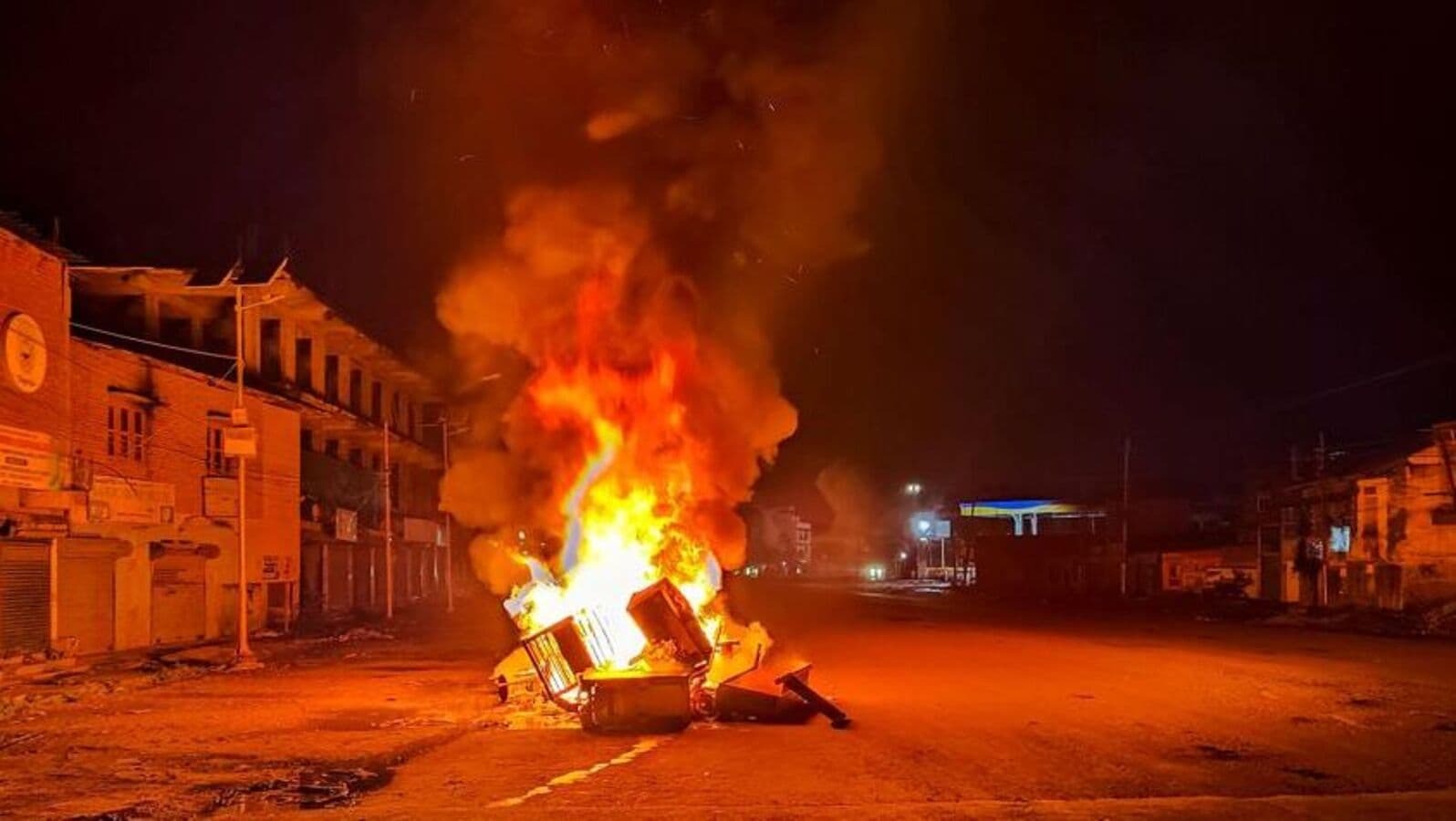
The recently released report of the People’s Union for Civil Liberties (PUCL) on the Manipur violence of 2023-2025 has ignited controversy for all the wrong reasons. Billed as a “fact-finding” exercise, the document reads less like a balanced investigation and more like a political indictment of one community.
By asserting that the violence was “not sponta- neous but orchestrated, enabled by armed Meitei vigilante groups like Arambai Tenggol and Meitei Leepun, and facilitated by state complicity and law enforcement failure,” PUCL presents a selective account that discounts vital evidence – including verified testimonies pointing to Kuki-mil- itant aggression preceding the May 3 conflagration.
This one-sided framing ignores an inconvenient reality: Meiteis were the first to suffer targeted attacks and mass displacement from Kuki-dominated areas. The assertion that the Kuki-Zo community alone was victimized erases this early trauma, distorting a deeply complex tragedy into a morality play where culpability is assigned along political, not factual, lines.
Misreading the Ground Reality PUCL’s treatment of Meitei defense groups is a case in point. The report depicts Arambai Tenggol (AT) as an armed vigilante outfit that engineered the violence. In truth, AT was founded in 2020 as a socio-cultural and religious body, with no record of militarization before May 3, 2023.
The first major instance of weapon looting in the valley – the storming of the Manipur Police Training Centre at Pangei – occurred only on May 4, after Kuki militants had already carried out coordinated assaults. Those raids, while unlawful, were widely interpreted as desperate, defensive reac- tions to a wave of attacks that had begun in Kuki-dominated hill districts.
More damning to PUCL’s thesis are videos and forensic records from May 3 showing armed Kuki militants wielding sophisticated weaponry – including AK47s – during assaults in Churachandpur and Bishnupur. These incidents directly contradict the report’s characterization of the tribal solidarity protests as “peaceful marches” disrupted by Meitei aggression.
When the Governor of Manipur later ordered the surrender of illegal and looted arms in February 2025, Meitei groups com- plied; many Kuki group openly refused. The Eastern Kuki-Zo Village Volunteers even declared that they would not return weapons until separate administrative status was granted.
Official tallies show that the volume of surrendered arms was higher in the valley than in the hills – a fact completely absent from PUCL’s accounting. Violence in Context, Not Isolation To treat the bloodshed of May 3 as an isolated eruption is to ignore years of combus- tible policy disputes.
Among the triggers: “ Anti-drug campaigns that de- stroyed extensive poppy cultivation in hill areas, disproportionately affecting Kuki livelihoods. “ Eviction drives and joint surveys targeting illegal encroachment of Reserved and Protected Forests, much of it linked to settlements opposed by Kuki groups. “ Talk of an NRC-like exercise to identify illegal immigrants, perceived by Myanmar-origin Kuki-Chin-Zomi communities as a direct threat.
“ The Meitei Scheduled Tribe demand and proposals to delete “Any Kuki Tribes” (AKT) from the ST list, both of which inflamed fears of land-right erosion. “ Breakdown of the Suspension of Operations (SoO) agreements with key Kuki militant outfits, citing extortion, encroachment, and repeated violations. These structural flashpoints were widely discussed across communities.
Yet, where protests in Naga-dominated districts over the same ST issues ended peacefully, Kuki-dominated areas spiraled into violence. PUCL never addresses this pivotal disparity. A Timeline the Report Ignores The path to May 3 was marked by deliberate, escalating provocations: “ April 27, 2023 (Churachandpur): Local youths vandalize an open gym sched- uled for inauguration by then-CM N. Biren Singh. “ April 28: The Indigenous Tribal Leaders Forum (ITLF) calls a shutdown.
Later that day, the Churachandpur Range Forest Office is torched by mobs chanting “No more Reserved Forest.” “ April 29: Kuki miscreants desecrate the Salai Taret flag at a private residence. On March 27, a Manipur High Court order directing the state to consider Meitei ST inclusion prompted the All Tribal Students’ Union (ATSUM) to announce a Tribal Solidarity March for May 3.
The march passed without violence in Naga areas but exploded in Churachandpur, Kangpokpi, and Tengnoupal – with Kuki militants initiating attacks on Meitei settlements and government offices. By nightfall on May 3, temples were desecrated, villages burned, and homes abandoned under gunfire.
The first rape victim – a 37-year-old Meitei woman in Churachandpur – was assaulted that evening, hours before the infamous naked parade of two Kuki women in Thoubal on May 4, which Meitei civil groups condemned publicly and punished internally.
Displacement and State Abdication PUCL claims that “Kuki-Zo communities were driven out of the valley” while “Meitei communities left tribal hill-dominated areas.” The phrasing suggests symmetri- cal displacement – yet the chronological record shows that Meiteis fled first, driven from Kuki-dominated districts by targeted arson and armed raids.
What followed in the valley – the burning of Kuki homes and churches – was retaliation, not the opening salvo. Worse still was the state’s catastrophic operational failure. Instead of defending mixed settlements, authorities prioritized evacuation. Once civilians were removed, unguarded neighborhoods were systemat ically destroyed – often within hours. This choice, more than any ethnic hostility, guaranteed the scale of loss and entrenched mutual mistrust.

Political Cover for Militant Agendas Evidence of premeditation is abundant. On May 3 alone, Kuki mobs attacked and burned multiple Forest Offices – a symbolic and strategic target, aligning with long-standing disputes over land demarcation.
The same day, arms were looted from a Churachandpur gun shop. Just weeks earlier, cadres of the Kuki Independent Army had raided a designated SoO camp, escaping with weapons. Many of these groups enjoyed tacit or explicit political patronage.
By mid-May 2023, ten Kuki-Zomi MLAs – including BJP ministers – demanded separate administration, asserting that the Manipur government had “miserably failed” to protect tribal citizens. By 2025, Kuki-Zomi political and militant organizations were meeting in Guwahati, jointly suspending engagement with the Government of India and conditioning peace on “substantive political dialogue” toward autonomy.
The Kuki National Organisation (KNO), which had earlier pledged electoral support to BJP candidates based on promises of expedited settlements, now stood at the center of a hardened separatist lobby – a shift obscured entirely in PUCL’s treatment.
A Narrative That Feeds Partition Perhaps most troubling is PUCL’s framing of Manipur as a “de facto ethnic partition,” depicting valley districts as Meitei fortresses and hill districts as Kuki-Zo enclaves. Such language is not neutral analysis; it risks legitimizing separatist claims and hardening psychological borders. By referring to state police as “Meitei police,” PUCL echoes ethnonationalist rhetoric that reduces legitimate state institutions to ethnic caricatures.
This erodes public trust in law enforcement and feeds precisely the zero-sum logic that militant actors exploit. The Cost of a Flawed Inquiry Taken as a whole, PUCL’s report is not merely incomplete; it is dangerously misleading.
It omits documented triggers, downplays the scale of Kuki militant armament, and attributes pre-planned assaults to spontaneous outrage by Meitei groups. Its reliance on earlier “fact-finding missions” already discredited and legally challenged – including that of the Editors’ Guild of India – further undermines its credibility.
Such selective storytelling deepens wounds instead of healing them. In a state as fractured as Manipur, false balance is no substitute for truth. Justice can only emerge from a clear, unsparing record of who did what, when, and why – not from ideological comfort zones dressed up as human rights advocacy. The Justice Ajay Lamba Commission is still expected to deliver its official findings.
Until then, the ethical burden on civil society groups is immense: to prioritize verifiable truth over factional narratives. Manipur does not need manufactured indictments. It needs clarity, accountability, and the courage to confront uncomfortable facts across all lines. Anything less will not write the history of reconciliation – only the prologue to another round of violence.
Promotional | North East Integration Rally