

The human cost of this impasse is staggering especially for those who depend on life-saving treatments such as dialysis, cancer care, and cardiac surgery
 KRC TIMES Manipur Bureau
On the surface, the suspension of the Pradhan Mantri Jan Arogya Yojana (PMJAY) in Manipur’s private hospitals might sound like just another administrative hiccup in a sprawling government program. In reality, it is a slow-moving disaster one that threatens to push a state already battered by conflict, poverty, and displacement into a full-blown health emergency.
From August 16, 2025, private hospitals across Manipur will stop offering free treatment under PMJAY. Their decision stems from a stark reality: the state government has failed to reimburse them for months, leaving bills unpaid and hospitals financially strained. The human cost of this impasse is staggering— especially for those who depend on life-saving treatments such as dialysis, cancer care, and cardiac surgery.
This is not an isolated failure. The same crisis is unfolding in Haryana, Jammu and Kashmir, and Rajasthan, revealing a national pattern of delayed reimbursements and poor coordination between the Centre and the states. For millions of India’s poorest citizens, this is more than a policy lapse—it is the difference between life and death.
A State Already on the Edge“Manipur is one of India’s most vulnerable states in socio-economic terms. Nearly 36.8 percent of its population lives below the poverty line, one of the highest rates in the country. Its per capita income is far below the national average, and the informal economy—the lifeline for most households—has been shattered by over two years of ethnic unrest and economic disruption.
Since May 2023, violent conflict between communities has displaced tens of thousands. Many now live in relief camps, with scarce access to clean water, food, or medical care. Prices of essentials have soared due to road blockades and disrupted supply chains. For the poor, the cost of a hospital bill is simply unthinkable.
Against this bleak backdrop, PMJAY—India’s flagship health assurance scheme under Ayushman Bharat—has been a vital safety net. It promises up to ?5 lakh per family per year for hospitalisation, covering over 1,500 medical procedures. For Manipur’s poor, especially those with chronic illnesses, PMJAY has been the only way to access private healthcare without sinking into debt The Breaking Point The current crisis has been years in the making.
For months, private hospitals in Manipur have been treating PMJAY patients without receiving timely reimbursement from the state government. According to the Association of Healthcare Providers of India (AHPI), Manipur Chapter, the dues have reached a level where continuing free services is “increasingly unfeasible.”
On July 30, 2025, AHPI Manipur—led by president Dr. Palin Khundongbam and secretary Dr. James Elangbam—issued a final warning: if the pending bills were not cleared, PMJAY services would be suspended from August 16. During the suspension, patients would have to pay standard hospital rates and could claim refunds only if the government eventually settled the dues.
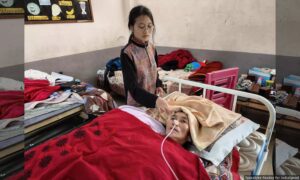
The AHPI’s statement expressed regret but made their position clear: hospitals cannot run on promises. We have stood by the public through repeated crises,” they said, “but without reimbursements, our ability to provide care is being destroyed.” Dialysis Patients in the Firing Line The people most at risk are those who need regular, expensive treat ment—dialysis patients chief among them.
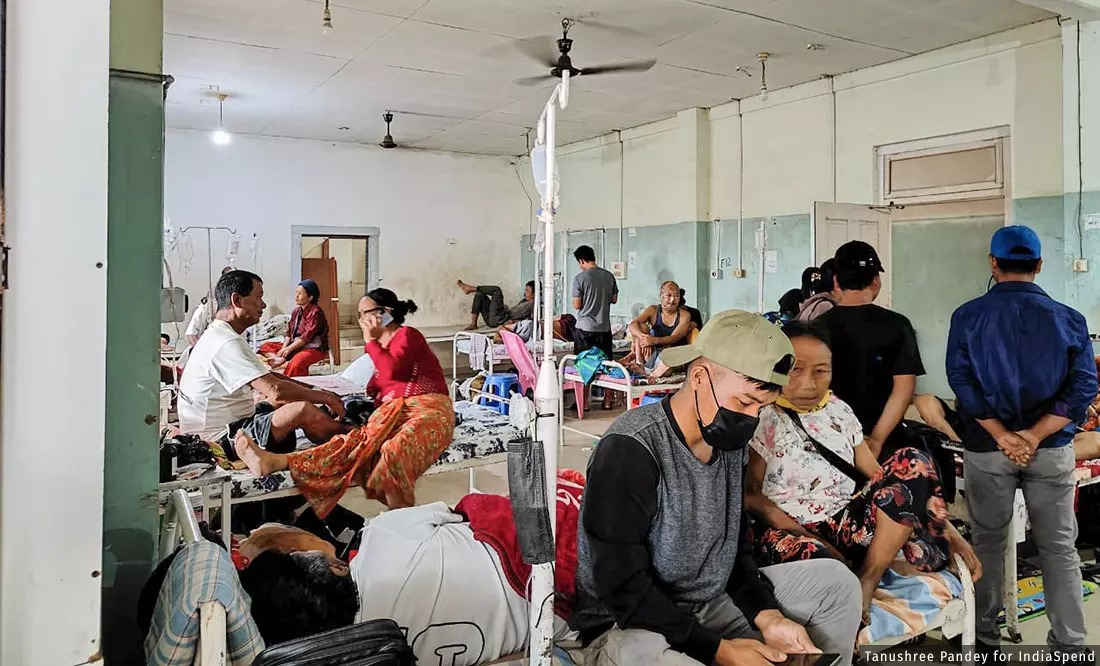
In private hospitals, one dialysis session costs around ?4,000, an impossible sum for daily wage earners. Under PMJAY, these sessions were free, but the suspension means hundreds of patients could be forced to choose between treatment and survival. In relief camps, where many displaced people now live, the danger is already visible.
Several kidney patients have died due to missed dialysis sessions, according to local accounts. At a press conference in Imphal on August 8, 2025, families shared harrowing stories. Athokpam Manglembi, whose husband undergoes dialysis at Shija Hospital, warned: From August 16 onwards, they will stop free dialysis for PMJAY patients.
This will put countless lives at risk.” Another patient from Ukhrul district, who has been traveling to Imphal twice a week for more than a decade, called the suspension “devastating.” A woman from Thoubal district spoke about her father’s four-year struggle with kidney disease: We cannot afford these costs. Government hospitals are full, and a patient may die if dialysis is delayed for even a week.”
These voices echo across the state—patients and families caught between a collapsing public health system and a private sector that can no longer work for free. A National Pattern of Neglect Manipur’s crisis is mirrored in other parts of India.
In Haryana, 650 private hospitals suspended PMJAY services from August 7 over unpaid dues of ?490 crore. This decision affects 1.8 crore beneficiaries. In Jammu and Kashmir and Rajasthan, too, hospitals are threatening to withdraw unless dues are cleared. These are not isolated administrative bottlenecks—they are signs of systemic dysfunction in the way PMJAY is funded and managed.
Private hospitals are indispensable to the scheme because public hospitals alone cannot meet demand. But without timely payments, these private partners are effectively subsidising the state, at the cost of their own financial health.
The Centre’s role cannot be ignored. While PMJAY is a centrally sponsored scheme, the responsibility for settling claims lies with State Health Agencies. When states delay, there is no rapid-response mechanism from the Union Ministry of Health to ensure funds flow. As a result, the scheme’s promise of universal coverage is breaking down in multiple regions at once.
The Cost of Delay“In Manipur, the suspension of PMJAY services is not just an inconvenience—it is potentially fatal for hundreds of patients. In Haryana, it risks creating a healthcare void for millions. In both places, the poor are being asked to carry the cost of government inaction. For more than two years, Manipur’s economy has been in free fall due to conflict.
Public finances are strained, but that is no excuse for failing to fund a scheme that literally keeps people alive. As one patient’s family member put it: “If the government can find money for security forces, why not for our hospitals? Voices of Intervention“Recognising the urgency, Maheshwar Thounaojam, National Secretary of the Republican Party of India (Athawale), submitted a memorandum to Union Minister of Social Justice & Empowerment Ramdas Athawale.
He urged the minister to press the Health Ministry to release pending funds immediately, warning that “every day of delay will cost lives.” In the state legislature, Moirang MLA Thongam Shanti Singh is exploring an alternative: a local health scheme for Below Poverty Line families in his constituency, to be implemented through Raj Medicity.
While laudable, such initiatives can only partially fill the gap left by a suspended PMJAY. What Needs to Change“The crisis offers three clear lessons for policymakers: Timely Reimbursements Are Non-Negotiable“PMJAY relies on private hospitals to deliver care where public facilities are overstretched. If payments are delayed, these hospitals cannot function as partners.
Central Oversight Must Be Stronger The Union government must have a mechanism to step in when states default, to prevent disruptions that cost lives. Public Healthcare Infrastructure Needs Urgent Expansion“In Manipur, the scarcity of dialysis units and specialist care in public hospitals leaves the population dangerously dependent on private providers.
The Human Face of the Crisis Behind every unpaid bill is a human story. The woman from Thoubal who worries her father won’t survive the month. The diabetic man from Ukhrul who has spent years making the long, exhausting journey to Imphal twice a week. The families in relief camps, already stripped of homes and jobs, now facing the loss of their only lifeline to treatment.
For them, PMJAY is not a government program—it is the difference between another sunrise and another funeral.A Promise on the Brink“When PMJAY was launched, it was hailed as the world’s largest government-funded healthcare scheme, designed to cover 55 crore of India’s poorest citizens. It was a promise that no family would be forced into debt or despair because of medical bills.
In Manipur, that promise is hanging by a thread. If the suspension goes ahead on August 16, the government will not just have broken a policy—it will have broken trust with its most vulnerable people.The question now is whether those in power will act in time.
Clearing the dues is not charity; it is fulfilling a legal and moral obligation. Delay will not only deepen the crisis in Manipur but also send a chilling message across the country: that in India, even a right to healthcare can be held hostage to bureaucratic apathy.
Promotional | Subscribe KRC TIMES e-copy