

Why Reopening the SSC Centre in Churachandpur Marks a Step Toward Equity, Not Controversy
 KRC TIMES Desk
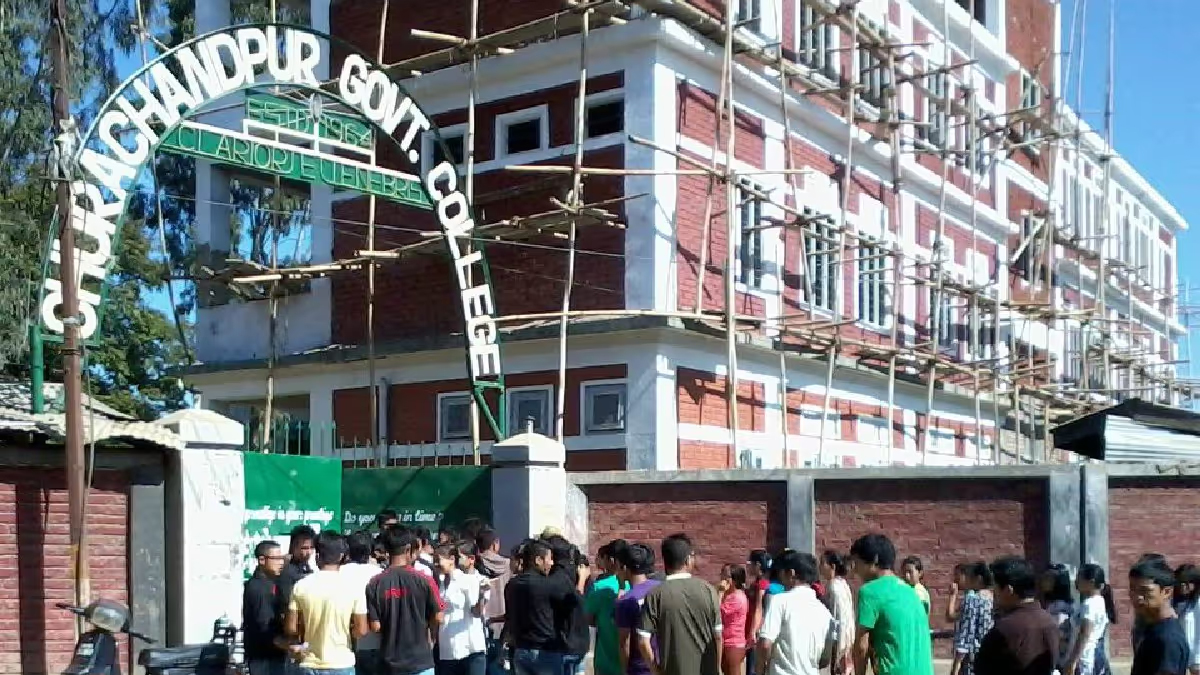
The reinstatement of the Staff Selection Commis- sion (SSC) examination centre in Churachandpur, Manipur, has unexpected- ly become the focus of an intense and often misinformed controversy. Rather than being viewed as a welcome move to promote equitable educational access for students in a violence-affected district, the decision has ignited waves of suspicion, with critics raising fears about mass cheating, unfair advantages, and potential manipulation of examination outcomes.
Social media has played a significant role in amplifying these concerns, with many linking them to the Kuki com- munity, invoking historical IT-related frauds and questioning the integrity of examinations held in the district. How ever, these narratives lack substantive evidence and ignore the broader intent and inclusive design of the initiative, which is aimed at supporting students across communities and conflict zones in Manipur.
A Step Toward Equal Access in Con- flict-Affected Areas The SSC centre in Churachandpur is part of a larger initiative by the Manipur government to set up 11 state-of-the-art IT-enabled examination centres across the state, under a Rs 11 crore project funded by the Ministry of Home Affairs. These centres aim to provide secure, technology-driven venues for competitive exams such as SSC, NEET, PG, and Army SSB, particularly for students residing in areas disrupted by ethnic violence and regular internet shutdowns.
Inaugurated on January 7, 2025, by Governor Ajay Kumar Bhalla, the Churachandpur IT centre marked its operational debut with the SSC Selection Post Examination on July 28, 2025. Sixty-five candidates appeared on the first day, signaling a much-needed step toward localized access to national-level assessments.
This development follows the disrup- tion in 2024, when examination centres in Churachandpur and Ukhrul were relo- cated due to law and order concerns and logistical hurdles. That move dispropor- tionately affected local aspirants, many of whom were unable to afford the costs and time required to travel to faraway test centres.
With the reinstatement of the Churachandpur centre, this burden is being alleviated offering students the dignity of fair opportunity, close to home. Student-Led Advocacy and the Bigger Picture“The reinstatement of the SSC centre did not occur in isolation.
In September 2024, the Kuki Students’ Organisation (KSO) and the Tangkhul Katamnao Long Del- hi (TKLD) had jointly petitioned the SSC Chair- man to restore centres in both Chura- chandpur and Ukhrul. The letter underscored the smooth functioning of these centres in the past and assured authorities of the prevailing peaceful conditions.
While KSO has publicly claimed credit for the reinstatement, even organizing delegations to thank the SSC Chairman in New Delhi, this development is part of a broader state-led plan aimed at benefiting all conflict-affected students, regardless of ethnicity. The participa- tion of TKLD a body representing the Tangkhul community shows that this advocacy was collaborative, not com- munity-specific. Exaggerated claims of victory by any one group risk deepening ethnic fault lines in an already fragile social climate.
Indeed, the new centres are being established across all corners of Manipur Kangpokpi, Ukhrul, Tamenglong, Chandel, Bishnupur, Thoubal, Jiribam, Senapati, Imphal West, and Imphal East underlining a state-wide strategy to restore parity and access for every student impacted by violence, curfews, and digital blackouts.
Rumours, Biases, and Baseless Allegations“Despite the laudable goals of this initiative, the Churachandpur centre has come under fire due to long-standing prejudices, often rooted in unfounded fears of favoritism or cheating. Critics argue that the centre will become a hotspot for unfair practices and that candidates from the Kuki community will disproportionately benefit or misuse the facility.
Such allegations not only lack evidence but ignore the previous successful operation of SSC centres in Churachandpur and Ukhrul. Before their 2024 shutdown, no significant irregularities had been reported from these venues. Moreover, the SSC examination process is governed by standardized protocols, including biometric verification and third-party vendors, making it extremely difficult to manipulate outcomes at any single location.
Some detractors have tried to link the exam centre to historical cybercrimes in the district, including a notorious scam call centre operating from Churachandpur. While the existence of such frauds is real and concerning, they are not unique to this district nor are they indicative of systemic malpractice in public exams. India, in fact, reported over 2.4 million cyber fraud cases in the first ten months of 2024, with cities like Kolkata and Delhi being major hotspots.
To suggest that the presence of a fraudulent call centre in the past dis- qualifies Churachandpur from hosting an SSC exam is an illogical leapakin to penalizing an entire population for the crimes of a few. The new IT centres are built with modern safeguards, monitored connectivity, and surveillance systems to ensure transparency.
Infrastructure Challenges Are Real But Not Unmanageable“Like any new initiative, the Churachandpur centre faces legitimate challenges. These include infrastructural constraints such as limited seating capacity, unreliable power supply, and potential network disruptions. Administering large scale exams in such a setup also calls for adequate staffing, training, and logistical support. Moreover, ensuring the safety of exam materials and smooth candidate flow requires rigorous coordination.
The government must address these concerns proactively to guarantee that no student suffers due to technical or administrative lapses. Yet, these are challenges of implementation not of intent or legitimacy. They are surmountable with investment, oversight, and cooperation between local and central agencies.
What they do not justify is the blanket suspicion being cast on the integrity of the entire project. The ST Quota Debate and Misplaced Anxieties“Some voices opposing the Churachandpur centre have raised con- cerns about Scheduled Tribe (ST) quota benefits being monopolized by Kuki candidates.
This rhetoric not only sows division but ignores the purpose of reservation to empower historically marginalized communities. If there are issues with the functioning of quota systems, these should be addressed within the ST frame work itself, not by external ethnic groups seeking to undermine another community’s rights.
Ironically, past incidents have shown that Meitei candidates have also sought out examination venues known for “lenient” environments like Saikul and Komlathabi. These examples point to systemic loopholes that transcend community boundaries and demand a fair and uniform reform of examination processes, not targeted suspicion.
National-Level SSC Challenges Are the Bigger Threat“Beyond localized controversies, the SSC itself is grap- pling with systemic issues that pose far greater threats to the fairness of its exams. Since the Commission shifted its exam outsourcing from Tata Consultancy Services (TCS) to Eduquity, multiple glitches have emerged nationwide ranging from centre misallocation to system crashes and invigilator shortages.
In fact, on the very first day of the 2025 SSC exams, several centres across India reported massive technical failures, forcing postponements and leaving candidates in limbo. Eduquity’s track record has come under fire, with allegations of leaked question papers and poor management.
A Dainik Bhaskar investigation in 2024 exposed a scandal in Patna, where students allegedly paid up to Rs 10 lakh for SSC exam clearances. Clearly, the real vulnerabilities lie at the national vendor and administrative levels, not in a specific district in Manipur.
Even the use of AI-generated ques- tions has sparked criticism for being too simplistic or vague raising cut-offs artificially and disadvantaging well-prepared students. These broader, systemic issues require urgent attention and reform if SSC exams are to maintain their credibility.
Reframing the Narrative: An Oppor tunity for Unity“In this context, the reinstatement of the Churachandpur centre should be seen as a small but signifi- cant move toward restoring educational access and social balance in Manipur.
Rather than stoking division, it offers a chance to reaffirm shared values of inclusion, opportunity, and resilience. The funds allocated for the 11 IT centres, including Churachandpur’s, come from central government schemes meant to benefit all citizens of Manipur. These are not privileges granted to one community, but rights extended to every youth striving for a better future amidst conflict and instability.
It is imperative that groups like the Kuki Students’ Organisation and other civil society bodies refrain from over- playing their role or turning these public projects into ethnic achievements. Such posturing may offer temporary validation but risks long-term damage by reinforcing divides.
Instead, the message should be clear: these examination centres belong to all students in Manipur Kuki, Meitei, Naga, Muslim, or otherwise. The success of one centre should serve as a model for others, not as a trigger for mistrust.
Conclusion: Turning Controversy Into Consensus“The reopening of the SSC centre in Churachandpur must not be mired in unnecessary and unfounded controversy. It represents a hopeful step forward for Manipur’s youth, many of whom have endured years of educational disruption due to unrest, displacement, and digital isolation.
Rather than questioning the legitima- cy of the centre, critics would do well to focus on strengthening its functional- ity, ensuring fairness in its operations, and supporting similar efforts across other districts. As Manipur rebuilds from within, education remains its most powerful tool and denying any community access to that tool only prolongs the state’s journey to peace.
If anything, the reinstatement of the Churachandpur SSC centre is a call not to divide, but to come together because the future of Manipur lies in classrooms, not in conflict.

Know More – Apply Here