

The painful question must be asked, why are we so selfish as to prioritise individual gain over collective healing?
 KRC TIMES Manipur Bureau
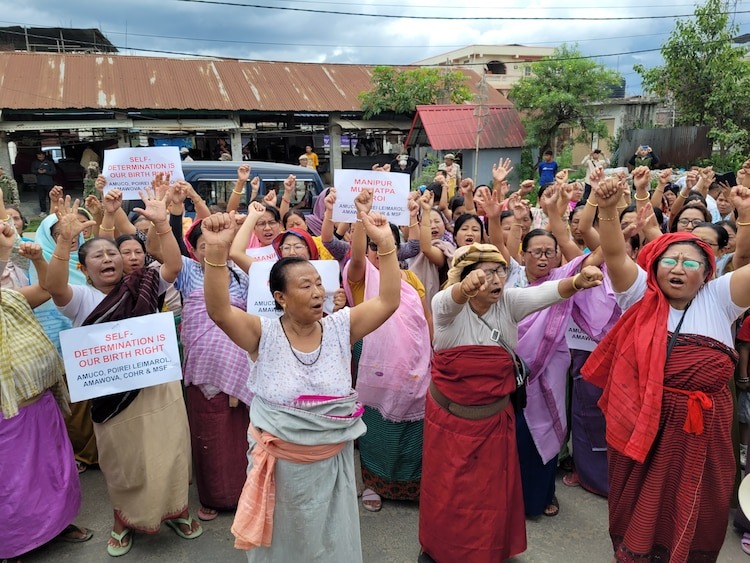
The recent extension of Presi- dent’s Rule in Manipur until February 13, 2026, offers not just a constitutional necessity but a crucial moral moment. It provides a rare window of opportunity six months free from political noise to focus on what matters most: the healing of a fractured society, the safe return of Internally Displaced Persons (IDPs), and a resolute commitment to restoring order and trust in governance.
Yet, even in this time of crisis, a disturbing pattern persists. Instead of uniting around the urgent needs of the displaced and the traumatised, segments of society continue to push personal agendas salary hikes, promotions, regularisation of services, and development demands that can and should wait.
The painful question must be asked: why are we so selfish as to prioritise individual gain over collective healing? The Real Purpose of President’s Rule President’s Rule is not a convenience it is a constitutional last resort. In Manipur, it was invoked on February 13, 2025, following the resignation of Chief Minister N. Biren Singh and the failure of any party to form a stable government.
This came after nearly two years of relentless ethnic violence, political paralysis, and social breakdown. Over 300 lives have been lost, more than 70,000 people displaced, and countless homes, villages, and institutions destroyed. President’s Rule, therefore, is not an administrative reshuffle it is a moment to rebuild from the ashes.
The mandate before Governor Ajay Kumar Bhalla, acting as the President’s representative, is not to deliver developmental largesse or act as a substitute politician, but to stabilise the state, deliver justice, and enable healing. This requires a single-minded focus on core priorities: Safe and dignified return of displaced families.
Arrests and prosecution of perpetrators of violence. Tracing of hundreds of missing individuals. Curbing unregistered civil society groups that incite ethnic hatred. Restoring law, order, and the rule of law. Everything else is secondary.““Bureaucracy Unshackled: A Unique Opportunity“For decades, Manipur’s administration has struggled under the weight of political interference.
Deputy Commissioners (DCs), Superintendents of Police (SPs), and departmental directors were often answerable less to the public and more to MLAs and party bosses. That political pressure compromised effective governance , often leading to skewed priorities and poor crisis management. Now, with the political machinery suspended , the state’s bureaucracy has a chance to function with sincerity and independence.
DCs can coordinate large-scale relief and resettlement efforts across volatile districts like Churachandpur, Imphal East, and Kangpokpi. SPs can conduct impartial investigations, ensure law and order, and initiate arrests without fear or favour. Departmental heads in health, education, and infrastructure can direct resources efficiently toward the IDPs, not political projects.
But this will only succeed if personal demands salary revisions, departmental promotions, and infrastructure projects are kept off the table for now. The Governor must issue clear directions to defer such agendas until stability is achieved. The Suffering of the Displaced: An Urgent Humanitarian Crisis The displaced people of Manipur are not mere statistics.
They are fathers, mothers, children tens of thousands of them living in squalid relief camps across the state. Their homes are ashes, their lands abandoned, their mental scars still fresh. Yet, despite the visibility of this suffering, their voices have been muffled by our collective self-absorption. We demand road repairs, government job postings, and institutional upgrades while thousands live without toilets, drinkable water, or even hope.
A report from the Manipur Human Rights Commission in July 2025 revealed that: Over 100 families are being forced to share a handful of toilets in some relief camps. Measles, tuberculosis, and other preventable diseases are spreading. Suicide rates are rising.
Over 75% of IDPs suffer from Post-Traumatic Stress Disorder (PTSD). The system is failing them because we have failed to put them first. The phased return of IDPs, once promised by former Chief Secretary P.K. Singh, has seen only minimal progress. This must become the central priority of President’s Rule. District administrations, particularly in hotspots like Moreh and Kangpokpi, must work closely with both communities Meitei and Kuki to ensure safe, conflict-free returns.
The Missing: A Silent Tragedy“Beneath the visible humanitarian crisis lies another, quieter catastrophe: the missing. Hundreds of people remain unaccount- ed for since the outbreak of violence in May 2023. In areas like Kangpokpi and the hills bordering Churachandpur, entire families have disappeared some abducted, some killed, others simply lost in the chaos of displacement.
Their families wait in torment, not knowing whether to grieve or hope. This uncertainty is perhaps the cruellest punishment of all. Each missing person is a priority. Each unresolved disappearance is a blot on the state’s conscience. The Governor must instruct the police, intelligence units, and the National Disaster Response Force (NDRF), if needed, to intensify search and identification efforts.
The Failure of Relief and the Plague of Corruption Though funds have been allocated Rs.21 crore in 2024–25 by the Union Home Ministry, and ?1.3 lakh per family for reconstruction their impact has been in- consistent, often diluted by corruption. Relief funds have allegedly been siphoned off. Prefabricated homes meant for IDPs are being built without proper oversight, often at inflated costs.“
“Essential sup- plies, including ration kits and medical stock, remain undelivered or are distrib- uted through opaque channels. The Governor must order an indepen- dent audit of all relief fund spending, preferably with assistance from central agencies like the CAG or CBI. Anyone found looting in the name of relief must be brought to justice.
No healing can hap- pen in a system that rewards opportun- ism over empathy. Development Can Wait Peace Can not“Calls for infrastructure expansion, new institutional buildings, and increased salaries, while valid in a func- tional state, are premature in a wounded one. Let us not mistake the temporary calm of President’s Rule for normalcy.
The situation is fragile. Markets may reopen, and schools may resume, but communities remain divided, fear still stalks the hills and valleys, and anger simmers beneath the surface Before we build bridges, we must build trust. Before we upgrade roads, we must ensure people are safe to travel them.““Before we push for job benefits, we must make sure the state itself is stable enough to function.
What the people of Manipur need is not faster file clearances or new job titles, but a government that sees them, hears them, and prioritises their pain. And in this moment, that government is the Governor and his council. Reconciliation Must Replace Revenge No state can be rebuilt without reconciliation between its people.
The ethnic divide between Meiteis and Kukis cannot be wished away; it must be addressed head-on through: Inter-community dialogues. Joint rehabilitation efforts.““Protection of minority rights in both hill and valley areas. A clear public stance by the Governor against hate speech and ethnic profiling. The registration and monitoring of Civil Society Organisations (CSOs) is critical here.
Unregistered groups that fan ethnic violence or impose diktats like those barring the return of certain communities to places like Moreh must be disbanded. The rule of law must replace the rule of threats.
The Path Forward: A Six-Month Chance to Heal The extension of President’s Rule is not just a bureaucratic formality it is an opportunity.““Over the next six months, the Governor and state bureaucracy must rise above politics, above lobbying, and above personal gain to lay the foundation for long-term peace.
This means: Returning every IDP to a home rebuilt, safe, and dignified. Prosecuting those who killed, looted, and destroyed. Reuniting families torn apart by vio- lence and fear. Investigating the corrupt who profited from disaster.
Healing the psychological wounds through real medical and mental health support. These are the victories that matter. Imagine, six months from now: A mother embracing her son who had been missing for over a year. A family returning to a rebuilt home, their faith in the state partially restored.
A community holding a festival, not in protest or grief, but in joy. A market bustling again, with Meiteis and Kukis trading side by side. These are the moments that must define this period not headlines about pay hikes or job regularisations.
A Final Plea: Let Compassion Guide Us We cannot claim to love Manipur while turning our backs on those who suffer most. We cannot demand justice for our- selves while ignoring the injustice en- dured by tens of thousands.
We cannot re- build by competing for favours when the foundation itself is fractured. To the people of Manipur—this is a call to conscience. Set aside selfish demands. Put healing first. To the officers and administrators— this is your moment. Be the instrument of restoration.
To the Governor—this is your charge. Deliver peace with compassion, justice with resolve. If we focus on this shared mission, the next six months can change everything. Let this be the time when Manipur doesn’t just survive—but begins to heal.

Know More – Apply Here