

India is already the world’s largest producer and exporter of turmeric, but what distinguishes the North-East is not merely its output-it is the quality
 KRC TIMES Desk
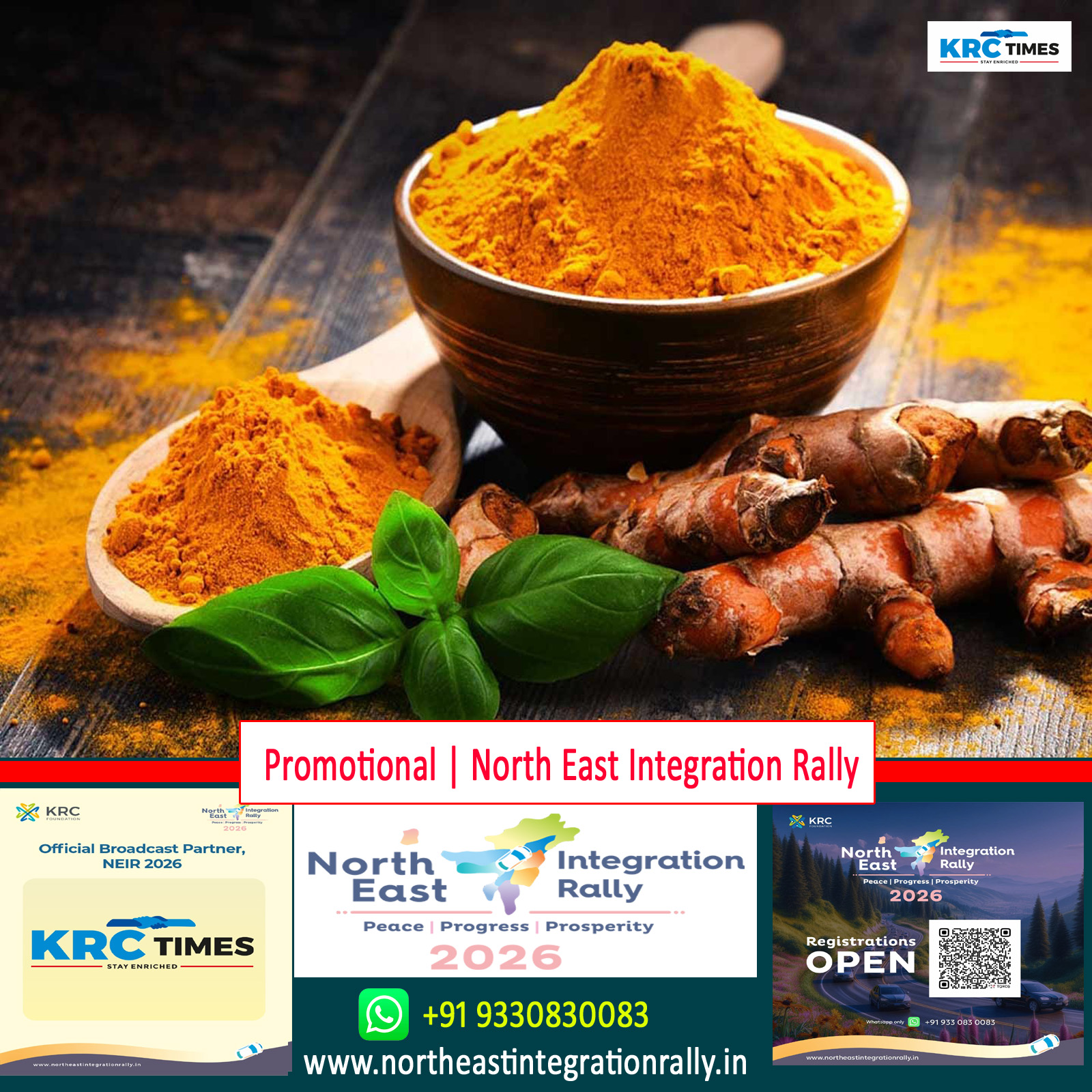
For generations, the villages of India’s North-East have nurtured a secret beneath their green hills and rich red soil-a golden root with the power to heal bodies, colour food, strengthen rituals and now, increasingly, transform lives and livelihoods. Turmeric, the brilliant yellow rhizome known botanically as Curcuma longa, has travelled a long path from kitchen spice and home remedy to the world’s most pursued medicinal ingredient.
As scientists, nutritionists and global markets turn their gaze towards natural health boosters, the humble turmeric of the North-East stands at the forefront, glowing with both cultural memory and economic potential. India is already the world’s largest producer and exporter of turmeric, but what distinguishes the North-East is not merely its output-it is the quality.
The region’s climate, biodiversity and indigenous cultivation wisdom have made its turmeric varieties, particularly Lakadong from Meghalaya and Megha Turmeric-1, prized for exceptionally high curcumin levels, the very compound that lends turmeric its colour and medicinal strength.
While many countries grow turmeric, few achieve the curcumin concentration found in the North-Eastern hills, making this root not just a spice, but a premium agricultural asset. This is the story of a crop that is ancient yet newly rediscovered, domestic yet globally demanded, and rooted in tradition while rising as a pillar of sustainable rural economy.

A Spice Born of Soil and Ancestral Knowledge Turmeric belongs to the ginger family Zingiberaceae, native to Southeast Asia but long naturalised in the North-Eastern region of India. The landscape of the eight North-Eastern states-Assam, Arunachal Pradesh, Meghalaya, Manipur, Mizoram, Nagaland, Tripura and Sikkim-forms a lush ecological basin of rainfall-fed forests, fertile valleys and warm humid climate.
It is in this stretch of hills and plains that turmeric thrives without synthetic pressure, nourished instead by natural rain, forest leaf litter and age-old farming practices Farmers in the region have traditionally grown turmeric not as a commercial crop but as part of daily life.
The underground rhizome is their dye, their flavouring, their medicine, their household disinfectant and an inseparable part of ritual practice. Over time, every community developed its own variety-some with intense aroma, others with deep orange pigment or stronger medicinal potency.
Lakadong, a variety now celebrated globally, comes from the high-altitude Jaintia hills of Meghalaya and often contains over 7-9% curcumin-among the highest recorded anywhere. Similarly, various unnamed local strains across Manipur, Nagaland and Arunachal carry strong healing properties and unique culinary flavour, preserved through seed exchange, traditional cultivation and community heritage.

A Cultural Ingredient Steeped in Taste and Belief In the kitchens of the North-East, turmeric is more than seasoning. It is identity. In Manipur, where the rhizome is baked into chutneys, fermented into pickles or blended into aromatic masalas, turmeric marks winter meals, festivals and medicinal diets alike.
The bright inflorescence (flower) itself is also edible-fried into crisp pakoras or ground fresh into chutney. One of Manipur’s most beloved delicacies, Paknam, uses turmeric in a way few outside the region would imagine: gram or pea-flour batter wrapped in turmeric leaves, then steam-baked until its aroma infuses every layer.
In many traditional households, turmeric leaves are used to flavour rice cakes, cure fish and preserve meat naturally long before refrigeration ever arrived. Beyond taste, turmeric is a ritual symbol-a purifying agent used in marriage ceremonies, worship rituals, childbirth customs and healing traditions. Its colour stands for light, health and auspicious beginnings.
Few crops in the region bridge spirit, body and economy the way turmeric does The Golden Molecule: Curcumin and Its Medicinal Power The golden pigment that defines turmeric is curcumin-a compound now at the centre of global pharmaceutical research. Curcumin levels vary widely depending on soil, cultivar and altitude, ranging between 3.5% and 9% in Indian varieties.

The higher the curcumin, the more potent its colour and therapeutic effect. Because the NorthEast is home to cultivars with naturally high curcumin, exports from the region command premium value in health, food and cosmetic industries. Modern science continues to reaffirm what Indian households have known intuitively for centuries.
Turmeric fights inflammation, boosts immunity, heals wounds, aids digestion and purifies the blood. It is antibacterial, antioxidant, anti-fungal, liver-strengthening and anti-depressant. Curcumin is now being researched globally for its potential in cancer prevention, diabetes management, arthritis treatment and even neurodegenerative conditions.
From homemade turmeric milk (haldi doodh) to modern capsules and wellness beverages, turmeric’s medicinal relevance has grown from folk remedy to clinical interest. Today it is a regular ingredient in nutraceuticals, detox drinks, skin therapy, wound-healing ointments and functional foods. What villagers applied to cuts and burns as a simple paste is now bottled, patented and exported across international markets.
Food Industry: A Colourant, a Preservative and a Clean-Label Hero As global consumers turn away from artificial colouring, natural plant-based pigments like curcumin have become highly sought after. Turmeric offers a bright, stable golden-yellow hue that survives heat, pasteurisation and cooking-making it ideal for processed foods.

In dairy, curcumin lends colour to ghee, butter, cheese and yoghurt. In confectionery and bakery, it brightens cakes, sweets and biscuits without altering taste. In beverages, it colours juices, mocktails, sauces and packaged drinks. In meat and seafood, it improves appearance, slows spoilage and enhances freshness.
The demand for natural additives has created a new market where turmeric is not just a spice but a food ingredient. As a preservative, its antimicrobial and antioxidant behaviour slows bacterial growth, protects fats from oxidation and extends shelf life in packaged foods.
This positions turmeric as a valuable tool for clean-label manufacturing-a global trend where consumers prefer functional, natural and chemical-free products. Curcumin is now internationally approved for food use, with regulatory safety already established in the US, EU and other major markets.
This compliance advantage opens doors for largescale exports of turmeric powder, oleoresin, essential oil and processed nutraceutical extracts from the North-East. From Healing Root to Wealth-Generating Crop With its rich genetic diversity and organic nature of cultivation, the North-East contributes about 8.3% of India’s turmeric production.

Mizoram leads the regional output with nearly 28,000 metric tonnes annually, followed by Meghalaya and Manipur. While these numbers may seem modest compared to southern states, the North-East enjoys one crucial advantage-quality over quantity.
High curcumin commands higher prices. Exporters are increasingly looking to the NorthEast for raw turmeric, dried rhizomes and extract-grade varieties. Lakadong turmeric, for instance, has already carved a niche market abroad for supplement production. With improved processing centres, cold storage, grading units and farmer cooperatives, the region could easily transition from small-scale producers to global suppliers.
Turmeric also fits into the evolving model of rural economic development. It requires low investment, adapts naturally to organic farming and demands minimal chemical intervention. Small farmers, women-led self-help groups and village cooperatives can cultivate and process turmeric with basic infrastructure, generating year-round income with higher value addition.
With the right market linkages, North-East India stands to benefit not only through raw exports but through domestic value chains: o turmeric oil & oleoresin extraction, o cosmetic and skincare manufacture,
• herbal medicine formulation,
• food colouring and beverage industry,
• organic spice branding & e-commerce marketing. Every gram of curcumin extracted, every packet of organic Lakadong powder exported, adds revenue to the region and global recognition to its agricultural heritage.
Looking Ahead: Strengthening the Gold in Our SoilAs demand for natural health-promoting foods continues to rise, turmeric sits in a unique position—rooted in tradition but aligned with modern wellness trends.

To unlock its full potential, the North-East must prioritise:
1. Genetic conservation and varietal improvement Traditional cultivars with high curcumin content must be preserved, studied and improved for yield, disease resistance and market adaptation.
2. Infrastructure and value-added processing Drying units, powder mills, oleoresin extraction plants and packaging hubs can multiply farmer income far beyond raw rhizome sales.
3. Export-oriented branding and certification GI tagging, organic certification and region-specific branding like Lakadong Gold or North-East High Curcumin Turmeric can create global identity.
4. Farmer training, cooperatives and policy support Empowering growers with market knowledge ensures that the wealth generated does not bypass the community that has nurtured this crop for centuries.
Conclusion: A Wonder for Health, A Wealth for the Future Turmeric is not simply a spice of the North-East—it is history, medicine, colour, soul and now, an economic passport to the world. With curcumin-rich varieties, organic cultivation traditions and immense market demand, the region stands at the doorstep of a global opportunity.
What once healed wounds at home now heals economies as well. As we look to sustainable agriculture and natural wellness as the future of global food systems, the North-East’s turmeric emerges not just as a crop, but as a symbol—a golden promise of health for the body and wealth for the land. In every rhizome lies medicine. In every field lies prosperity. Turmeric is the region’s golden future— waiting only to be harvested.