

Policy Shift or Political Calculus?
 KRC TIMES Desk

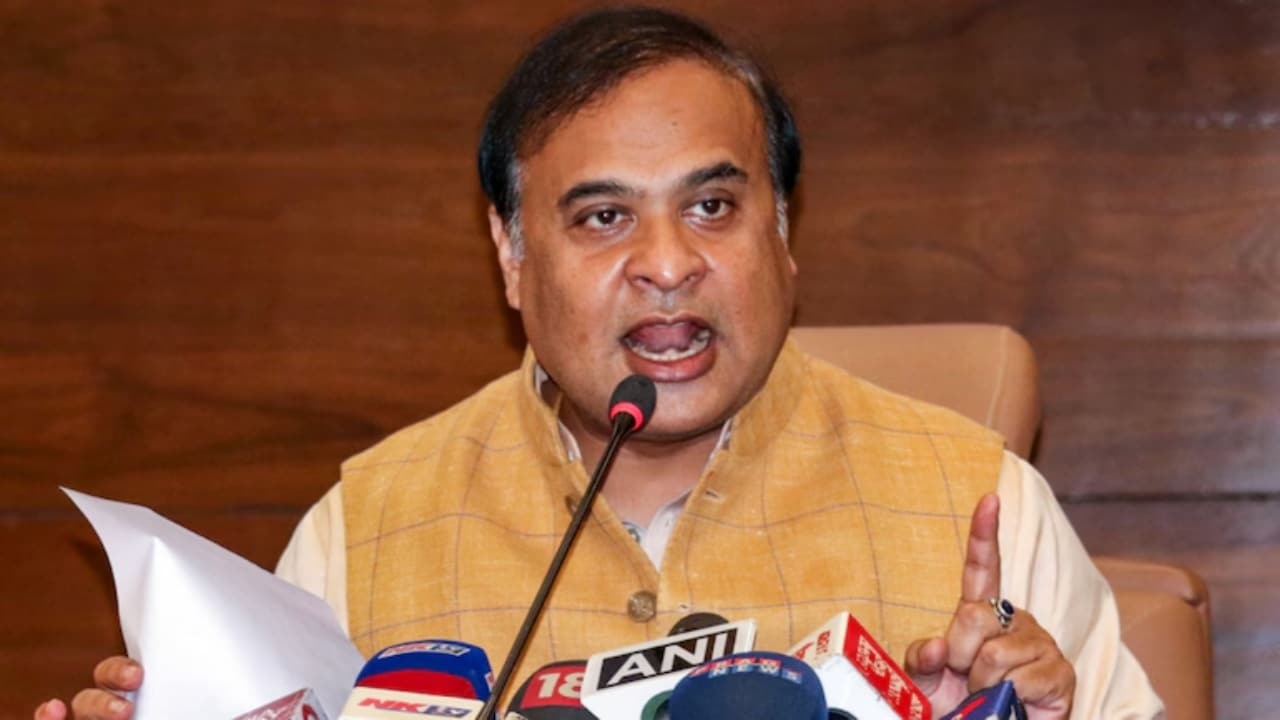
When the Assam Cabinet on Tuesday unveiled a new Standard Operating Procedure (SOP) to operationalise the Immigrants (Expulsion from Assam) Act, 1950, Chief Minister Himanta Biswa Sarma declared it a decisive moment in the State’s decades-long struggle against illegal migration. For supporters, the move represents long-overdue action to protect Assam’s cultural and demographic balance.
For sceptics, it smacks of political theatre—timed conveniently with elections less than a year away. The question is stark: is this a genuine policy shift, or an electoral calculus dressed up as law-and-order reform? What the SOP Says At the heart of the Cabinet decision is a framework empowering District Commissioners (DCs) to initiate expulsion proceedings against suspected foreigners.
The process is straightforward on paper but fraught with legal and human consequences:
- Suspected individuals will be served a 10-day notice.
- Within this period, they must furnish valid proof of Indian citizenship.
- Failure to comply allows the DC to order removal to a holding centre, where they will await deportation under the custody of the Border Security Force (BSF).
- In cases where the DC cannot conclusively determine status, the matter may be referred to the Foreigners’ Tribunals (FTs), institutions already central to Assam’s fraught citizenship landscape. Sarma justified the measure by pointing to recent.
Supreme Court judgments. While the apex court upheld Section 6A of the Citizenship Act, 1955—the contentious clause born out of the Assam Accord (1985)—it also reaffirmed the validity of the 1950 Act, most notably in the landmark Sarbananda Sonowal vs. Union of India verdict.
That ruling described unchecked illegal migration as “external aggression” undermining the nation’s sovereignty. The government’s message, therefore, is clear: the legal mandate exists, and Assam is ready to act. The Deep Roots of Assam’s Migration Dilemma To understand the resonance—and controversy— of this SOP, one must revisit Assam’s unique history.
Migration is not a recent issue; it is interwoven with the State’s very fabric. Colonial Roots In the 19th century, the British East India Company transformed Assam into a hub of tea cultivation. To meet labour demands, it imported large numbers of Bengali-speaking workers, primarily from present-day West Bengal and parts of East Bengal (now Bangladesh).
This influx markedthe first major wave of demographic change, as the sparsely populated Brahmaputra Valley became a magnet for settlers. Partition and After The upheaval of Partition in 1947 brought another surge of migrants, many fleeing communal violence in East Pakistan. By the 1950s, migration had become a political flashpoint.
The 1961 Census estimated that over 2.2 lakh migrants had entered Assam illegally. Alarmed, New Delhi launched the Project Prevention of Infiltration of Pak Nationals (PIP) in 1962. By 1964, official records claimed 1.7 lakh individuals had been “pushed back.”
The campaign sparked international criticism, with Pakistan even raising the matter at the United Nations, accusing India of human rights violations. The Assam Agitation and Accord By the late 1970s, resentment over unchecked migration exploded into the Assam Agitation (1979–1985), a mass movement led by the All Assam Students’ Union (AASU).
The agitation culminated in the Assam Accord of 1985, signed between the student leaders and the Rajiv Gandhi government. The Accord drew a line in time:
- Migrants who entered Assam before 1 January 1966 would be regularised.
- Those arriving between 1966 and 24 March 1971 could stay but would lose voting rights for ten years.
• Anyone entering after 24 March 1971 was to be detected and expelled. This compromise birthed Section 6A of the Citizenship Act, but its implementation has remained patchy and politically contested. The Legal Landscape The Assam Accord’s legal architecture was supposed to resolve the issue, but decades later, the question lingers unresolved. Several attempts to streamline detection—such as the Illegal Migrants (Determination by Tribunals) Act, 1983 (IMDT Act)—collapsed under judicial scrutiny.
In 2005, the Supreme Court struck down the IMDT Act, calling it ineffective and biased in favour of suspected foreigners. The court’s Sonowal judgment then elevated illegal migration to a national security threat, providing the foundation for today’s actions. The National Register of Citizens (NRC) exercise, concluded in 2019, was meant to be the final word.
Yet it too left over 19 lakh people excluded, creating new humanitarian and legal uncertainties. Many are still fighting their cases in Foreigners’ Tribunals, while the State struggles to manage holding centres. It is in this maze of unfinished legal experiments that the Assam government now resurrects the 1950 Act as a sharper tool.
Potential Risks and Challenges While the SOP looks decisive on paper, implementation could prove fraught.
1. Risk of Misuse: Empowering DCs to issue expulsion orders could lead to arbitrary decisions. Without rigorous safeguards, there is a danger of wrongful targeting, particularly of poor and marginalised communities with weak documentation.
2. Pressure on Foreigners’ Tribunals: The FTs are already overburdened, handling tens of thousands of unresolved cases. The new SOP could flood them with fresh referrals, prolonging rather than resolving disputes.
3. Diplomatic Hurdles: Deportation depends on Bangladesh’s willingness to accept individuals. Historically, Dhaka has denied the presence of Bangladeshi nationals among those labelled as illegal migrants in Assam. Without bilateral cooperation, the SOP risks creating a limbo of detainees stuck in holding centres.
Promotional | North East Integration Rally