


India and China are not just neighbours; they are the two most populous nations on Earth, with a combined population exceeding 2.7 billion
 KRC TIMES Desk
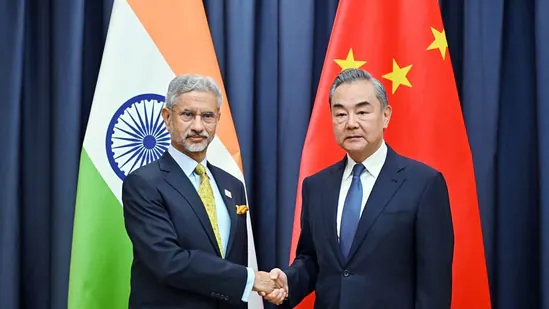
The visit of External Affairs Minister Dr S. Jaishankar to China, where he met President Xi Jinping and other senior leaders, has reignited discussions about the future of India-China relations. In an era of rapidly shifting geopolitical equations, this visit holds significance beyond bilateral optics-it signals a potential reorientation towards stability, cooperation, and mutual progress.
Over the past few years, India-China relations have weathered a period of heightened tensions, primarily due to border disputes and strategic divergences. However, Dr Jaishankar’s remarks reflect a pragmatic recalibration.
By appreciating the progress made in the past nine months and stressing the peaceful management of border frictions, India is indicating a renewed willingness to engage China constructively. The resumption of the Kailash Mansarovar Yatra after five years is a testament to what bilateral dialogue can achieve when underpinned by mutual respect.
What makes this engagement timely and necessary is the larger global context. The world is undergoing a profound transformation-traditional alliances are fracturing, and new power blocks are emerging. In this fluid geopolitical terrain, economic wars are increasingly replacing military conflicts.
Trade protectionism, technology decoupling, and tariff impositions-particularly those from the United States-are triggering realignments. For India and China, this presents a unique opportunity: to move past their differences and harness their complementarities as large, rapidly growing economies.
India and China are not just neighbours; they are the two most populous nations on Earth, with a combined population exceeding 2.7 billion. They are both members of major international platforms such as BRICS, SCO and G20. This overlapping presence on strategic multilateral forums indicates shared interests that go beyond regional rivalries. In this context, the emphasis must shift from confrontation to collaboration.
Economic interdependence can be a powerful deterrent to conflict. Trade between India and China has continued despite political tensions, underscoring its resilience. However, restrictive trade practices, non-tariff barriers, and lack of market access remain pain points.
Dr Jaishankar rightly emphasised the need to avoid such roadblocks, hinting at readiness to address these issues bilaterally. A stable and mutually beneficial trade relationship would not only bolster economic growth but also reduce dependency on distant, volatile markets-particularly in light of potential new USA tariffs that could affect both nations.
Yet, cooperation cannot be one-sided. China must re-evaluate its stance on Pakistan, particularly concerning terrorism. Its repeated blocking of global efforts to designate Pakistan-based terrorists and its reluctance to address Indian concerns on cross-border terror cast a long shadow over bilateral ties.
India has suffered tremendously from terrorism, most recently in Pahalgam, and expects unequivocal condemnation and cooperation from all partners, especially a regional giant like China. A joint declaration on terrorism during the SCO Defence Ministers’ meeting was noticeably absent, but such clarity must be achieved in the upcoming engagements.
China must stop viewing terrorism through the lens of strategic utility and start aligning with international norms on the issue. At the heart of improved India-China relations must be trust-and trust can only be built through transparent dialogue and confidence-building measures. Border de-escalation, regular military-to-military communication, easing of visa policies, cultural exchanges, and enhanced economic partnerships are essential tools in this process.
The world’s focus must now turn inward-towards the prosperity and welfare of its citizens. India and China, with their vast populations and development needs, cannot afford prolonged hostilities or arms races. The economic cost of militarisation detracts from vital investments in education, healthcare, and infrastructure.
The current geopolitical flux presents India and China with both a challenge and an opportunity. They can either remain locked in a cycle of mistrust and rivalry or choose the path of cooperation to shape a more equitable world order.
The recent thaw in relations and revival of diplomatic engagement offer hope. But for this momentum to translate into a sustainable partnership, both nations must demonstrate maturity, empathy and strategic foresight. A stable, peaceful, and economically integrated Asia cannot be realised without a robust India-China partnership. The time to build that future is now.

Know More – Apply Here

