

The US-led international order has been in decline for some time and is being increasingly challenged by multi-polarity
 KRC TIMES Desk
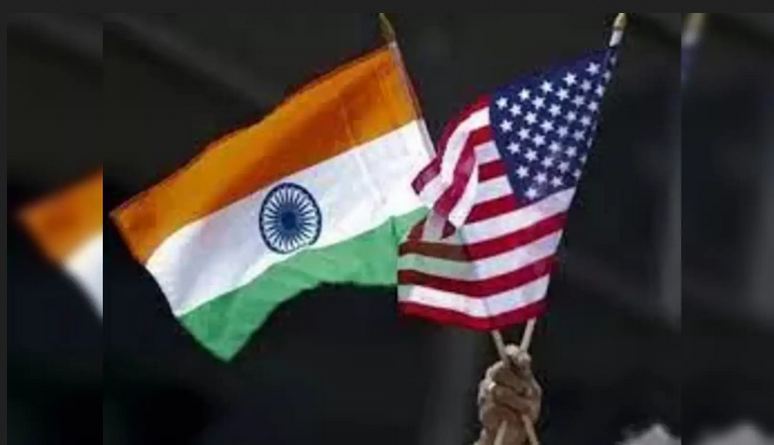
One should, ironically, thank Donald Trump for compelling the Narendra Modi government to undertake a long-overdue course correction in India’s foreign policy. For nearly three decades—beginning with the Atal Bihari Vajpayee government, to the Manmohan Singh government, and then with accelerating speed during the Modi government— India was set on a course of becoming a subordinate ally of the United States. This was a strategic policy orientation which eroded the basis of an independent foreign policy and the scope for strategic autonomy.
Till recently, the Modi government had proudly proclaimed that it had signed all the ‘foundational’ military agreements with the United States and aligned itself with its geopolitical strategy in the Indo-Pacific region. The QUAD (the Quadrilateral Security Dialogue between India, Australia, Japan, and the United States) was a manifestation of this emerging alliance.
During the first term of the Trump presidency, India had meekly stopped buying oil from Iran, to our great detriment, falling in line with the unilateral sanctions imposed by Trump; this was followed by stoppage of buying oil from Venezuela.
The second coming of Trump was seen as a heaven-sent opportunity for India to further cosy up to the United States banking on the personal friendship between Trump and Modi. Such an approach has led to the shameful silence on Israel’s ongoing genocide in Gaza—a project that Trump actively supports and abets.
Neither did India condemn the bombing of Iran’s nuclear installations by the United States, an act of aggression against a friendly country, which was heightened by the danger of nuclear proliferation.
But Trump’s ultra-nationalist stance and extremism in using tariffs as a weapon to bully India is something which even Modi and the BJP are unable to stomach. Nor can they countenance being treated on par with Pakistan. The reality is that the moment India and Pakistan became nuclear weapon states, any military conflict between them opens the way for the United States to act as the arbiter, given the strategic ties that bind both countries to America.
Even before Trump assumed the presidency this year, the United States under President Joe Biden had occasion to remind the Modi government of its obligations as a ‘strategic partner’. When Modi visited Russia and met President Vladimir Putin in July 2024, the Biden administration made known its displeasure.
The US ambassador to India, Eric Garcetti, warned, “Don’t take the relationship for granted,” and added: “I know India likes its strategic autonomy. But, in times of conflict, there is no such thing as strategic autonomy.”
There have been ample indications of India reducing its dependence on Russia for its defence supplies while substantially increasing the purchase of US weaponry and equipment—a demand that was made by successive US administrations and now being vociferously raised by Trump’s cabinet ministers.

The consequences of joining the American bandwagon in South Asia and the Asia-Pacific region have been unfolding over time. India’s foreign policy is in shambles as a result. In South Asia, India has become isolated from its neighbouring countries as never before. Both the futile quest to counter China’s rising influence in the region and the obsessive Pakistancentric policy have been the causes.
The Hindutva worldview being imported into foreign policy and international relations have dented India’s image and standing in the world. Now that the Hindutva ethno-nationalism has collided with the racist nationalism of MAGA, India’s pro-US strategic and foreign policies are at a dead-end. MAGA + MIGA do not make MEGA.
In this context, the recent steps to improve relations with China and Modi’s visit to Tianjin to attend the Shanghai Cooperation Organisation summit and the bilateral meeting with President Xi Jinping are positive developments. There is much to be done to overcome blind anti-China hostility and to adopt a realistic approach to bridge differences between the two countries.
There is tremendous scope to use Chinese investments and technology to boost the manufacturing sector in India. This requires withdrawing the restrictions placed on investments from Chinese companies in various sectors. For instance, the government had refused to give clearance in 2023 for a $1-billion investment by the giant electric vehicle manufacturer BYD in a joint venture with an Indian company to produce EVs and batteries.
This venture would have enabled India to acquire the latest technical knowhow and production capacities, as BYD is the leading EV company in the world. There are various other sectors where economic cooperation with China will significantly benefit Indian industry and infrastructure development.
The US-led international order has been in decline for some time and is being increasingly challenged by multi-polarity. The pro-US policies have actually hampered India from utilising the oppor tunities to strengthen itself in a growing multipolar world. India, as a member of BRICS and SCO, has not put its full weight behind developing and energising these forums.
It is not accidental that Trump has levied the highest tariffs on three of the founding members of BRICS, apart from Russia and China—50 percent on Brazil, 30 percent on South Africa and 50 percent on India. These three are the major countries of the Global South, representing South America, Africa and Asia, respectively. India will chair the BRICS next year. This is an opportunity to take the lead to formulate policies which can enhance Global South cooperation in trade and investment.
Does the Modi government have the resolve and vision to boldly strike out on a new path that will restore an independent foreign policy and truly assure strategic autonomy? Or, will it bide time to wait for the next favourable turn in Trump’s mood swings to get back on the beaten track of becoming a subordinate ally?
Promotional | North East Integration Rally