


A Nation’s Deafening Silence?
 KRC TIMES Desk
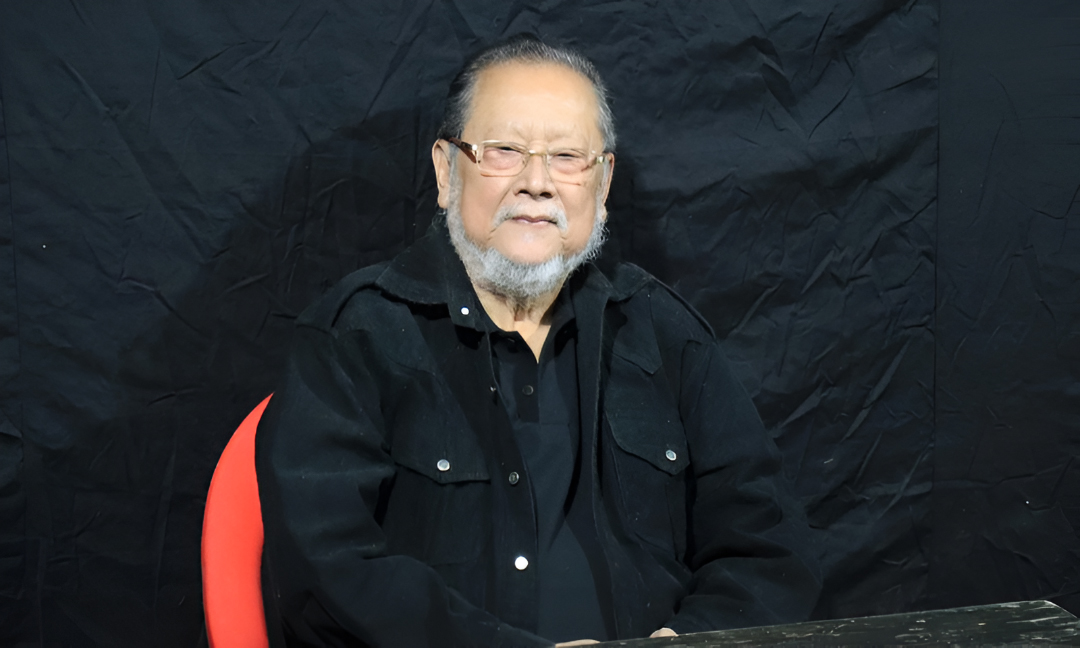
Ratan Thiyam, the towering fig- ure of Indian theatre and cultural icon from Manipur, passed away on July 23, 2025, at the age of 77. His death, following a prolonged illness, occurred at the Regional Institute of Medical Sciences in Imphal. For those familiar with Indian theatre, his passing signifies the end of an era one that bridged classical Indian traditions and modern dramaturgy, deeply rooted in the cultural ethos of the North- east.
Tributes poured in from across the country from political leaders, theatre artists, and cultural institutions honoring a man whose work elevated Manipuri theatre to international recognition. Yet one voice remains conspicuously absent: that of Prime Minister Narendra Modi. This silence has sparked critical reflec- tion. Why did the Prime Minister, known for extending condolences on social media for the demise of prominent personalities, refrain from commenting on the death of Ratan Thiyam?
Was it a deliberate political decision, a reflection of strained ties, or an unfortunate oversight? Either way, it raises questions about India’s attitude toward its Northeastern states and their cultural torchbearers. A Life Devoted to Theatre and Cul- ture“Ratan Thiyam was not merely a director or playwright; he was a cultural visionary. A pioneer of the “Theatre of Roots” movement in the 1970s and 1980s, Thiyam sought to create a theatre that embraced India’s indigenous traditions.
His works like Chakravyuha, Uttar Priyadarshi, and Lengshonnei (an adaptation of Sophocles’ Antigone) seamlessly blended Manipuri dance, martial arts, music, and poetry with themes drawn from epics and contemporary issues. He founded the Chorus Repertory Theatre in Imphal in 1976, which became both a sanctuary and laboratory for per- formance arts in the region.
His stage- craft, steeped in philosophical depth and cultural richness, earned him numerous accolades: the Padma Shri (1989), Sangeet Natak Akademi Award (1987), Kalidas Samman (1997), and the Sangeet Natak Akademi Fellowship (2012), among others.
Yet, Thiyam was more than his awards. His work was deeply political not partisan, but passionately committed to justice, truth, and social cohesion. He used theatre as a form of resistance and remembrance, chronicling the pain and aspirations of his people. The Echoes of Condolences“The tributes following Thiyam’s death came from a wide spectrum of Indian political and cultural life.
The Manipur government de- clared a day of state mourning. Governor Ajay Kumar Bhalla recognized his contri- butions, while former Chief Ministers N. Biren Singh and Okram Ibobi Singh hailed him as a national treasure and a global figure in theatre.
Cultural organizations responded with reverence. The Manipur State Film Development Society called his passing a blow to the creative soul of the state. The National School of Drama, the Sangeet Natak Akademi, and the North East Zone Cultural Centre (NEZCC) all offered trib- utes, recognizing him as a transformative figure in Indian theatre.
The response from leaders outside Ma- nipur was also notable. Assam Chief Minister Himanta Biswa Sarma highlighted Thiyam’s impact on the Theatre for Roots movement. Meghalaya’s Conrad Sang- ma and West Bengal’s Mamata Banerjee mourned the loss of a man whose works resonated across linguistic and cultural boundaries.
Congress MP Jairam Ramesh praised Thiyam’s liberal values and his fierce commitment to pluralism. Gaurav Gogoi, Deputy Leader of the Congress in the Lok Sabha, spoke of Thiyam’s influence on generations of theatre practitioners. Even BJP leader Mmhonlumo Kikon from Nagaland likened him to French absurdist playwright Eugène Ionesco.
In cultural hubs like Kolkata, theatre veterans such as Rudraprasad Sengupta and Kaushik Sen recalled Thiyam’s political commitment and humility. The breadth and depth of these tributes affirmed that Ratan Thiyam was not just a Manipuri icon, but a national treasure. Modi’s Silence and Its Implications“In this context, Prime Minister Narendra Modi’s silence looms large.
His lack of public acknowledgment be it via social media, an official statement, or through government channels stands in stark contrast to the gravity of Thiyam’s legacy. This isn’t about partisan politics. Rahul Gandhi, too, did not release a public state- ment, which some have noted.
But Gandhi is not the Prime Minister. This moment was about national recognition, not political point-scoring. Narendra Modi has in the past swift- ly expressed condolences on the deaths of cultural figures like Satish Kaushik, Dinyar Contractor, Tom Alter, and others.
Thiyam’s absence from this list feels not just like an omission but a marginalization especially when considered against the backdrop of India’s often peripheral treatment of the Northeast. The irony is stark. PM Modi has repeatedly called the Northeast India’s Astha Lakshmi a metaphor celebrating its cultural wealth.
Yet in the case of Ratan Thiyam, arguably one of the region’s greatest sons, that celebration was missing in action. A History of Estrangement The silence also has political context. In June 2023, in an interview with journalist Karan Thapar, Thiyam expressed sorrow over the Prime Minister’s silence on the ethnic violence in Manipur, which began in May that year.
He questioned why the Prime Minister had time to address the Gujarat cyclone and the Emergency in his Mann Ki Baat but ignored the burning cri- sis in Manipur. It was a humble, yet urgent plea not of condemnation, but of appeal. Ratan Thiyam also turned down a seat on a peace committee formed by the Centre, citing the lack of political will as the core issue. He had long been critical of New Delhi’s neglect of the Northeast.
In fact, he had returned his Padma Shri in 2001 in protest against the Atal Bihari Vajpayee government’s handling of the June 18 crisis in Manipur. His conscience, above all, guided his actions. Could these positions have contributed to the Prime Minister’s silence now? Was Thiyam’s defiance remembered more than his contributions?
If so, it underscores a dangerous trend where political dis- agreements override cultural respect. The Loss Beyond Words Ratan Thiyam’s death is not just the loss of a legendary artist it is the silencing of a conscience, a chronicler of margin- al stories, a bridge between the mythic and the modern, the local and the global. His theatre tackled the environment, conflict, identity, violence, and compas- sion.
He used ancient Sanskrit and Meitei texts to explore modern dilemmas. His creative universe defied neat ideological boxes—it was moral, aesthetic, spiritual, and political. In many ways, it was what India aspires to be: plural, dignified, coura- geous. The silence from the Prime Minister, thus, is not just an absence of words—it’s a missed opportunity for unity and healing.
Recognizing Ratan Thiyam would have reaffirmed that voices from India’s margins matter, that artistic dissent is not disloyalty, and that the cultural legacy of Manipur is India’s heritage too.““A Legacy for the Future“Now that Ratan Thiyam has taken his final bow, the question remains: how should India remember him? Certainly not just through awards or posthumous tributes.
To truly honor Thiyam, India must embrace the values he stood for cultural inclusion, artistic freedom, fearless storytelling, and dig- nity for all its regions. His life calls for a recalibration of how we define the “main- stream” reminding us that the Northeast is not peripheral, but central to the Indian story. And as his works continue to inspire theatre-makers, writers, students, and activists, the state must ensure that his institution the Chorus Repertory The- atre receives support to carry forward his legacy.
Final Bow“In the end, Ratan Thiyam’s legacy does not depend on the words or silences of powerful men. His influence is etched into the stages he lit, the minds he opened, and the truths he dared to tell. But national recognition matters—not for the dead, but for the living. Especially in Manipur, where communities contin- ue to struggle with neglect, violence, and invisibility.
Silence in moments like this is not neutral—it reverberates as indiffer- ence. If we are to live up to the ideals of a diverse, inclusive, culturally rich India, we must do better. We must acknowledge all our Ratan Thiyams—loudly, gratefully, and without delay. Let this be the last time such a giant passes, and the nation forgets to pause and bow. Let him now rest—his legacy shining like a spotlight on the conscience of the country he so fiercely loved.

Know More – Apply Here