


One thing is clear: the tussle between the Vice President and the ruling establishment was not a sudden development
 KRC TIMES Desk
Ashok Ogra
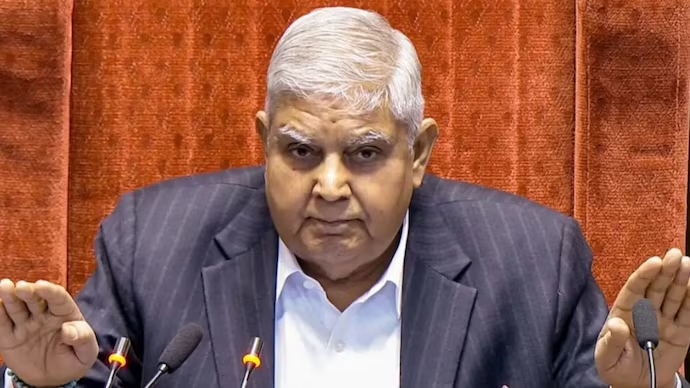
When Jagdeep Dhankhar, India’s Vice President, tendered his unexpected resignation last week, political circles buzzed with one question: what prompted a man once perceived as being closely aligned with Prime Minister Narendra Modi to step aside so abruptly? The details remain shrouded in silence and speculation, and I must admit that I am not qualified to comment on that. However, one thing is clear: the tussle between the Vice President and the ruling establishment was not a sudden development.
Tensions had been simmering for a long time – beginning with the Vice President’s speech defending agitating farmers and pointedly questioning Agriculture Minister Shivraj Singh Chouhan’s inaction. His prompt acceptance of the Opposition-sponsored motion to remove Justice Verma further raised eyebrows.
Reports suggest he was also upset with the Ministry of External Affairs for sidelining him over the years, most recently by excluding him from the itinerary during U.S. Vice President Vance’s visit. Whatever the official explanation, Jagdeep Dhankhar’s resignation appears to stem from reasons beyond indifferent health.
This episode prompts me to quote the poet Akbar Allahabadi: Tum bhi chhup ho, hukmran bhi chhup/
Kya zamaana aa gaya sab chhup! (You are silent, the rulers are silent/ What a strange era, where everyone stays silent!)
However, the episode casts a revealing light on an enduring political truth: the relationship between powerful leaders and their loyalists is a delicate one-a dance between need and manipulation, between fear and flattery. Most powerful leaders tend to cultivate echo chambers-filled not with principled advisors but with ‘Courtiers’ whose praise rises in direct proportion to the leader’s authority. The ‘political boss’ thrives on validation, the ‘yes man’ on proximity to power.
Yet the moment that power wavers, or a conscience stirs, these Courtiers /Yes men/ Sycophants/ Darbaris (call them by whatever name you like), – either vanish or revolt. Sometimes, they are cast aside. At other times, they walk away-seeking to reclaim dignity, distance, or perhaps a legacy. History is replete with such examples.
One is reminded of Dev Kant Barooah’s infamous and sycophantic remark made during the Emergency, when nothing mattered more to Mrs. Gandhi than absolute loyalty: “India is Indira and Indira is India.” Ironically, Barooah himself abandoned her after her defeat in 1977, joining the rebel Congress group. In fact, many of her earlier loyalists who once hailed her as “Durga” turned against her; long-term associates and prominent leaders like Jagjivan Ram and H.N. Bahuguna defected and aligned with the Janata Party.
Therefore, the story of Dhankhar, when seen in this light, is not unique. It is part of a much longer and older tradition-one that cuts across regimes and ideologies, and is found in abundance in both democratic set-ups and dictatorships- that ‘excessive deference,’ ‘uncritical loyalty,’ and ‘flattery’, once the source of proximity to power, often becomes a burden too heavy to carry.
No phrase better captures the theme of betrayal by trusted aides than the immortal words attributed to Julius Caesar: “Et tu, Brute?”-uttered as Brutus, his confidante, joins in his assassination. Shakespeare’s dramatization of this moment is not merely a theatrical flourish; it highlights the timeless pattern of how absolute power breeds both blind loyalty and fatal betrayal.
Take the case of Aurangzeb, whose court was dominated by orthodox clerics and sycophantic courtiers. Honest criticism was unwelcome. His religious intolerance, unchecked by dissenting voices, alienated vast segments of the empire. The result was rebellion, overreach, and a slow unraveling of Mughal authority.
Soviet Union dictator Joseph Stalin suffered from the paranoia of power. His inner circle was built on fear and sycophancy. His lieutenants-Molotov, Beria, Kaganovich- equated dissent with betrayal. Yet, after his death in 1953, the very men who had deified him-led by Khrushchev-denounced him as a tyrant. Sycophancy turned overnight into disavowal.
The case of Winston Churchill is even more striking. The savior of Britain during WW II was voted out of office in 1945, just months after victory in Europe. While this was a democratic verdict, it also reflected a larger truth: loyalists who had rallied around him during wartime abandoned him when peace required a different kind of leadership.
True, Churchill returned later but never with the same grip on his party or the nation.
Zulfikar Bhutto, once Field Marshal Ayub Khan’s protégé and foreign minister, turned against him when popular sentiment shifted after 1965 war against India. Bhutto launched a movement against Ayub Khan, eventually leading to his downfall in March1969. Bhutto’s rise was a reminder that today’s sycophant can be tomorrow’s challenger-when opportunity knocks.
We have the classic case of former foreign minister Natwar Singh, once a trusted confidant of Sonia Gandhi and a key figure in her inner circle, who saw his fortunes change dramatically after being named in the 2005 Iraq oil-for-food scandal. Forced to resign as Foreign Minister and later expelled from the Congress Party, Singh turned against the leadership he once served.
In his autobiography One Life Is Not Enough, he criticized Sonia Gandhi’s leadership style and questioned Rahul Gandhi’s political maturity. His shift from loyal insider to outspoken critic underscores how political loyalty can quickly unravel when power and trust erode.
Each of these cases reflects a core truth: permanent loyalty is a fragile alliance-strong only while the leader is unchallenged and the follower is rewarded.
Therefore, in this long historical arc, the resignation of assumes significance. Once seen as a combative Governor of West Bengal-often sparring with the Trinamool government and widely viewed as enjoying the full confidence of the BJP establishment-his elevation to Vice President in 2022 was seen as a reward for his loyalty.
Yet his sudden exit in 2025 has triggered speculation. Was it due to internal marginalization? Was he expected to play a ceremonial role when he desired a more assertive one? Or was it a quiet act of reclaiming dignity in the face of growing discomfort with political excess?
From being hailed as a Modi warrior till the other day to facing a no-confidence motion from the Opposition- and now being subtly distanced by the ruling establishment while ironically finding acceptance among opposition ranks- Dhankhar’s journey has taken a dramatic turn : a strange, macabre political tale of shifting loyalties and diminishing centrality.
Whatever the truth, the symbolism is powerful: even the most visibly loyalist can reach a point of fatigue. A ‘Darbari’ may become, overtime, a dissenter-or may simply withdraw, choosing silence over complicity. The themes of blind loyalty and betrayal have also been explored powerfully in both Bollywood and Hollywood, often offering cultural metaphors for political or corporate leadership.
The Bollywood film Raajneeti captures the slippery nature of loyalty. Leaders are surrounded by aides who appear devoted, but behind closed doors, alliances shift with the changing winds of power. It shows how sycophancy often masks ambition, and betrayal is only a matter of timing.
In the popular Netflix series ‘House of Cards’, Frank Underwood’s meteoric rise is lubricated by manipulation and loyalty enforced by fear. But as his power peaks, even his most trusted lieutenants begin to turn. The series is a masterclass in how the culture of sycophancy breeds paranoia, and paranoia breeds downfall.
What is abundantly clear is that the relationship between powerful leaders and their loyalists is delicate: the leader thrives on validation, the Darbari on proximity to power. But when the tides shift, loyalty is the first casualty.
As history teaches us-from Caesar’s fall to Stalin’s purges, from Churchill’s exile to modern-day defections- no power is permanent and no allegiance is absolute. These examples remind us: when kings fall, the loudest voices at the funeral are often those who once cheered the loudest at the coronation.

Know More – Apply Here