


Understanding the Risks, Realities, and Preventive Pathways
 KRC TIMES Desk
Col (Dr) Ashwani Kumar, M- in-D, VSM (Retd)
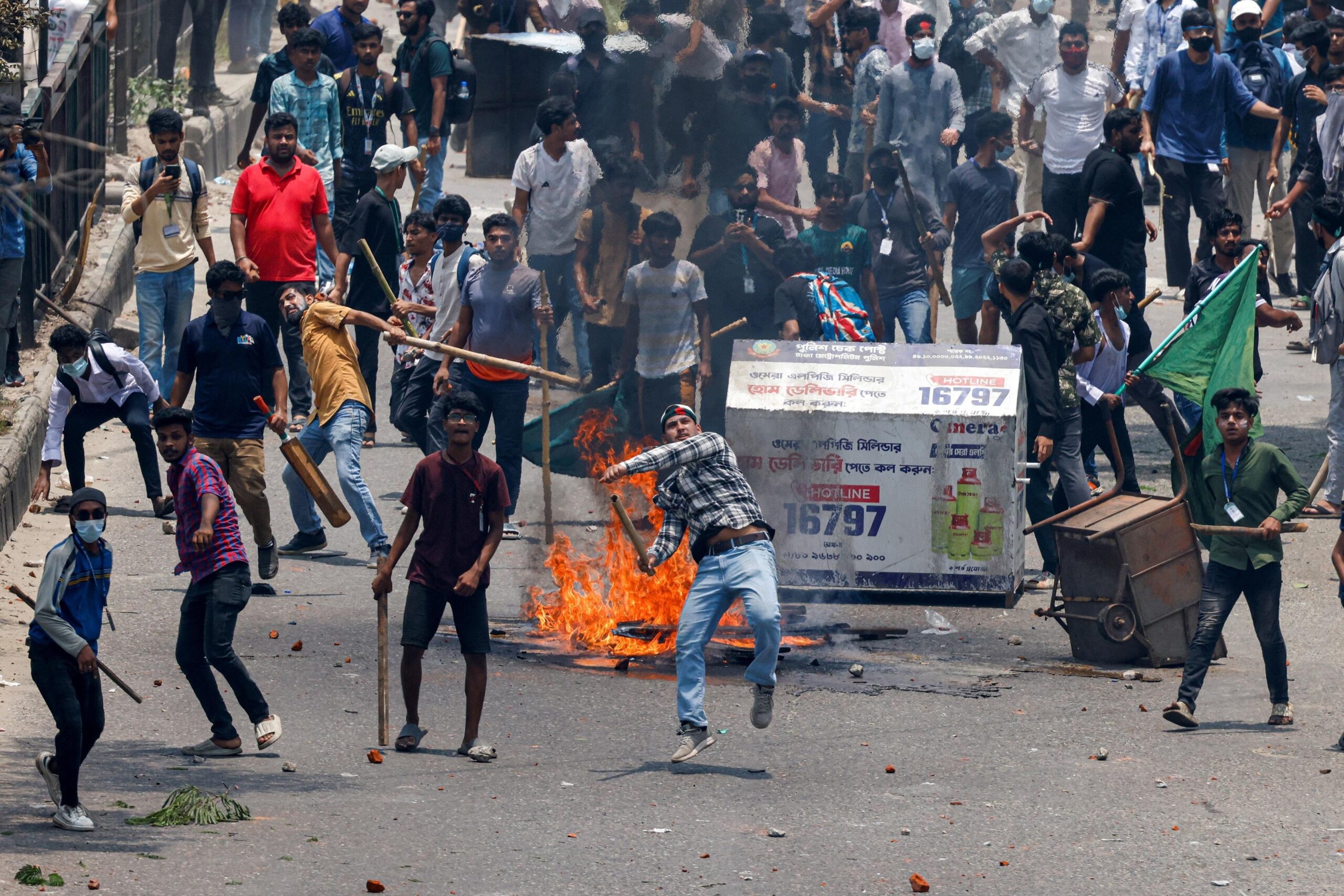
Political unrest in Bangladesh is not a distant domestic issue for India; it is a regional concern with direct implications for India’s northeastern states. Geography, history, and shared human linkages ensure that instability across the eastern border reverberates most strongly in Assam, Tripura, Meghalaya, Mizoram, and parts of West Bengal.
The Northeast, connected to the Indian mainland by a narrow corridor and sharing over 4,000 kilometres of border with Bangladesh, remains particularly sensitive to any disruption in its immediate neighbourhood.
The critical question, therefore, is not whether unrest in Bangladesh affects India’s Northeast, but how deeply it does so and what preventive measures can insulate the region from destabilising spillover.
Border Vulnerability and Illegal Movement.
India and Bangladesh share one of the longest and most complex international borders in the world. Large stretches pass through rivers, wetlands, agricultural fields, and densely populated villages, making complete physical fencing difficult.

During periods of political instability or economic stress in Bangladesh, attempts at illegal crossings tend to rise. Such movements may include economic migrants, but they can also provide cover for traffickers, smugglers, and elements with hostile intent.
For northeastern states already grappling with demographic sensitivities and resource constraints, even limited unregulated movement can strain administrative capacities and revive social anxieties. Border management thus becomes not merely a security function, but a governance challenge that requires coordination between central forces, state administrations, and local communities.
Insurgent Networks and Criminal Spillover
History offers sobering lessons. In earlier decades, instability in neighbouring regions enabled insurgent groups operating in the Northeast to exploit porous borders for shelter, logistics, and arms movement. While Bangladesh’s cooperation with India in recent years significantly weakened such networks, any dilution of state authority during unrest risks reopening old vulnerabilities.
Alongside insurgency-related concerns, organised crime thrives in unstable environments. Arms trafficking, narcotics movement, human trafficking, and counterfeit currency operations find easier passage when governance weakens. For the Northeast, where peace has been hard-won after decades of conflict, such spillover poses a serious long-term risk if not proactively addressed.

Trade, Transit, and Economic Disruption.
Bangladesh is not only a neighbour, but it is also a vital economic and transit partner for India’s Northeast. Over the past decade, land ports, rail links, inland waterways, and road corridors through Bangladesh have significantly reduced distances between northeastern states and the rest of India, as well as Southeast Asia. This connectivity is central to India’s Act East Policy and the economic transformation of the region.
Political unrest disrupts these lifelines. Trade slowdowns, restrictions at land ports, and delays in infrastructure projects directly affect border economies in Tripura, Assam, and Meghalaya, where local livelihoods depend heavily on cross-border commerce. Agricultural exports, small industries, and transport-linked employment suffer first, deepening economic insecurity in already fragile districts. When development stalls, security challenges inevitably resurface.
Social and Communal Sensitivities.
The Northeast is one of India’s most ethnically and culturally diverse regions. Any external unrest, especially if framed through ideological or communal narratives, can quickly resonate internally through misinformation, social media, and informal networks. Even isolated incidents across the border can be magnified into broader perceptions of threat, disturbing communal harmony.

Such social spillover does not always manifest immediately, but it erodes trust over time. In regions with complex histories of migration and identity politics, perceptions can be as destabilising as realities. Managing this dimension requires not only law enforcement but careful information management and community engagement.
Insights from the Ground: A Practitioner’s Perspective.
Having served extensively across India’s eastern and northeastern states during a long military career, the author has observed how external instability translates into internal stress along borderlands. From counter-insurgency operations to border management and civil-military coordination, one lesson remains constant: infiltration is rarely a standalone security issue. It is inseparably linked to economic deprivation, demographic pressures, historical fault lines, and governance gaps.
As a curative historian, one who studies history to anticipate and prevent future fractures rather than merely chronicle past events, the author views unrest in Bangladesh as part of a broader historical continuum. Experience shows that when governance weakens across borders, its effects surface first in peripheral regions like the Northeast. If these early indicators are ignored, they accumulate quietly before erupting into crises that are far harder to manage.

A forward looking approach must therefore integrate military vigilance with socio-economic foresight. Border fencing patrols, use of drones and serial surveillance coupled with IMINT are necessary, but insufficient unless accompanied by development, cultural integration, demographic balance, and political sensitivity in frontier regions.
The Preventive Way Forward.
India’s response must prioritise prevention over reaction. Strengthened border management using technology, surveillance, and intelligence coordination is essential. Equally critical is sustained diplomatic engagement with Bangladesh, ensuring that security cooperation and economic connectivity remain insulated from political fluctuations.
Development must be treated as a security instrument. Accelerated infrastructure, employment generation, and market access in border districts reduce vulnerability to infiltration and radical narratives. Parallelly, robust counter-misinformation mechanisms and community outreach are needed to preserve social harmony.

Most importantly, the Northeast must continue to be integrated emotionally, economically, and politically with the national mainstream. A confident and prosperous region is the strongest deterrent against external destabilisation.
Conclusion.
Yes, unrest in Bangladesh does disturb India’s Northeast, but disturbance need not lead to destabilisation. India today is better equipped than ever before, with stronger institutions, improved intelligence coordination, and deeper diplomatic leverage. The challenge lies in applying historical understanding to contemporary policy with consistency and foresight.
A stable Bangladesh and a resilient Northeast are not competing objectives; they are mutually reinforcing realities. Preventive security, inclusive development, and historical awareness together form India’s most credible defence against cross-border uncertainty.
Author’s Note.
The author, Ashk Machhanvi, is a former Indian Army officer who has served extensively across India’s eastern and northeastern states, including sensitive border and insurgency-affected regions. His operational experience in counter-insurgency, border management, and civil-military coordination has provided him with first-hand exposure to the complex interplay of security, society, and development in the Northeast.

Alongside his military career, the author is a curative historian, one who studies history not merely to record the past, but to diagnose present vulnerabilities and suggest corrective pathways for the future. His work focuses on how historical fault lines, demographic shifts, economic neglect, and cross-border movements influence long-term national stability.
Drawing from lived experience and historical analysis, he examines infiltration not only as a security challenge but as a socio-economic and humanitarian issue requiring anticipatory governance, regional integration, and people-centric policy responses.
His writing reflects a belief that sustainable security in the Northeast will emerge not just from fences and forces, but from foresight, inclusion, economic resilience, and a clear understanding of history’s unfinished business.